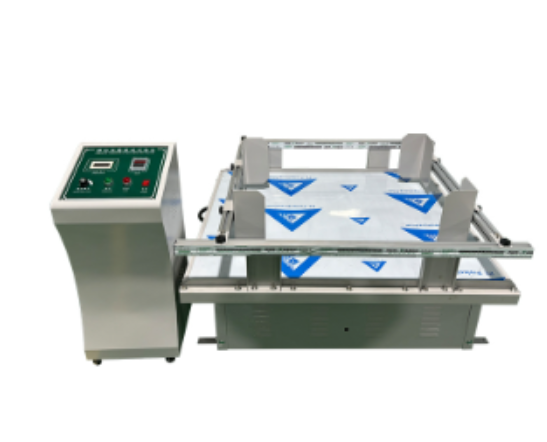
Battery Impact Test Chamber
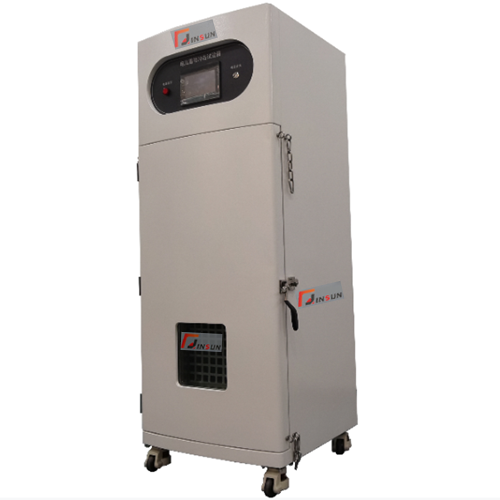


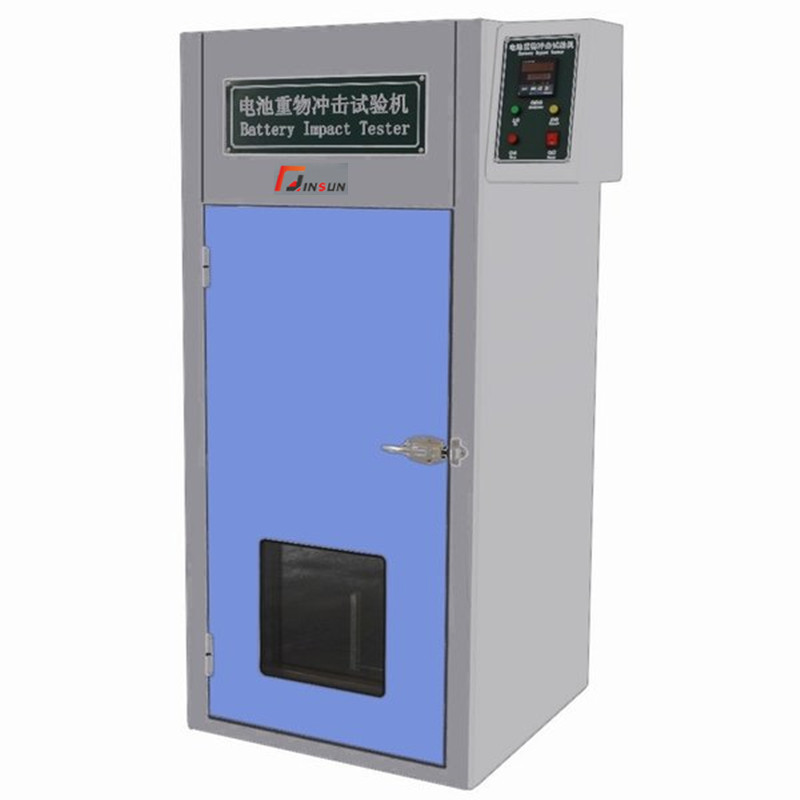
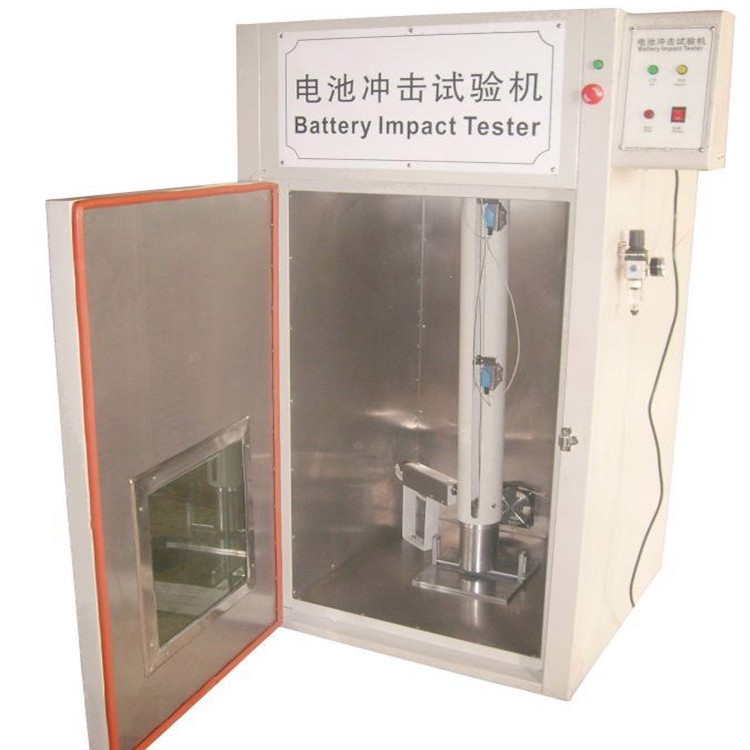
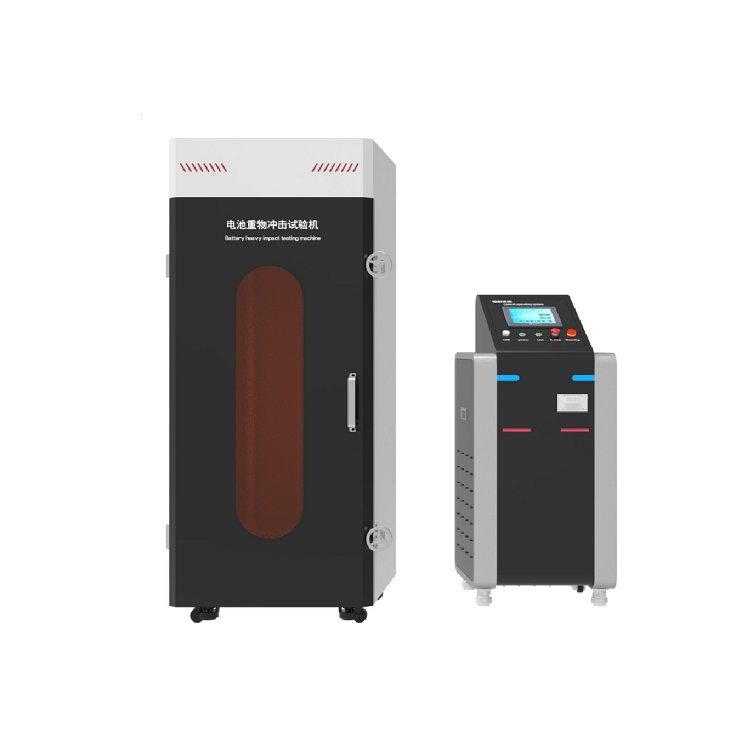
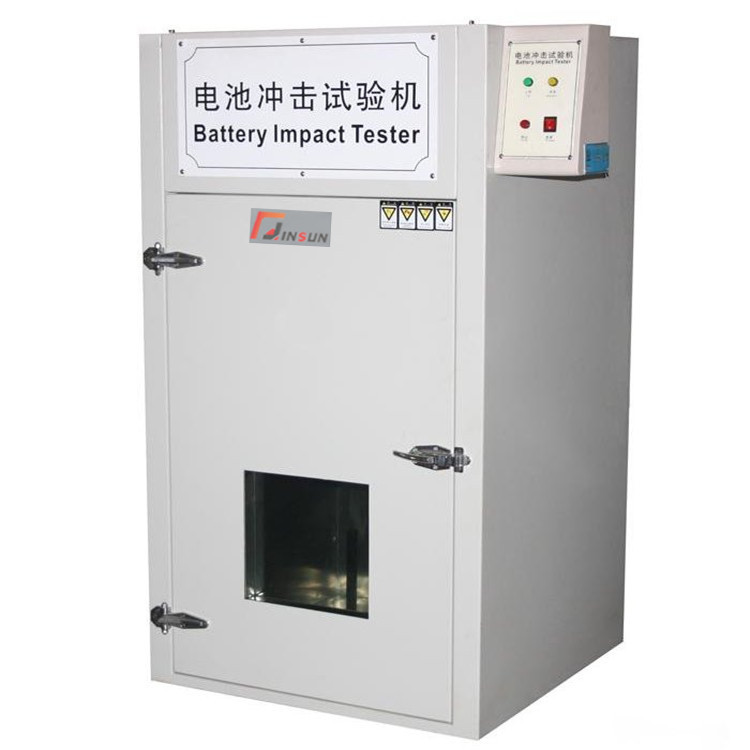
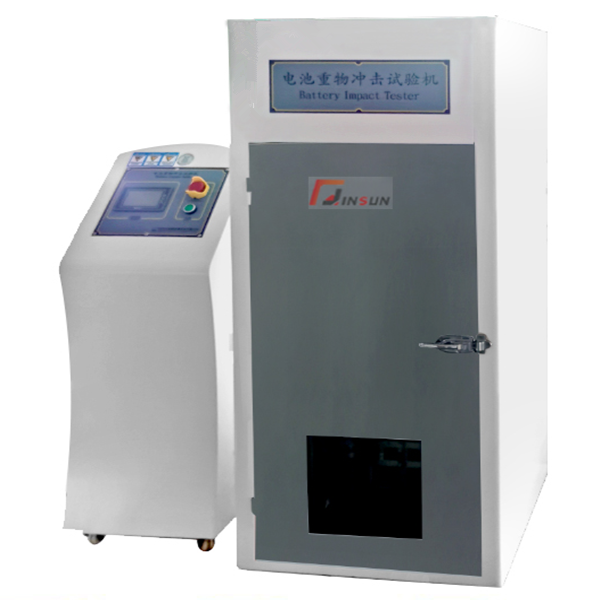
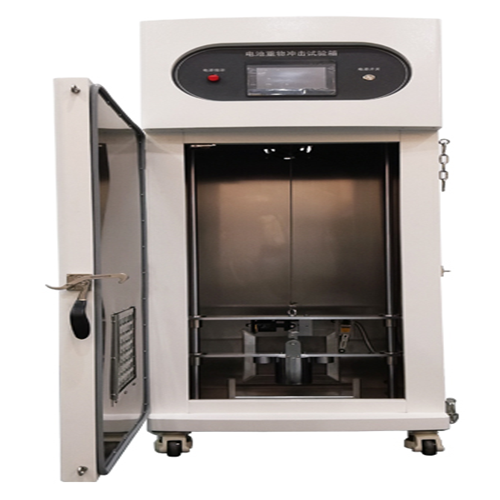
The Battery Impact Test Chamber is a specialized safety testing enclosure designed to perform standardized battery impact tests under controlled and protected conditions. It is used in combination with a falling weight mechanism to simulate mechanical abuse by dropping a defined mass onto a battery sample through a steel rod.
During testing, the battery is placed on a flat surface, with a 15.8 ± 0.2 mm steel rod positioned across the center. A 9.1 kg or 10 kg weight is released from a specified height (commonly 610 mm or up to 1000 mm) to evaluate the battery’s resistance to impact. The chamber provides a reinforced, explosion-protected environment, ensuring safe observation and containment in case of thermal events.
This equipment is suitable for compliance testing, R&D validation, and battery safety assessment in laboratory environments.
Application
(1) Lithium-ion battery impact safety testing
(2) Cylindrical, prismatic, and pouch cell evaluation
(3) Battery pack mechanical abuse testing
(4) Certification testing and compliance verification
(5) Research and development of battery safety performance
Standards
(1) GB/T 31485-2015 – Power battery safety requirements for electric vehicles
(2) GB/T 31241-2022 – Safety requirements for portable lithium-ion batteries
(3) UN 38.3 – Transport testing for lithium batteries
(4) IEC 62133 – Safety requirements for portable sealed cells
(5) UL 1642-2012 – Lithium battery safety standard
Technical Parameters
| Parameter | Specification |
|---|---|
| Inner Chamber Size | 550 × 550 × 1440 mm (W × D × H) |
| External Dimensions | 660 × 900 × 1720 mm (W × D × H) |
| Inner Material | SUS201 stainless steel (1.2 mm) with Teflon coating |
| Outer Material | Cold-rolled steel with coating (1.5 mm) |
| Observation Window | 250 × 250 mm tempered glass with mesh |
| Lighting | Built-in internal illumination |
| Smoke Outlet | Ø100 mm (rear) |
| Pressure Relief Port | 200 × 200 mm (rear) |
| Door | Single door with safety limit switch and explosion-proof chain |
| Impact Weight | 9.1 kg, 10 kg (with adjustment blocks) |
| Impact Height | 0–1000 mm (common: 610 mm) |
| Displacement Accuracy | ±5 mm |
| Impact Mode | Free-fall vertical drop |
| Metal Rod | Ø15.8 ± 0.2 mm steel rod |
| Max Battery Size | 200 × 200 × 200 mm |
| Impact Surface | 45# steel plate, 15 mm thickness |
| Control Mode | Touchscreen control |
| Equipment Weight | Approx. 270 kg |
| Power Supply | AC 220 V |
| Power | 600 W |
Test Principle
(1) Place the battery sample on a flat impact platform
(2) Position a 15.8 mm diameter steel rod across the sample center
(3) Raise a specified weight (9.1 kg or 10 kg) to a defined height
(4) Release the weight for free-fall vertical impact
(5) Observe battery response such as deformation, leakage, fire, or explosion
(6) Each sample is subjected to a single impact event as required by standards
Note: According to test requirements, compliant batteries should not exhibit fire or explosion after impact.
Features
(1) Designed for standard-compliant battery impact testing
(2) Reinforced chamber with explosion-proof structure
(3) Pressure relief port for safe release of internal pressure
(4) Observation window with protective mesh for safe monitoring
(5) Built-in lighting for clear visibility during testing
(6) Accurate height adjustment for repeatable impact conditions
(7) Stable free-fall mechanism ensuring vertical impact without deviation
(8) Safety door with limit switch and explosion-proof chain
(9) Integrated smoke exhaust port for improved safety
(10) Touchscreen control for simplified operation
Maintenance Information
(1) Inspect impact mechanism and guide system regularly
(2) Check integrity of explosion-proof chamber and seals
(3) Ensure pressure relief port and smoke outlet remain unobstructed
(4) Clean observation window and internal surfaces
(5) Verify control system and safety switches periodically
FAQ
(1) What is the purpose of a battery impact test chamber?
It provides a controlled and safe enclosure for performing impact tests, allowing evaluation of battery safety under mechanical shock conditions.
(2) What types of batteries can be tested?
The chamber supports cylindrical, prismatic, pouch cells, and battery packs within the specified size range.
(3) How does the test ensure consistency?
By controlling impact mass, height, and positioning of the steel rod, the system ensures repeatable and standardized test conditions.
(4) What safety features are included?
It includes an explosion-proof chamber, pressure relief port, safety door switch, observation window with mesh, and smoke exhaust system.
(5) Why is this test required by standards?
Impact testing evaluates whether a battery can withstand mechanical abuse without causing fire or explosion, which is essential for transportation, certification, and safe use.
Leave Message Get Price