Differential Thermal Analyzer
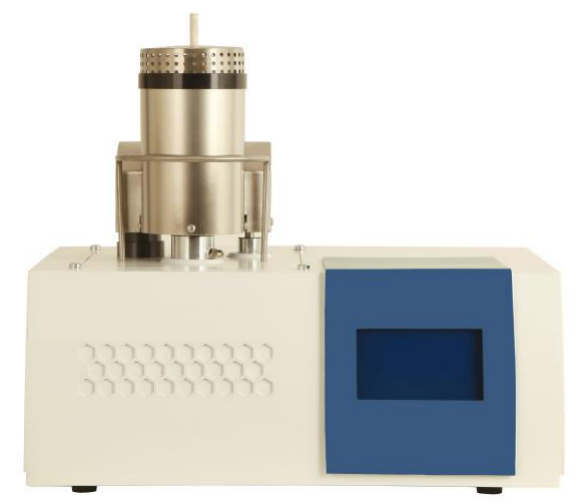


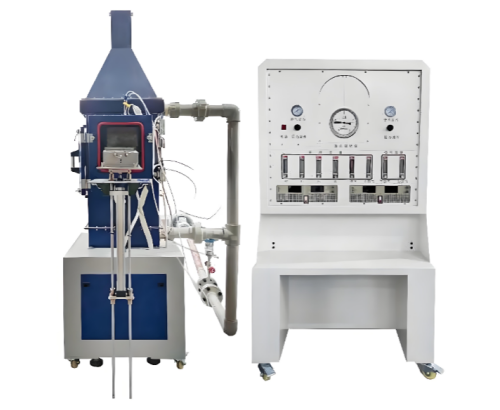
The Differential Thermal Analyzer (DTA/DSC) is a high-precision instrument designed to measure thermal effects related to physical and chemical changes of materials. It can determine melting points, heat of fusion, crystallization heat, phase transition heat, glass transition temperature, oxidation induction period (OIT), and thermal stability. The instrument integrates advanced furnace control, precise thermocouple measurement, and user-friendly software, making it suitable for research, quality control, and material development in laboratories and production environments.
Application
The DTA/DSC is applicable to:
Polymers and plastics — analysis of thermal transitions and stability.
Pharmaceutical compounds — melting point, crystallization, and thermal stability studies.
Metals and alloys — phase transformations and heat effect measurements.
Ceramics and composites — thermal stability and reaction heat studies.
Food and chemical materials — thermal analysis and degradation studies.
Materials requiring oxidation induction period (OIT) testing or steam-assisted experiments.
Suitable for laboratories, research centers, and quality control environments requiring precise thermal characterization.
Standards
JB/T 9369-2017 — Mechanical industry thermal analysis standard
ASTM E1356 — Standard test method for assignment of glass transition temperatures
ASTM E793 — Standard test method for differential scanning calorimetry
ISO 11357 series — Plastics — Differential scanning calorimetry (DSC)
ISO 11357-6 — Determination of oxidation induction time (OIT)
IEC 61010 — Safety requirements for electrical laboratory equipment
Parameters
| Parameter | Specification |
|---|---|
| Temperature Range | Room temperature to 1550°C |
| Temperature Accuracy | ±0.1°C |
| Heating Rate | 0.1–100°C/min (user-defined) |
| Cooling System | Optional forced cooling; 1550°C → RT ≤15 min |
| Furnace Control Modes | Sample thermocouple / Furnace thermocouple, switchable via software |
| Isothermal Holding | Up to 72 h; optional steam introduction 100–250°C, 0.01–100% concentration, 0.1–5 MPa |
| DTA Range | ±10 µV – ±2000 µV; resolution 0.01 µV |
| DSC Range | ±1 mW – ±500 mW; accuracy ±0.1 µW |
| Atmosphere Control | Dual mass flow controllers; automatic gas switching; supports corrosive gases |
| Vacuum Capability | Optional up to 2.5×10⁻² Pa |
| Software Functions | Automatic measurement, plotting, screenshot, baseline correction, calibration (In, Sn, Pb, Zn, Al) |
| Crucibles | Standard: ceramic 0.06 ml / 0.12 ml; Optional: aluminum, graphite, quartz, platinum |
| Power Supply | AC 220 V, 50 Hz |
Features
Accurate temperature control and high-resolution thermal measurement for reliable and reproducible results.
Flexible furnace control with sample or furnace thermocouple options.
Optional steam and vacuum interfaces for experiments under controlled atmospheres.
Fully automated measurement, plotting, and baseline correction.
User-friendly software with calibration functions and optional 3D virtual simulation.
Capability to measure oxidation induction period (OIT) for polymers and fuels.
Supports complex thermal analysis for research, quality control, and material development.
Accessories
Ceramic crucibles (0.06 ml or 0.12 ml)
Optional aluminum, graphite, quartz, or platinum crucibles
Standard calibration materials: Indium (In), Tin (Sn), Lead (Pb), Zinc (Zn), Aluminum (Al)
Optional 3D virtual simulation software
User manual, calibration certificates, ISO 9001:2015 certification
Test Procedures
Place the sample in the selected crucible (ceramic or optional material).
Select furnace control mode (sample or furnace thermocouple) via software.
Define temperature program: heating rate, target temperature, and isothermal hold if required.
Start the test; monitor DTA/DSC signals and temperature curves in real time.
Save, export, and analyze data; baseline correction and plotting are available.
Optionally, introduce controlled gas or vacuum for advanced thermal tests.
Maintenance Information
Keep furnace and crucible areas clean; avoid contamination.
Periodically calibrate with standard materials (In, Sn, Pb, Zn, Al).
Ensure cooling system is maintained if forced cooling is used.
Avoid operating outside recommended temperature or pressure ranges.
FAQ
What is this product?
A high-precision thermal analysis instrument that measures heat-related physical and chemical changes in materials.
What is this product used for?
Determination of melting point, crystallization heat, phase transitions, glass transition temperature, oxidation induction period (OIT), and thermal stability.
Why is this product important?
Provides accurate and reproducible thermal properties data for research, quality control, and material development.
What industries is this product suitable for?
Polymers, plastics, pharmaceuticals, metals, ceramics, composites, food, chemicals, and materials science laboratories.
What types of this product are available?
Standard DTA/DSC with ceramic crucibles; optional crucibles in aluminum, graphite, quartz, or platinum; optional steam and vacuum interfaces; optional 3D virtual simulation software.
Leave Message Get Price