16-Zone Thermal Manikin (Dry Type)
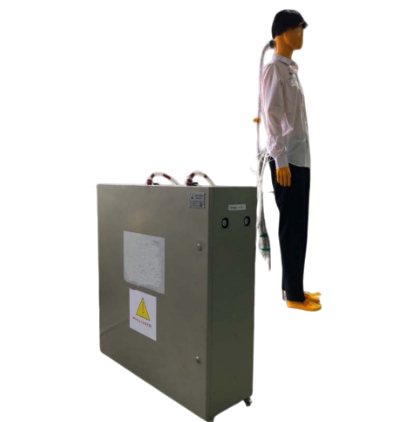


The 16-zone thermal manikin is a high-precision experimental device designed to simulate human heat and moisture exchange with the surrounding environment. By reproducing human metabolic heat generation and body surface temperature distribution, the manikin provides reliable data for research on thermal environments in clothing, buildings, vehicles, and aerospace cabins. It is mainly used to evaluate human thermal comfort, thermal protective performance of clothing, and the effectiveness of HVAC systems, and is especially suitable as a substitute for human subjects in high-risk thermal physiology experiments.
By establishing stable and controllable constant-temperature boundary conditions on the surface of the human body model, the system realistically reproduces heat exchange between the human body and air, radiation, and surrounding space under different environmental conditions. Based on multi-zone independent constant-temperature control technology, the system enables objective and repeatable acquisition of thermal environment data under standardized experimental conditions, effectively avoiding errors caused by individual differences, subjective perception, and limited controllability in human testing. The system is widely used in thermal comfort evaluation of HVAC systems in buildings and vehicles, thermal performance testing of clothing and protective equipment, and related research in human thermal environments.
Application
Simulation of human heat sources in vehicles and vessels, including buses, passenger cars, new energy vehicles, high-speed rail carriages, ships, and submarines;
Thermal comfort testing and evaluation of building HVAC systems;
Research on indoor thermal regulation performance in office buildings, residential buildings, public buildings, and test chambers;
Thermal environment testing of air-conditioning systems for automobiles, rail transit, and special vehicles;
Thermal performance evaluation of protective clothing, functional garments, workwear, and occupational apparel;
Measurement of clothing thermal resistance (Clo value) and evaporative resistance;
Universities, research institutes, third-party testing organizations, and enterprise R&D laboratories;
HVAC education and research, including indoor thermal comfort and airflow distribution studies;
Clothing thermal resistance testing to evaluate thermal protection under different environments;
Thermal source simulation for aerospace cabins, including aircraft, helicopters, space stations, and re-entry capsules;
Research related to human thermal balance and thermal physiology.
Standards
GB/T 50785 — Evaluation Standard for Thermal Comfort of Building Environment and Equipment Engineering
GB/T 18049 — Ergonomics of the Thermal Environment — Analytical Determination and Interpretation of Thermal Comfort
GB/T 17244 — Test Method for Thermal Resistance of Clothing
GB/T 18398 — General Requirements for Thermal Performance Testing of Protective Clothing
GB/T 32376 — Evaluation Method for Thermal and Moisture Comfort of Protective Clothing
GB/T 12023-2008 — Textiles — Test Method for Thermal Properties of Clothing
GB/T 11054-2013 — Textiles — Determination of Air Permeability of Fabrics
ISO 15831 — Clothing — Physiological Effects — Measurement of Thermal Insulation by Means of a Thermal Manikin
ASTM F1291 — Standard Test Method for Measuring the Thermal Insulation of Clothing Using a Heated Manikin
ASTM F1720 — Standard Test Method for Measuring the Thermal Insulation of Sleeping Bags Using a Heated Manikin
ASTM F2370 — Standard Test Method for Measuring the Evaporative Resistance of Clothing Using a Sweating Manikin
ISO 7933:2004 — Ergonomics of the Thermal Environment — Analytical Determination and Interpretation of Heat Stress
ASTM F1291-2020 — Thermal Physiological Evaluation of Clothing and Personal Protective Equipment
ISO 9920:2007 — Ergonomics of the Thermal Environment — Estimation of Thermal Insulation and Water Vapour Resistance of Clothing
Note: The system can be extended to meet enterprise standards, research specifications, and customized test protocols according to experimental requirements.
Product Specifications
| Component | Technical Parameters |
|---|---|
| Thermal Manikin Body | 16-zone heated manikin; material: fiberglass resin; Asian body proportions (European/US body types customizable); standing or seated posture; weight approx. 45 kg; operating temperature 10–40 °C; humidity 15–95%; head with pronounced nose or mouth optional |
| Heating System | Nickel-chromium heating wire with resistance temperature detection; 16-zone surface temperature 33 ± 0.5 °C (adjustable 32–35 °C); core temperature 37 ± 0.1 °C; maximum temperature difference between adjacent zones ≤ 1.0 °C; each zone equipped with patch-type PT100 sensor (Heraeus Class B, Germany); dry type without sweating function |
| Constant Temperature Control System | Dedicated 16-zone control cabinet, size 780 × 780 × 260 mm; two 8-channel temperature control boards; PID control with automatic parameter tuning; power supply AC 220 V / 50 Hz; start-up instantaneous power ≤ 1200 W; steady-state heat flux density 0–300 W/m²; quick-connect interfaces; cabinet with lockable caster wheels |
| Customizable Parts | Optional heated head, heated feet, child or infant manikin components |
Features
Independent multi-zone constant-temperature control
Sixteen independently controlled PID temperature zones ensure uniform and stable surface temperature distribution without mutual interference.
High-precision temperature control
Surface temperature control accuracy up to ±0.1 °C, meeting strict stability requirements for thermal comfort and clothing thermal performance testing.
Efficient and uniform heating structure
Nickel-chromium resistance heating provides fast response and high reliability, realistically simulating dry heat exchange between the human body and the environment.
Modular design with high system integration
Plug-and-play operation with RS485 communication to the host computer, facilitating data acquisition, monitoring, and analysis.
High posture adaptability
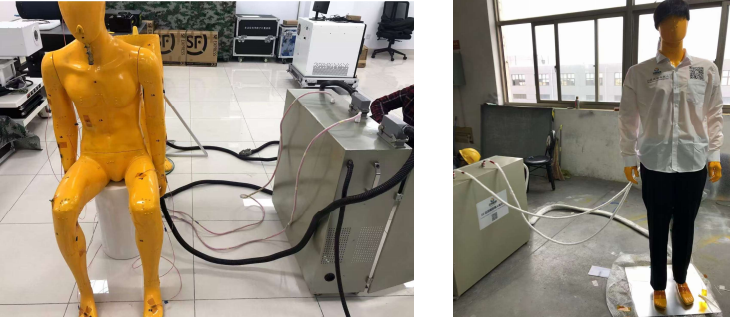
Adjustable joints allow standing or seated postures to meet testing needs in buildings, vehicles, and clothing applications.
Accessories
| Accessory / Consumable | Specification |
|---|---|
| Constant Temperature Control Cabinet | Includes temperature control boards, PID modules, quick-connect interfaces, caster base |
| PT100 Temperature Sensors | One per zone, 16 zones total; Heraeus Class B sensors |
| Cables and Wiring | Standard cable interfaces located at the back of the head and hip area |
| Optional Customized Parts | Heated head, heated feet, child or infant manikin modules |
| Manuals and Installation Accessories | Electrical installation guide, operation manual, software interface documentation |
Test Principle
The manikin system simulates human heat exchange by establishing constant and controllable temperature boundary conditions on the surface of the body model. Each zone is controlled in a closed loop, with heating power adjusted to maintain the set temperature. Heat exchange between the environment and the manikin (convection, radiation, conduction) is directly reflected by changes in heating power. Under steady-state conditions, measurement and analysis of heating power enable calculation of thermal comfort indices and clothing thermal resistance (Clo value). The heating system simulates human metabolic heat, while independent PID control of each zone ensures local temperature stability. Recorded data such as zone temperature, heat flux density, and ambient temperature and humidity are used for evaluation of clothing thermal resistance, HVAC systems, and enclosed-space thermal environments.
Operation Instructions
(1) Check the connections of all zone temperature controls and sensors before testing;
(2) Lock all joints after adjusting posture to prevent movement during testing;
(3) Preheat the system to reach thermal steady state before measurements;
(4) Surface temperature settings and steady-state duration vary by standard and shall strictly follow the applicable standard;
(5) Avoid external contact with the manikin surface during testing to prevent measurement interference.
FAQ
1. What is this product?
It is a 16-zone dry-type thermal manikin used to simulate human heat exchange with the environment under controlled laboratory conditions.
2. What is this product used for?
It is used for evaluating thermal comfort, clothing thermal resistance, HVAC system performance, and human thermal environment characteristics in buildings, vehicles, and enclosed spaces.
3. Why is this product important?
It provides objective, repeatable thermal data while avoiding variability and safety risks associated with human subject testing.
4. What industries is this product suitable for?
It is suitable for HVAC engineering, automotive and rail transportation, aerospace, textile and protective clothing industries, research institutes, universities, and testing laboratories.
5. What types of this product are available?
The standard configuration is a 16-zone dry thermal manikin, with optional customization including different body sizes, postures, and modular heated components such as head, feet, child, or infant manikins.
6. How should a suitable thermal manikin system be selected?
Selection depends on the test purpose, body model requirements, temperature control zones, and applicable standards. Different applications may require additional components or customized configurations. Each QINSUN system undergoes strict factory inspection and performance verification to ensure accurate and reliable test data. For suitable model selection, please contact QINSUN engineers for professional advice.
Leave Message Get Price