High Vacuum Friction and Wear Tester
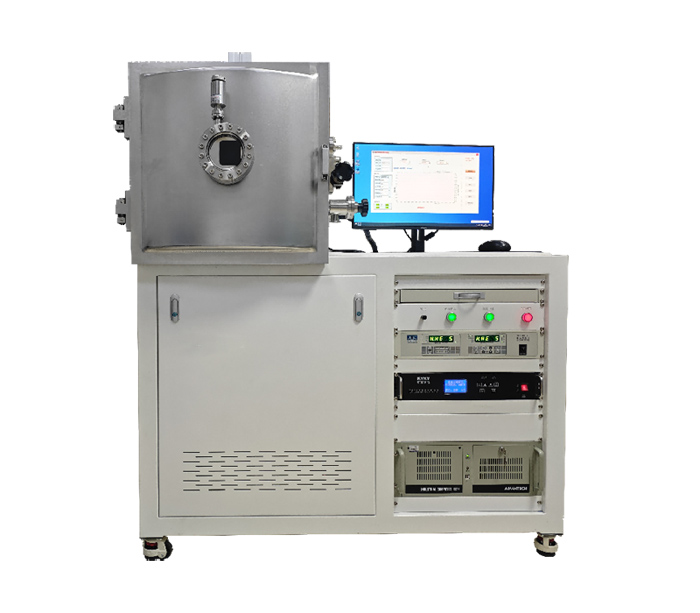


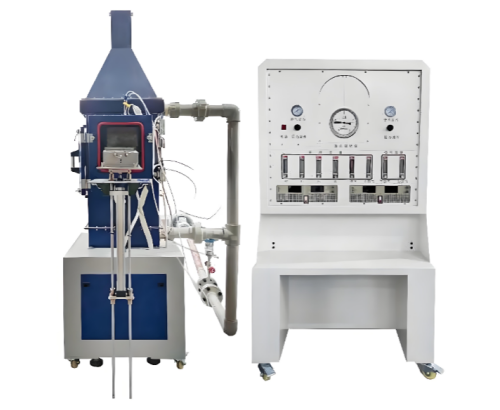
The High Vacuum Friction and Wear Tester is designed and manufactured in strict accordance with GJB 3032. It is used to simulate the friction and wear behavior of materials and their surface coatings under high-vacuum environmental conditions. Under controlled vacuum conditions, the equipment can accurately measure friction force, coefficient of friction, and wear characteristics of materials in rotary or reciprocating friction states, providing reliable experimental means for the study of tribological properties of materials under vacuum operating conditions.
Application
Friction and wear performance testing of metal materials, ceramic materials, and composite materials in high-vacuum environments;
Tribological performance evaluation of functional coatings, solid lubricant coatings, and surface-modified layers under vacuum conditions;
Material selection research for aerospace structural components, space motion mechanisms, and vacuum transmission components;
Performance verification of components operating under vacuum or low-pressure conditions in precision machinery and the automotive industry;
Research on vacuum friction and wear mechanisms conducted by research institutes, university laboratories, and material testing organizations.
Standards
GJB 3032 — Test Method for Friction and Wear of Materials in Vacuum Environment
GB/T 3960 — Metallic Materials — Friction and Wear Test Methods
GB/T 12444 — Metallic Wear Testing — General Principles
ASTM G99 — Standard Test Method for Wear Testing with a Pin-on-Disk Apparatus
ASTM G133 — Standard Test Method for Linearly Reciprocating Ball-on-Flat Sliding Wear
ISO 7148 — Plain Bearings — Testing of Friction and Wear Characteristics of Bearing Materials
Technical Specifications
| Item | Technical Parameter |
|---|---|
| Maximum test force | 20 N (dead-weight loading) |
| Normal load range | 1–20 N |
| Load accuracy | ≤ ±1% F.S |
| Friction force measurement accuracy | ≤ 0.02% F.S |
| Linear speed | 0.1–10 m/min |
| Counterface ball diameter | φ3, φ4, φ5, φ6 mm (standard configuration) |
| Reciprocating stroke | 0.5–20 mm (continuously adjustable) |
| Reciprocating frequency | 0.1–30 Hz (continuously adjustable) |
| Rotational speed | 5–3000 r/min (continuously adjustable) |
| Rotational speed accuracy | ≤ 1 r/min |
| Friction modes | Pin-on-disk friction, ball-on-disk friction |
| Lubrication modes | Dry friction, boundary lubrication friction |
Product Features
Meets military standard technical requirements for friction and wear testing in vacuum environments and is suitable for research under severe operating conditions;
Integrates both rotary and reciprocating friction modes, providing flexible test configurations;
Stable and reliable vacuum system with high ultimate vacuum and strict leak-rate control;
Continuously adjustable load and motion parameters, facilitating simulation of various actual working conditions;
High measurement accuracy of friction force and load, with good data repeatability;
Modular design, allowing expansion to high-temperature friction testing functions.
Accessories
| Name | Description |
|---|---|
| Vacuum chamber | Core component of vacuum friction testing |
| Vacuum pump unit | Provides high-vacuum environment |
| Vacuum measurement system | Real-time monitoring of chamber vacuum level |
| Rotary/reciprocating friction module | Enables different friction motion modes |
| Automatic loading mechanism | Applies load accurately |
| Friction force sensor | Measures friction force signals |
| Counterface balls | Standard consumable components |
| Specimen fixtures | Secure specimens of different sizes |
| Control and data acquisition software | Test control and data processing |
Test Principle
During the test, the specimen and counterface are installed inside the vacuum chamber, and the chamber is evacuated to the preset vacuum level using the vacuum system. According to test requirements, either rotary or reciprocating friction mode is selected, and parameters such as load, speed, stroke, and frequency are set. The loading mechanism applies a normal load to the friction pair, while the motion system drives relative sliding between the counterface and the specimen surface. During the test, sensors continuously collect friction force signals and calculate the coefficient of friction, while load and vacuum parameters are recorded simultaneously, enabling quantitative analysis of friction and wear performance of materials under vacuum conditions.
Operating Instructions
Before testing, confirm that the vacuum system sealing is in good condition to prevent leakage from affecting test results;
During evacuation, operate the vacuum system in stages according to specifications to avoid impact on specimens and sensors;
Different standards specify different requirements for load, speed, and friction modes, and corresponding standard parameters should be confirmed before testing;
Do not open the chamber under vacuum conditions; operation should only be performed after restoring atmospheric pressure;
When using the high-temperature module, pay attention to the influence of thermal expansion on fixtures and sensor systems.
Test Procedure
Determine the test conditions;
Install the specimen and counterface, and complete sealing of the vacuum chamber;
Start the vacuum system, evacuate the chamber to the specified vacuum level, and stabilize it;
Set the load, motion mode, and friction parameters, and start the friction test;
After the test, save the friction curves and data, restore atmospheric pressure, and remove the specimen;
Conduct subsequent analysis of wear scars and wear morphology.
FAQ
1. What is this product?
The High Vacuum Friction and Wear Tester is a laboratory testing instrument designed to evaluate the friction and wear behavior of materials and surface coatings under controlled high-vacuum conditions.
2. What is this product used for?
It is used to measure friction force, coefficient of friction, and wear characteristics of materials during rotary or reciprocating motion in vacuum environments, supporting tribological performance assessment under simulated vacuum operating conditions.
3. Why is this product important?
Material friction and wear behavior in vacuum differs significantly from that under atmospheric conditions. This equipment provides reliable and quantitative test data necessary for material selection, coating evaluation, and mechanism design for vacuum and space applications.
4. What industries is this product suitable for?
It is suitable for aerospace and space technology, precision machinery, automotive engineering, materials science, surface engineering, as well as research institutes, universities, and third-party testing laboratories.
5. What types of this product are available?
The system supports rotary and reciprocating friction configurations, pin-on-disk and ball-on-disk contact modes, and can be configured with optional modules such as high-temperature friction testing to meet different test requirements.
Leave Message Get Price