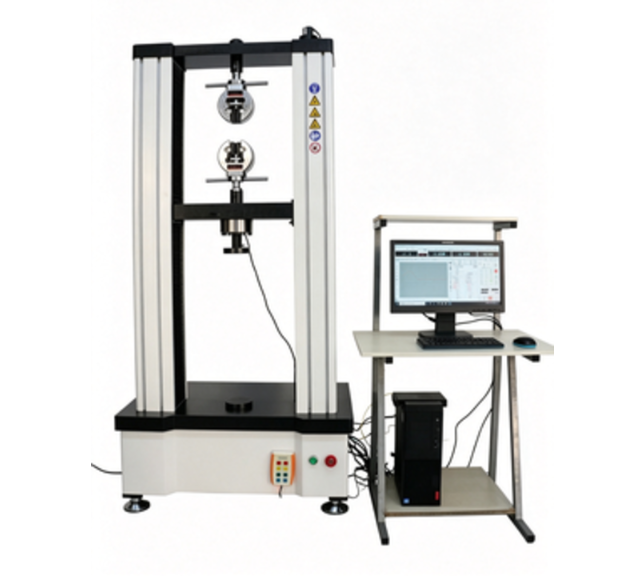
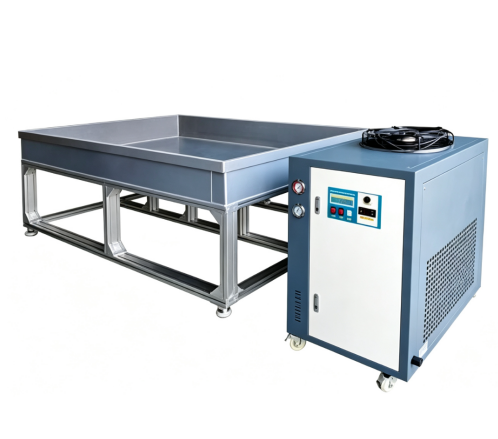
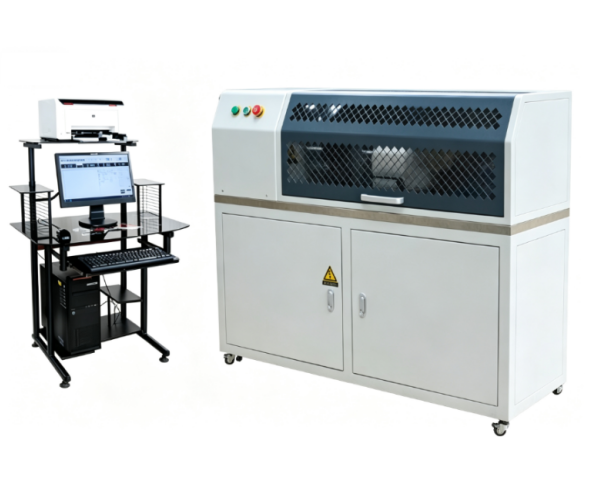
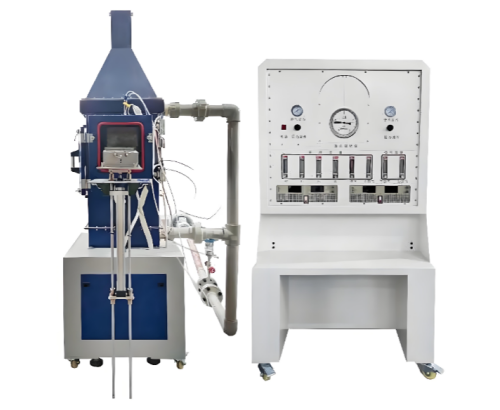
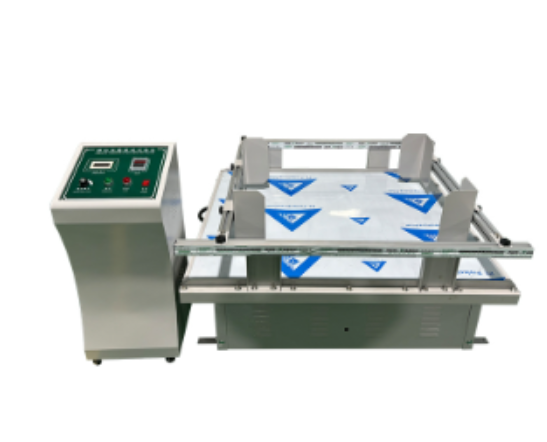
High-Temperature Reciprocating Friction and Wear Tester
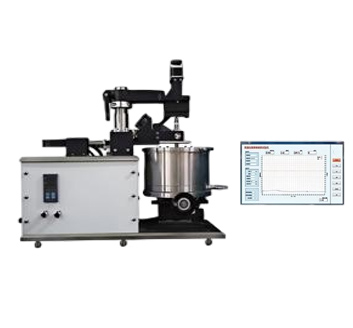


The High-Temperature Reciprocating Friction and Wear Tester is designed for quantitative evaluation of the friction and wear performance of materials and surface coatings under ambient and high-temperature conditions. By combining a high-temperature heating system with an automatic loading mechanism, the instrument applies stable and controllable reciprocating motion on the specimen surface at set temperatures and loads. The computer system continuously records and displays key parameters such as friction coefficient, load, and temperature, providing reliable data for high-temperature tribological research and engineering material evaluation.
Application
Friction and wear testing of metals, alloys, ceramics, and surface coatings under room temperature and high-temperature conditions.
High-temperature tribological studies of thermal barrier coatings, wear-resistant coatings, hard coatings, and functional surface modification layers.
Material selection and performance evaluation for aerospace, automotive, energy, metallurgy, and high-temperature mechanical components.
High-temperature friction and wear mechanism research in R&D institutions, universities, and third-party testing laboratories.
Verification of friction performance of lubricants and solid lubrication coatings under high-temperature conditions.
Standards
GB/T 3960 Metallic Materials – Friction and Wear Test Method
GB/T 12444 Metallic Materials – General Principles of Wear Testing
GB/T 13678 Metallic Materials – Friction and Wear Performance Test Method
ASTM G133 Linear Reciprocating Friction and Wear Test (Ball-Flat)
ASTM G99 Pin-on-Disk Friction and Wear Test
ISO 7148 Sliding Bearing and Bearing Material Friction and Wear Test
DIN 50324 Material Tribology Performance Test
Parameters
| Parameter | Specification |
|---|---|
| Test Load Range | 5–80 N (automatic loading) |
| Load Control Accuracy | 0.2% F.S |
| Reciprocating Speed | 10–1000 r/min, continuously adjustable |
| Reciprocating Stroke | 1–15 mm |
| High-Temperature Furnace Range | Room temperature – 1000 °C |
| Temperature Control Accuracy | ≤ ±2 °C |
| Friction Coefficient Display Accuracy | ±0.001 |
| Control Method | Computer automatic control |
| Data Processing | Real-time display, storage, and analysis |
Features
Integrated high-temperature furnace and reciprocating friction system, enabling stable operation up to 1000 °C.
Automatic loading mechanism with closed-loop control for precise, stable, and repeatable load application.
Wide adjustable range for reciprocating speed and stroke to meet diverse testing requirements.
High-precision real-time friction coefficient display for capturing material behavior under high-temperature conditions.
Compact structure with high system stability suitable for long-term continuous testing.
Automatic stop and multiple safety protection features for secure operation.
Accessories
| Accessory | Description |
|---|---|
| High-Temperature Furnace | Core component for simulating high-temperature environment |
| Reciprocating Friction Assembly | Provides stable linear reciprocating motion |
| Automatic Loading System | Precisely applies test load |
| Friction Force / Coefficient Sensor | Real-time measurement of friction signals |
| Specimen Fixture | Secures specimens of various sizes |
| Counterbody (Ball/Pin) | Choice of friction pair materials |
| High-Temperature Insulation | Protects equipment and sensors |
| Control & Data Acquisition Software | Test control and data processing |
Test Principle
The specimen is mounted inside the high-temperature furnace and heated to the set temperature. The automatic loading system applies the desired load to the friction pair, and the reciprocating drive moves the counterbody in a stable linear reciprocating motion on the specimen surface. Friction sensors continuously measure friction force and calculate the coefficient of friction, while temperature and load variations are simultaneously recorded. Analysis of friction coefficient and wear behavior over time and temperature allows quantitative evaluation of high-temperature tribological performance.
Operation Instructions
Ensure the furnace, insulation, and temperature control systems are functioning properly before testing.
Avoid rapid temperature ramp-up that exceeds the allowed limits of the specimen or sensors.
Set load, speed, and stroke according to the relevant standard before testing.
Confirm the furnace has sufficiently cooled before replacing specimens or counterbodies to avoid burns.
Stop the test immediately if abnormal friction force or temperature fluctuations occur and check the system.
Experimental Flow
Set reciprocating speed, load, and stroke parameters.
Install specimens and counterbodies, then heat the furnace to the target temperature and stabilize.
Start the reciprocating friction system and initiate data acquisition for friction coefficient and temperature.
At test completion, automatically save friction curves and experimental data.
After cooling, analyze the wear track and quantify wear amount.
FAQ
1.What is this product?
The High-Temperature Reciprocating Friction and Wear Tester is a specialized instrument designed to evaluate the friction and wear performance of materials and surface coatings under ambient and high-temperature conditions, with real-time measurement and data acquisition.
2.What is this product used for?
It is used to quantitatively test the friction coefficient, wear behavior, and surface performance of metals, alloys, ceramics, and surface coatings under controlled temperature and load conditions, simulating real service environments up to 1000 °C.
3.Why is this product important?
It allows precise, repeatable testing of material friction and wear performance under high-temperature conditions, helping engineers and researchers evaluate material durability, select appropriate materials or coatings, and understand high-temperature tribological mechanisms.
4.What industries is this product suitable for?
Aerospace, automotive, energy, metallurgy, high-temperature mechanical equipment manufacturing, research institutes, universities, and third-party testing laboratories.
5.What types of this product are available?
Variants include standard high-temperature reciprocating testers, linear reciprocating friction testers, pin-on-disk and ball-on-disk testers, and combined electrochemical friction-wear testing systems for corrosion-wear studies.
Leave Message Get Price