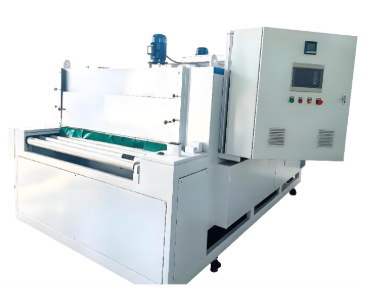
High-Temperature Friction and Wear Tester G1000
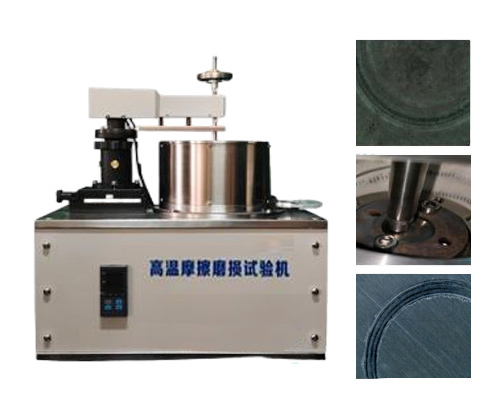


The G1000 High-Temperature Friction and Wear Tester is designed to study the friction and wear behavior of materials and surface coatings under conditions from room temperature up to 1000 °C. The instrument applies controlled loads and drives relative motion of friction pairs in a high-temperature environment to evaluate friction force, coefficient of friction, and their variation with temperature. It is suitable for systematic research on tribological performance under high-temperature service conditions.
Application
Friction and wear testing of metals and alloys (steel, non-ferrous metals, high-temperature alloys).
Surface engineering materials (thermal spray coatings, PVD/CVD coatings, diffusion coatings).
Ceramics and metal/ceramic composite materials.
High-temperature structural materials and wear-resistant materials.
Materials for aerospace engines and hot-section components.
High-temperature tribological materials in energy and power equipment.
Automotive engine, braking, and transmission system materials.
Tribology research in metallurgy, mechanical manufacturing, and academic institutions.
Standards
GB/T 3960 Metallic Materials – Friction and Wear Test Method
GB/T 12444 Metallic Materials – General Principles of Wear Testing
GB/T 13678 Metallic Materials – Friction and Wear Performance Test Method
ASTM G99 Pin-on-Disk Friction and Wear Test
ASTM G133 Linear Reciprocating Friction and Wear Test
ISO 7148 Sliding Bearing and Bearing Material Friction and Wear Test
DIN 50324 Material Tribology Performance Test
Parameters
| Parameter | Specification |
|---|---|
| Test Load Range | 150–2000 g (weight loading) |
| Friction Pair Type | Pin-Disk, Ball-Disk |
| Sample Table Speed | 5–2800 r/min, continuously adjustable |
| Friction Mode | Rotational friction |
| High-Temperature Furnace Range | Room temperature – 1000 °C |
| Temperature Measurement Accuracy | 0.2% F.S |
| Friction Coefficient Accuracy | 0.2% F.S |
| Friction Force Accuracy | ±0.002 N |
| Atmosphere | N₂, CO₂, He, Ar (inert gases) |
| Control Method | Computer automatic control |
| Data Acquisition | Real-time friction force, coefficient, and temperature data storage |
Features
Wide temperature range from room temperature to 1000 °C for high-temperature tribology research.
Integrated high-temperature furnace and friction system for stable operation.
Supports various inert gas atmospheres to simulate controlled environmental conditions.
Real-time display of friction force and coefficient for process analysis.
High precision load and speed control with excellent repeatability.
Automatic stop protection ensures safe high-temperature testing.
Accessories
| Accessory | Specification / Use |
|---|---|
| High-Temperature Furnace | Up to 1000 °C |
| Friction Test Pins | Spherical, pin-shaped; multiple materials available |
| Sample Disk | Standard disk holder for specimen mounting |
| Weight Set | Various levels for load application |
| Temperature Sensor | High-temperature thermocouple |
| Atmosphere Interface | Inert gas supply device |
| Computer & Control Software | Data acquisition and analysis |
| Protective Components | High-temperature shields and insulation |
Test Principle
The specimen is mounted on the sample disk inside the high-temperature furnace. The furnace heats the specimen to the set temperature. The loading system applies a defined load to the friction pair while driving the sample disk to rotate, creating stable contact between the counterbody (ball or pin) and the specimen surface. The sensor system records friction force and coefficient in real-time, while temperature is simultaneously monitored, enabling quantitative analysis of material friction and wear behavior under high-temperature conditions.
Operation Instructions
Confirm specimen can withstand high temperatures to avoid damage.
Set load, rotational speed, temperature, and atmosphere according to the relevant standard.
Avoid direct contact with the furnace or hot specimens.
Ensure gas purity and stable flow when introducing inert atmospheres.
Allow furnace to cool to a safe temperature before removing specimens.
Experimental Flow
Prepare and clean specimens and counterbodies per relevant standards.
Install specimens and friction pairs, ensure coaxial alignment.
Set test load, speed, temperature, and atmosphere conditions.
Heat furnace to the target temperature and maintain thermal stability.
Perform friction test, recording data in real-time.
Upon test completion, the system automatically stops; save and export data.
Analyze wear surfaces and quantify wear amount.
FAQ
1.What is this product?
The G1000 High-Temperature Friction and Wear Tester for evaluating material tribology at high temperatures.
2.What is this product used for?
Testing friction, wear, and their variation with temperature for metals, ceramics, coatings, and composites.
3.Why is this product important?
Provides quantitative, high-precision data for high-temperature material performance and engineering design.
4.What industries is this product suitable for?
Aerospace, automotive, energy, metallurgy, mechanical manufacturing, and research laboratories.
5.What types of this product are available?
High-temperature testers with rotational friction and customizable inert atmosphere options.
Leave Message Get Price