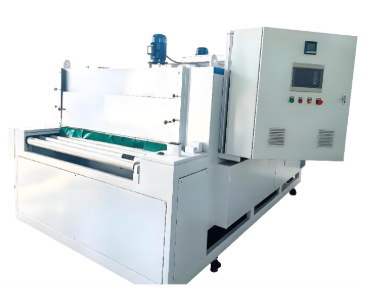
Electrochemical Reciprocating Friction and Wear Tester
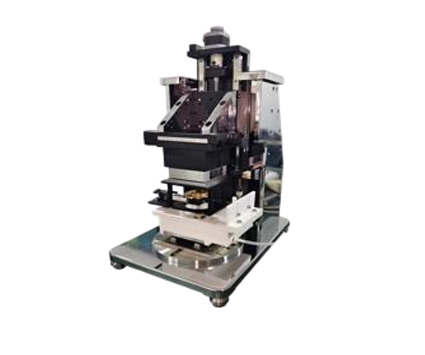


The Electrochemical Reciprocating Friction and Wear Tester is a specialized instrument designed to study the tribocorrosion behavior of metallic materials in corrosive environments. By integrating reciprocating friction and wear testing with electrochemical measurement technology, the instrument evaluates material performance under simultaneous friction, corrosion, and synergistic conditions. The test is computer-controlled, with real-time load, sliding speed, and stroke regulation, and friction coefficient measurement. Data are recorded, displayed graphically, and stored for analysis, providing reliable evaluation of corrosion-wear resistance for materials and components.
Application
Study of metallic materials’ friction and wear behavior in corrosive media.
Comparative analysis of pure wear, pure corrosion, and tribocorrosion phenomena.
Evaluation of coatings and surface-modified layers under corrosive conditions.
Investigation of material failure mechanisms in marine, chemical, and energy service environments.
Testing tribocorrosion properties of components such as bearings, valves, and seals.
Research on synergistic effects and interaction mechanisms between corrosion and wear.
Standards
GB/T 3960-2016 Plastics – Determination of Sliding Wear Properties
GB/T 12444 Metallic Materials – General Friction and Wear Testing Methods
ASTM G119 Evaluation of Wear in Corrosive Media (Tribocorrosion Guidelines)
ASTM G133 Linear Reciprocating Sliding Wear Test
ISO 7148 Sliding Friction and Wear Testing (Relevant Sections)
ASTM G5 / G59 Electrochemical Corrosion Testing (Principles Reference)
Parameters
| Parameter | Specification |
|---|---|
| Test Load Range | 30–1000 g (weight loading) |
| Automatic Load Range | 10–50 N |
| Load Accuracy | 0.2% F.S |
| Reciprocating Frequency | 0.1–5 Hz |
| Sliding Stroke | 0.5–25 mm (depends on frequency) |
| Friction Force Range | ≤50 N |
| Friction Measurement Accuracy | 0.2% F.S |
| Control Method | Computer automatic control |
| Data Acquisition | Friction coefficient real-time acquisition and storage |
| Display | Real-time curve display |
Features
Integrates electrochemical corrosion testing with reciprocating friction and wear experiments.
Simulates real material service conditions in corrosive media.
Supports both weight and automatic loading, with stable load control.
Adjustable reciprocating frequency and sliding stroke to accommodate various test conditions.
Real-time friction coefficient measurement with automatic curve plotting.
Computer-controlled full test process, easy to operate.
Data storage and export for further analysis and comparative studies.
Accessories
| Accessory | Specification / Use |
|---|---|
| Reciprocating Drive System | Standard, provides stable reciprocating motion |
| Friction Fixture | Multiple specifications, holds different specimens |
| Electrochemical Corrosion Cell | Standard, holds corrosive media |
| Weight Loading Assembly | 30–1000 g, manual load application |
| Automatic Loading Module | 10–50 N, precise load control |
| Friction Force Sensor | Standard, collects friction signals |
| Control and Analysis Software | Standard, data acquisition and processing |
Test Principle
During testing, the specimen acts as part of an electrochemical system in the corrosive medium while interacting with a counter body under set load and reciprocating motion. The material surface is simultaneously subjected to mechanical wear and electrochemical corrosion. Friction sensors measure friction force in real-time and calculate friction coefficient, while the electrochemical environment induces corrosion behavior. This enables evaluation of the synergistic effects of corrosion and wear and their impact on material performance.
FAQ
1.What is this product?
An Electrochemical Reciprocating Friction and Wear Tester for studying tribocorrosion behavior of materials.
2.What is this product used for?
Evaluating friction, wear, corrosion, and their synergistic effects in controlled corrosive environments.
3.Why is this product important?
Provides precise, real-time tribocorrosion data for material research, surface treatment evaluation, and component reliability analysis.
4.What industries is this product suitable for?
Marine, chemical, energy, materials research laboratories, industrial quality control, and academic research.
5.What types of this product are available?
Reciprocating testers with integrated electrochemical corrosion testing capabilities.
Leave Message Get Price