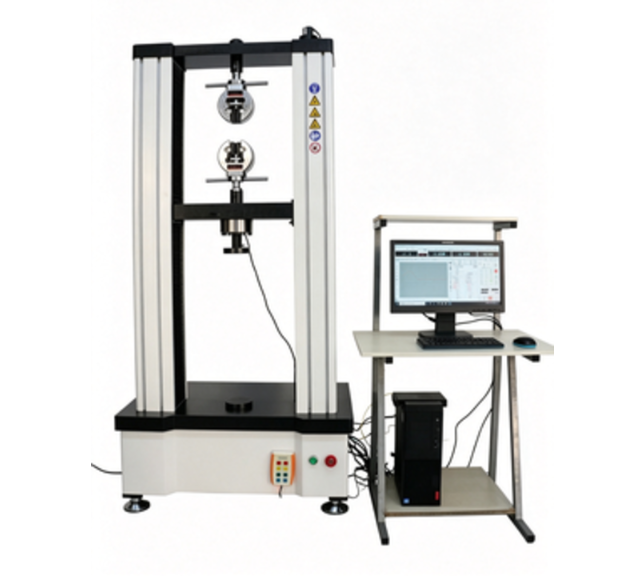
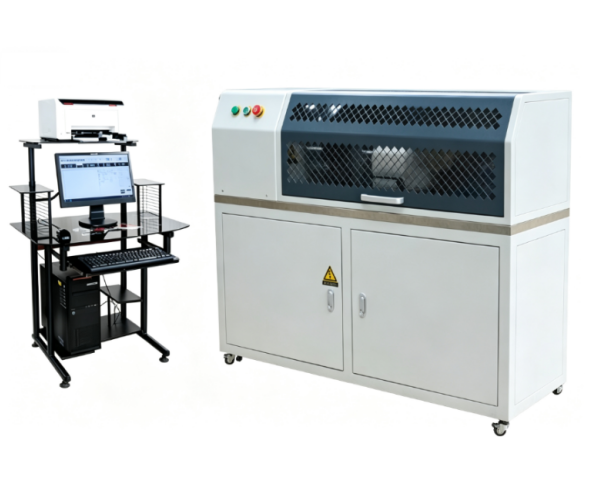
Pin-on-Disc Friction and Wear Tester
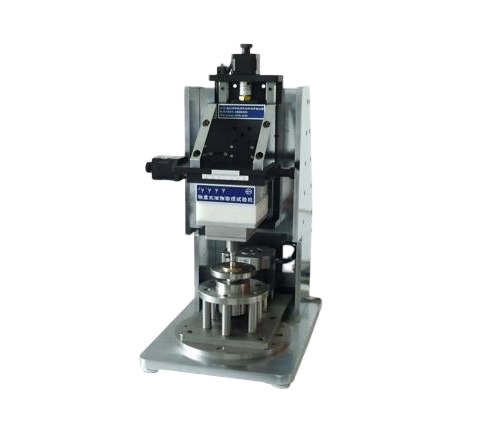


The Pin-on-Disc Friction and Wear Tester is designed for evaluating the friction and wear performance of materials and surface coatings. The instrument can simulate different friction modes using ball-on-disc or pin-on-disc configurations and measure friction coefficient, wear depth, and wear resistance in real time. The tester features user-friendly operation, automatic stop protection for safety, and high measurement accuracy, making it suitable for research, quality control, and industrial testing.
Application
Friction and wear testing of metal and non-metallic material surfaces.
Evaluation of wear resistance for coatings, platings, and composite materials.
Performance testing of ball-on-disc and pin-on-disc friction pairs.
Materials science research and industrial quality control in laboratories.
Teaching and research experiments in tribology.
Standards
GB/T 3960-2016 Plastics – Determination of Sliding Wear Properties
ASTM G99 Standard Test Method for Wear Testing with a Pin-on-Disk Apparatus
ASTM G133 Standard Test Method for Linearly Reciprocating Pin-on-Flat Sliding Wear
ISO 20502 Coating Scratch Test
DIN 50324 Friction and Wear Test Standard
Parameters
| Parameter | Specification |
|---|---|
| Test Load Range | 30–1000 g (weight loading), 10–200 N (automatic); accuracy 0.2% F.S. |
| Sample Table Speed | 5–2800 rpm, continuously adjustable |
| Friction Diameter | Φ3–Φ50 mm, adjustable |
| Friction Force Measurement | ≤100 N |
| Power Supply | 210–235 V, 50–60 Hz, 2500 W |
| Workbench Size | 1800 × 750 × 800 mm (user-supplied) |
Features
Supports ball-on-disc and pin-on-disc friction pairs for versatile testing.
Wide load and adjustable speed range for various materials and coatings.
Automatic measurement of friction coefficient, wear depth, and wear resistance with real-time display.
Automatic stop protection for safe operation.
High measurement accuracy, suitable for research, quality control, and industrial applications.
Accessories
| Accessory | Specification / Use |
|---|---|
| Friction Pairs | Ball-on-disc, pin-on-disc; replaceable per experimental requirements |
| Sample Fixtures | Secure samples of different sizes and shapes |
| Data Acquisition Software | Real-time acquisition of friction force, wear depth, and friction coefficient |
| Power Cable | Input 210–235 V, 50–60 Hz |
| Weight Set | For manual loading of test force |
Test Principle
The tester applies adjustable load via a ball-on-disc or pin-on-disc friction pair while rotating the sample table. Friction force and friction coefficient are measured in real time, and wear depth is recorded by sensors. Combined with load and speed data, the instrument analyzes material surface wear resistance. Data are automatically collected and experimental curves generated, enabling high-precision friction and wear evaluation.
Operation Instructions
Install the sample and secure it in the fixture.
Set the friction mode, test load, rotation speed, and friction diameter.
Start the test; the instrument automatically operates and displays friction force and wear depth in real time.
Do not touch rotating components during testing; ensure safety.
Save data after testing and turn off the instrument for cleaning.
Experimental Flow
Sample Installation: Secure the sample in the friction pair fixture.
Parameter Setting: Choose ball-on-disc or pin-on-disc mode; set load, speed, and friction diameter.
Start Test: The instrument automatically performs the test and records friction force and wear depth.
Data Monitoring: Observe friction force curves and wear changes in real time.
Data Processing: Generate friction coefficient, wear volume, and wear resistance analysis reports after the test.
Sample Replacement: Clean the fixture and replace the sample for the next experiment.
FAQ
1.What is this product?
A precision tester for evaluating the friction and wear performance of materials and coatings using ball-on-disc or pin-on-disc configurations.
2.What is this product used for?
Measuring friction coefficient, wear depth, and wear resistance under controlled load and speed conditions.
3.Why is this product important?
Provides accurate, real-time data for research, industrial quality control, and material performance evaluation.
4.What industries is this product suitable for?
Materials science research, industrial testing, coatings development, tribology laboratories, and academic institutions.
5.What types of this product are available?
Models supporting ball-on-disc and pin-on-disc friction configurations with adjustable load and speed settings.
Leave Message Get Price