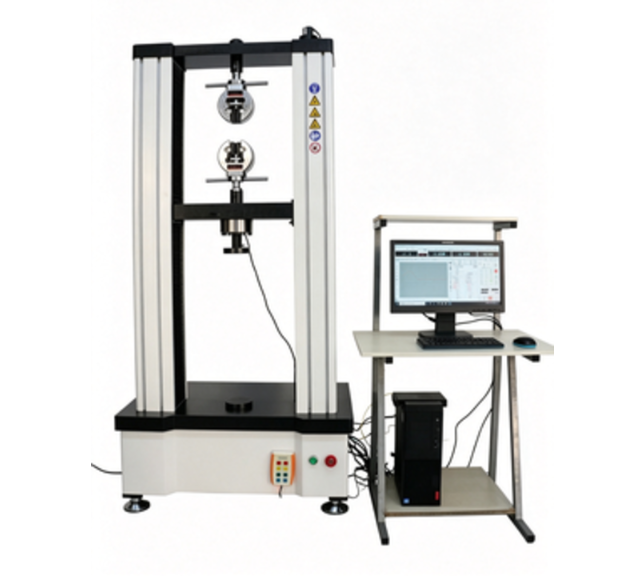
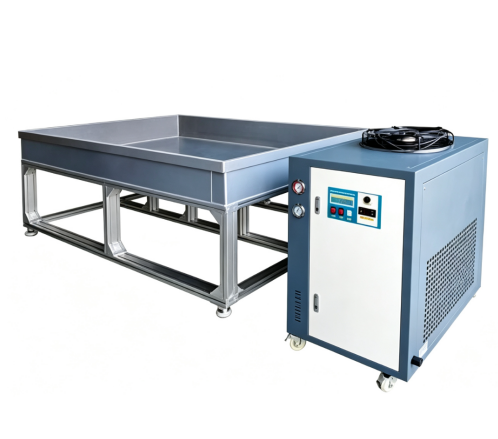
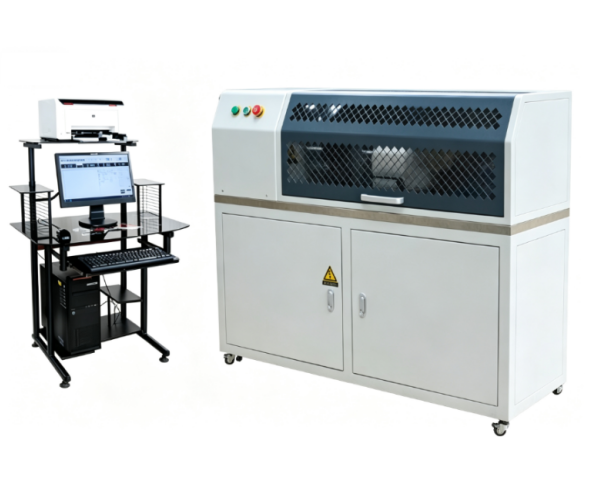
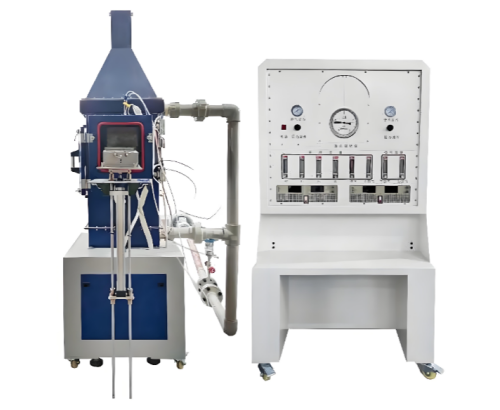
Material Surface Performance Comprehensive Tester
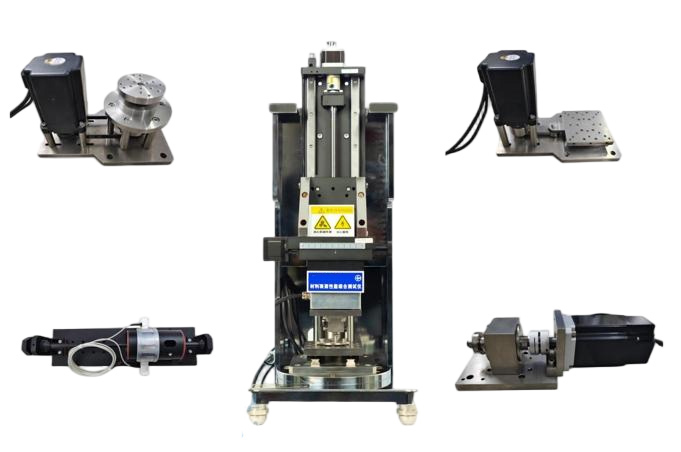


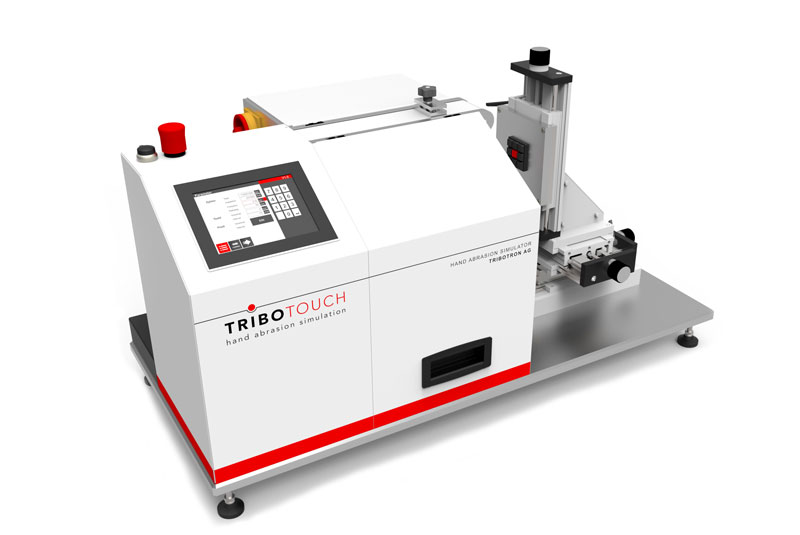
The Material Surface Performance Comprehensive Tester is a modular instrument designed for high-precision evaluation of material and component surface mechanical properties, including coatings and platings. The instrument can test friction force, friction coefficient, wear volume, and coating thickness under varying loads, sliding speeds, media conditions (e.g., lubricating oil, saline), and environmental temperatures. It supports multiple friction modes, including rotational, reciprocating, ring-on-block, and pipe surface friction. Its modular design allows flexible installation and combination, high automation, and user-friendly operation, making it suitable for materials science research, industrial product development, and quality control.
Application
Mechanical property testing of metal, ceramic, polymer, and composite material surfaces.
Wear and friction performance evaluation of coatings, platings, thin films, and composite materials.
Friction and wear testing under low-temperature conditions.
Friction and wear testing in liquid media environments (e.g., lubricating oil, saline).
Material development, quality control, and tribology research in industrial production and laboratories.
Standards
GB/T 3960-2016 Plastics – Determination of Sliding Wear Properties
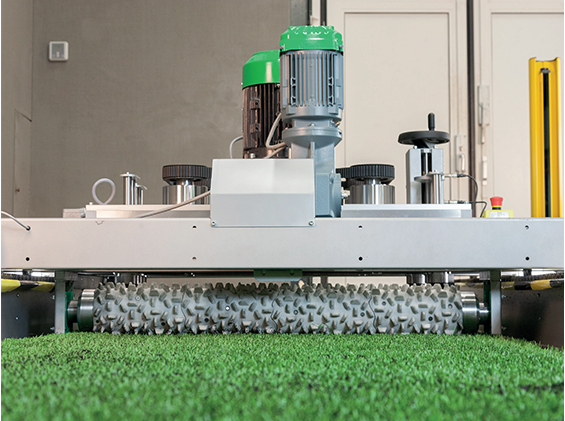
GB/T 20394-2013 Artificial Turf Durability Test Method
JB/T 8554-1997 Coating Adhesion Automatic Scratch Test Method
ASTM G99 Standard Test Method for Wear Testing with a Pin-on-Disk Apparatus
ASTM G133 Standard Test Method for Linearly Reciprocating Pin-on-Flat Sliding Wear
ISO 20502 Coating Scratch Test
DIN 50324 Friction and Wear Test Standard
Parameters
| Parameter | Specification |
|---|---|
| Reciprocating Friction | Load: 30–1000 g (weight), 10–200 N (automatic); accuracy 0.2% F.S.; sliding frequency 0.1–45 Hz; stroke 0.5–25 mm; max reciprocating force ≤100 N |
| Electrochemical Reciprocating Friction | Load: 30–1000 g (weight), 10–50 N (automatic); accuracy 0.2% F.S.; frequency 0.1–5 Hz |
| Rotational Friction | Load: 30–1000 g (weight), 10–200 N (automatic); accuracy 0.2% F.S.; table speed 5–2800 rpm, stepless |
| Ring-on-Block Friction | Load: 100–1000 g (weight), 10–200 N (automatic); accuracy 0.2% F.S.; spindle speed 5–2000 rpm, stepless |
| Pipe Surface Friction | Load: 50–1000 g (weight); accuracy 0.2% F.S.; reciprocating stroke 0.5–20 mm; frequency 0.1–35 Hz |
| Wear Volume Measurement | Load ≤40 g; wear scar depth ±0.5 mm; accuracy 0.02 µm (customizable) |
| Low-Temperature Module | Load 0.3–10 N; accuracy 0.2% F.S.; temperature range: room temperature to -50℃ |
| Power Supply | 220 V, 50 Hz, 6000 W |
| Instrument Weight | Approx. 150 kg |
| Workbench Size | 1800 × 750 × 800 mm (user-supplied) |
Features
Modular Design: Quick combination of rotational, reciprocating, ring-on-block, and pipe friction modules.
Wide Load and Sliding Speed Range: Meets friction and wear testing needs for different materials and environments.
High-Precision Wear Measurement: Automatically calculates wear depth and generates 2D contour plots.
Low-Temperature and Electrochemical Modules: Simulate special environments to closely match actual applications.
Automated Control System: Real-time display of friction force, friction coefficient, wear volume, and environmental parameters; data can be stored, printed, and analyzed.
User-Friendly Interface: Simplifies parameter setting, monitoring, and safety management.
Accessories
| Accessory | Specification / Use |
|---|---|
| Reciprocating Friction Module | Automatic or weight loading; adjustable stroke and frequency |
| Rotational Friction Module | Table speed adjustable; accommodates various sample diameters |
| Ring-on-Block Module | Spindle speed 5–2000 rpm; suitable for ring-on-block tests |
| Pipe Friction Module | Adjustable stroke and frequency; simulates pipe surface friction |
| Low-Temperature Module | Temperature -50℃ to room temperature; for low-temperature friction tests |
| Electrochemical Module | Tests friction under corrosive media conditions |
| Wear Measurement Module | Accuracy 0.02 µm; measures wear depth and volume |
| Sample Fixtures | Secure samples of different sizes and shapes |
| Data Acquisition & Analysis Software | Real-time collection of friction force, friction coefficient, wear volume, and environmental parameters |
| Power Cable | Input 220 V, 50 Hz |
Test Principle
Multiple modules enable different friction modes: reciprocating, rotational, ring-on-block, and pipe surface friction.
Force and displacement sensors measure friction force, friction coefficient, and wear volume in real time.
High-precision wear measurement module automatically detects wear depth and contour to calculate surface material loss.
Low-temperature and electrochemical modules simulate environmental effects on friction performance.
Operation Instructions
Install and secure all modules and sensors; ensure sample fixtures are stable.
Set friction mode, load, sliding length, frequency, and environmental parameters according to testing requirements.
Do not touch moving parts during testing; ensure safety.
Save data after testing and generate friction force, coefficient, and wear volume reports.
Regularly inspect sensors and wear measurement modules to maintain measurement accuracy.
Experimental Flow
Sample Installation: Secure the sample in the corresponding module fixture.
Parameter Setting: Select friction mode, load, sliding length, frequency, and environmental conditions.
Start Test: Instrument automatically performs testing and records friction force, coefficient, and wear volume.
Real-Time Monitoring: Observe test curves; pause if necessary to inspect the sample.
Data Processing: Save data after testing and generate reports and 2D contour plots.
Sample Replacement: Remove sample and clean fixtures to prepare for the next test.
FAQ
1.What is this product?
A modular instrument for high-precision measurement of surface mechanical and frictional properties of materials.
2.What is this product used for?
Measuring friction force, friction coefficient, wear volume, and coating thickness under varied environmental and load conditions.
3.Why is this product important?
Provides accurate, versatile, and automated evaluation of material surface performance for R&D, industrial applications, and quality control.
4.What industries is this product suitable for?
Materials science research, industrial product development, quality control, tribology laboratories, aerospace, automotive, and manufacturing sectors.
5.What types of this product are available?
Modular system supporting rotational, reciprocating, ring-on-block, pipe friction, low-temperature, and electrochemical corrosion testing.
Leave Message Get Price