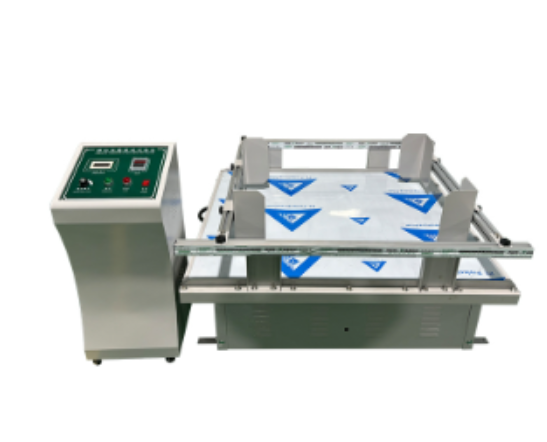
Laboratory Car Wash Simulation Tester
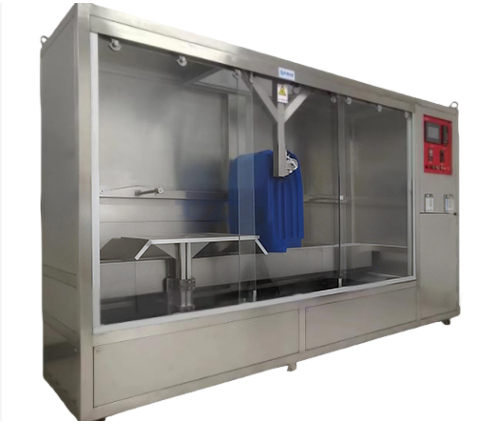


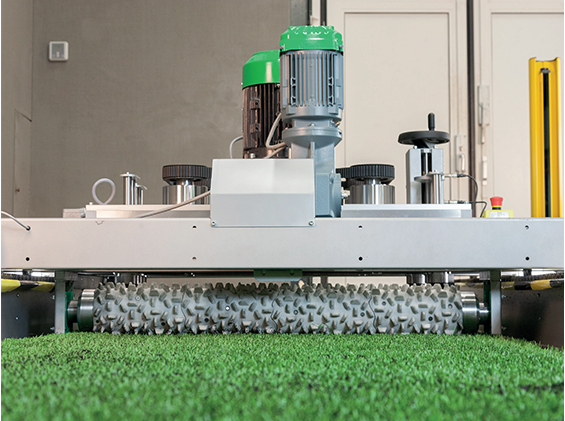
The Laboratory Car Wash Simulation Tester is a dedicated testing system designed for you to simulate automatic car wash tunnel conditions under controlled laboratory environments. By combining rotating brushes, programmable specimen movement, and spraying of cleaning media containing synthetic dirt, you can accurately evaluate the mechanical durability and surface appearance changes of automotive coatings, paint protection films, and plastic components after repeated wash cycles.
Application
You can use this tester for laboratory-scale simulation of automatic car wash processes, covering a wide range of automotive materials and surface systems, including:
(1) Wash-brush resistance testing of organic coatings used on complete vehicles and automotive components
(2) Scratch resistance and surface durability evaluation of automotive clear coats, base coats, and multi-layer coating systems
(3) Durability and appearance retention testing of paint protection films (PPF) under simulated car wash conditions
(4) Abrasion resistance testing of plastic exterior parts such as bumpers, trims, decorative strips, and covers
(5) Performance assessment of functional coatings applied to metal or plastic substrates
(6) R&D validation and quality control testing of surface materials exposed to simulated automatic car wash tunnel environments
Standards
The Laboratory Car Wash Simulation Tester is designed to meet or support the following international standards:
(1) ISO 20566:2021 (Paints and varnishes — Determination of resistance to washing using a laboratory-scale car wash)
(2) ISO 13076 (Paints and varnishes — Visual assessment of surface appearance)
(3) ISO 2813 (Paints and varnishes — Determination of gloss value)
(4) ISO 13803 (Paints and varnishes — Determination of haze on coating surfaces)
(5) ISO 7724 (Paints and varnishes — Color measurement and evaluation of color differences)
Parameters
| Item | Technical Specification |
|---|---|
| Overall Dimensions | Approx. W 3100 × D 950 × H 1800 mm |
| Equipment Weight | Approx. 450 kg |
| Main Structure Material | SUS 304 stainless steel |
| Test Ambient Temperature | 23 ± 3 ℃ |
| Test Ambient Humidity | 50 ± 5 %RH |
| Test Medium | Clean water + silicon dioxide |
| Medium Temperature | 15 – 30 ℃ |
| Brushing Direction | Clockwise / counter-clockwise |
| Brush Rotation Speed | 70 – 127 ± 5 rpm |
| Brushing Cycles | 1 – 999 cycles |
| Cleaning Liquid Capacity | 80 L |
| Specimen Thickness | 1.5 – 3.5 mm |
| Specimen Size | 155 × 305 mm (up to 4 specimens) or 310 × 610 mm (1 specimen) |
| Platform Travel Speed | 5.0 ± 0.2 m/min |
| Spray Nozzle Flow Rate | 2.2 ± 0.2 L/min |
| Spray Pressure | 300 ± 50 kPa |
| Power Supply | AC 220 V, 2.2 kW, 50 Hz |
Features
You benefit from a realistic simulation of automatic car wash tunnel conditions through synchronized brush rotation, specimen reciprocation, and cleaning liquid spraying.
The tester is designed in accordance with ISO 20566:2021, allowing you to set brush spacing, rotation speed, pressure, and movement parameters precisely.
Replaceable brush assemblies make maintenance easy while ensuring long-term test repeatability.
A high-stability servo-driven platform with dual limit protection ensures smooth, reliable, and safe operation.
The integrated cleaning liquid circulation and stirring system guarantees uniform test media composition, improving result consistency and accuracy.
Accessories
(1) Rotating brush assemblies
(2) Specimen holding fixtures
(3) Cleaning liquid tank with mixing system
(4) Spray nozzle assembly
(5) Control system and electrical cabinet
Test Procedures
(1) You prepare and mount the test specimens onto the specimen holder according to the required dimensions.
(2) You fill the tank with clean water and add the specified amount of synthetic dirt.
(3) You set brushing speed, brushing direction, platform speed, spray flow rate, and test cycles via the control system.
(4) You start the test, allowing the specimens to undergo repeated brushing and spraying under simulated car wash conditions.
(5) After completion, you remove the specimens for visual inspection and further evaluation such as gloss, haze, and color measurements.
Maintenance Information
You should clean the brush assemblies and liquid tank after each test to prevent contamination.
You are advised to regularly inspect brushes, spray nozzles, and moving parts for wear.
Periodic calibration of motion speed and spray parameters is recommended to maintain measurement accuracy.
Electrical and mechanical components should be inspected according to laboratory maintenance schedules.
FAQ
1. What is this product?
This product is a laboratory-scale tester designed for simulating automatic car wash tunnel conditions.
2. What is this product used for?
You use it to evaluate scratch resistance, abrasion resistance, and appearance changes of automotive coatings, films, and plastic parts after repeated wash cycles.
3. What is the working principle of this product?
The tester applies controlled mechanical stress through rotating brushes, specimen movement, and spraying of cleaning media, replicating real car wash processes in a laboratory environment.
4. Why is this product important?
It allows you to predict long-term surface durability and appearance performance before real vehicle exposure, reducing development risk and improving product quality.
5. Which industries is this product suitable for?
It is suitable for automotive OEMs, coating manufacturers, material suppliers, testing laboratories, and research institutions.
6. What types of this product are available?
The system can be configured for different specimen sizes, brush types, and test parameter ranges based on your specific testing requirements.
Leave Message Get Price