Shoelace Abrasion Tester
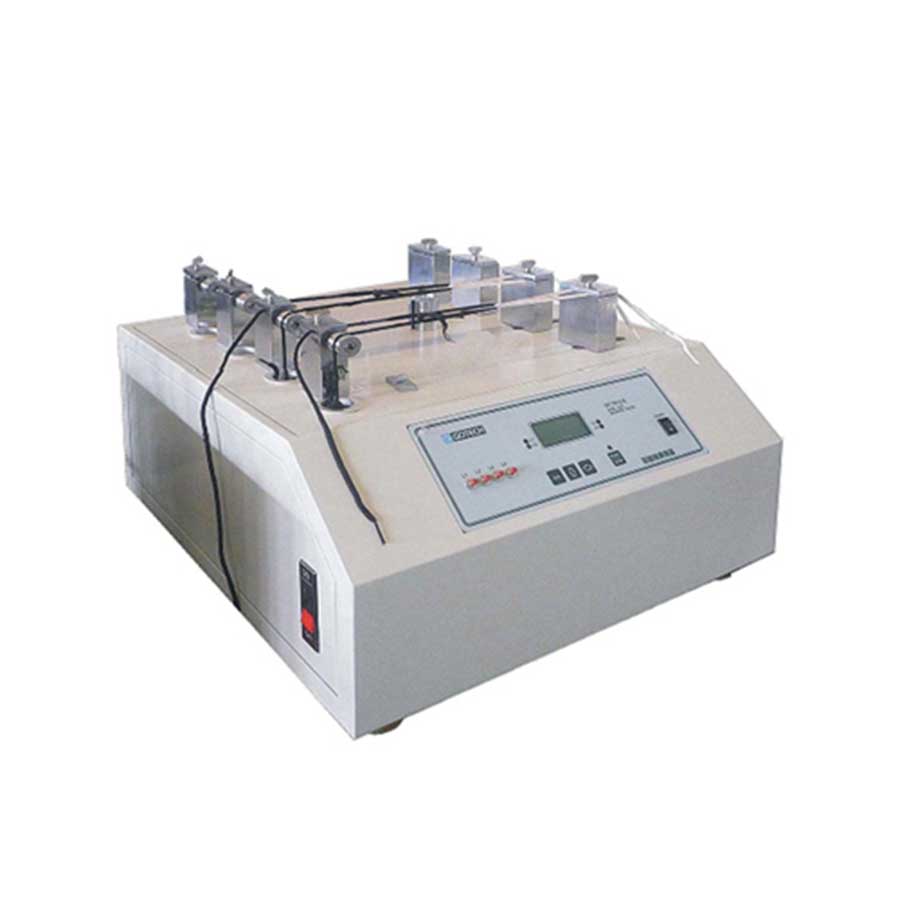


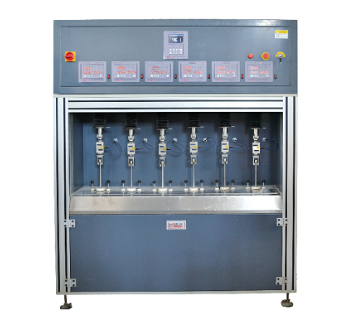
The Shoelace Abrasion Tester is designed to evaluate the wear resistance and durability of shoelaces and eyelets by simulating the friction and tension experienced during actual footwear use. It provides quantitative data such as the number of cycles to failure, enabling reliable quality control, research and development, and performance verification of footwear lacing systems. The tester ensures repeatable and objective results under realistic operational conditions.
Application
This tester is suitable for evaluating the abrasion resistance of shoelaces and eyelets in:
Athletic shoes: running shoes, basketball shoes, football shoes.
Casual shoes: sneakers, loafers, canvas shoes.
Work and safety footwear: industrial boots, steel-toe shoes with reinforced eyelets.
Children’s footwear: school shoes and sports shoes with frequent lacing.
Leather footwear: dress shoes with leather laces and metal eyelets.
Outdoor footwear: hiking boots, trekking shoes, and waterproof boots.
Footwear R&D: testing new shoelace materials, coatings, or eyelet designs.
Standards
The Shoelace Abrasion Tester complies with:
(1) SATRA TM93 — Footwear: Shoelace and Eyelet Abrasion Test
(2) DIN 4843 — German Standard for Footwear Component Abrasion
(3) QB/T 2226 — Chinese Standard for Shoelace and Eyelet Durability
(4) SATRA TM154 — Footwear Lacing System Durability Testing
(5) ISO 22774 — Textiles and Plastics: Shoelace Abrasion Testing
(6) EN ISO 20344 — Personal Protective Equipment — Footwear — Test Methods
(7) ASTM F2023 — Standard Test Method for Footwear Components
(8) BS 5131:3.6:1991 — British Standard for Footwear Lacing Components
Parameters
| Item | Specification |
|---|---|
| Test Positions | 6 |
| Weights | 455 g ± 5 g, 6 pcs |
| Test Speed | 100 ± 5 cycles per minute (cpm) |
| Stroke | 76 ± 2 mm |
| Standard Eyelet | Brass, inner diameter 4.5 mm |
| Fiberboard | 25 × 25 mm, inner diameter 5.0 ± 0.2 mm |
| Control Method | Touch-screen control |
| Counter | 0–999,999 cycles |
| Power Supply | Single-phase AC 220V, 50/60 Hz |
| Dimensions (W×D×H) | 57 × 58 × 1025 mm |
| Weight | Approx. 60 kg (excluding weights) |
Features
Evaluates durability and service life of shoelace-eyelet systems under realistic wear conditions.
Simulates actual friction and tension to ensure reliable and repeatable test results.
Six simultaneous test positions improve testing efficiency.
Provides objective, quantitative results for quality control and R&D purposes.
Accessories
(1) Standard weights (455 g × 6)
(2) Fiberboard with pre-mounted brass eyelets (6 pcs)
(3) User manual and calibration certificate
(4) Power cable
(5) Wrench for sample installation
Test Procedures
(1) Install the shoelace and eyelet on the provided fiberboard using the included wrench.
(2) Attach the fiberboard to one of the six test positions on the tester.
(3) Place the standard weights (455 g) on the respective test positions.
(4) Set the stroke and test speed on the touch-screen control panel.
(5) Start the machine; the tester will simulate repeated flexing and abrasion.
(6) The digital counter tracks the number of cycles until failure.
(7) Record and analyze results for durability assessment.
Maintenance Information
Clean the fiberboards, weights, and eyelets after each test to remove debris.
Inspect moving components and weights for wear or damage.
Calibrate the digital counter periodically to ensure accuracy.
Check electrical connections and touch-screen interface for proper operation.
Lubricate moving parts as necessary to maintain smooth operation.
FAQ
1. What is this product?
It is a Shoelace Abrasion Tester designed to measure the durability of shoelaces and eyelets under repeated friction and tension.
2. What is this product used for?
It evaluates abrasion resistance and predicts the service life of lacing systems in footwear.
3. Why is this product important?
It ensures reliable quality control, preventing premature failure of shoelaces or eyelets in footwear.
4. What industries is this product suitable for?
Footwear manufacturing, quality control labs, R&D departments, and material testing facilities.
5. What types of this product are available?
Six-position standard model with touch-screen control; optional customized versions can be supplied for specialized shoelace materials.
Leave Message Get Price