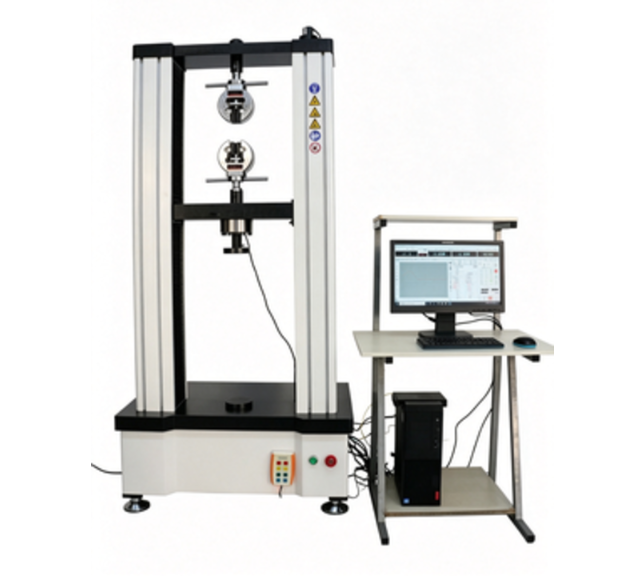
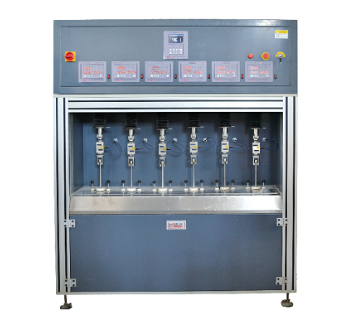
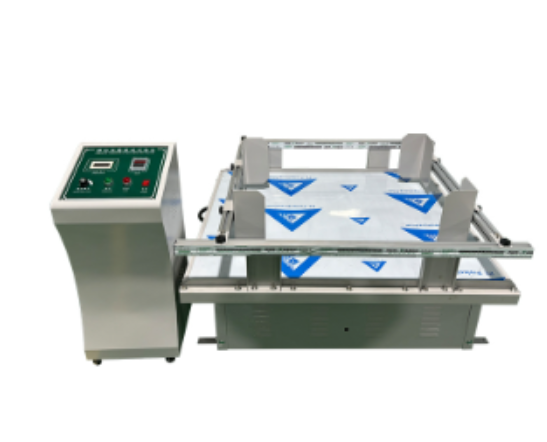
G034 Electronic Single Fiber Strength Tester



The G034 Electronic Single Fiber Strength Tester is designed for accurate measurement of mechanical properties of individual textile fibers under dry or wet conditions. The instrument evaluates breaking force, elongation, modulus, and related tensile parameters using a constant rate of extension (CRE) method. Fully computer-controlled operation ensures stable testing, simple setup, and reliable data acquisition. Test results can be stored without limitation or printed as standardized reports, making the system suitable for both research and quality control applications.
Application
The G034 Electronic Single Fiber Strength Tester is used for tensile testing of individual fibers in laboratory and production environments, including the following specific test objects:
Cotton single fibers
Wool single fibers
Silk fibers
Man-made fibers such as polyester, nylon, acrylic, and viscose
Dry-state and wet-state single fiber tensile testing
Comparative analysis of fiber batches
Evaluation of fiber processing quality and uniformity
Typical application scenarios include textile research institutes, fiber production plants, quality inspection laboratories, and educational institutions.
Standards
The instrument complies with and supports testing according to the following international and national standards:
(1) GB/T 9997 — Test Method for Tensile Properties of Single Fibers
(2) GB/T 4711 — Textile Fibers—Determination of Breaking Strength and Elongation
(3) GB/T 14337 — Chemical Fiber Tensile Test Methods
(4) ISO 5079 — Textile Fibers—Determination of Breaking Force and Elongation
(5) ASTM D3822 — Standard Test Method for Tensile Properties of Single Textile Fibers
Parameters
| Item | Technical Specification |
|---|---|
| Test Principle | Constant Rate of Extension (CRE) |
| Force Range | 1–200 cN (customizable) |
| Force Resolution | 0.01 cN |
| Force Accuracy | ±1% |
| Elongation Range | 0–130 mm (at 10 mm gauge length) |
| Elongation Resolution | 0.01 mm |
| Tensile Speed | 1–1000 mm/min |
| Speed Accuracy | ±2% |
| Gauge Length | 10–100 mm |
| Clamping Method | Pneumatic |
| Pneumatic Pressure | 0.4–0.5 MPa |
| Test Cycles per Batch | 1–99 |
| Data Output | Digital storage or printer output |
| Power Supply | AC 220 V ±10%, 50 Hz |
| Power Consumption | 0.1 kW |
| Compressed Air Supply | 0.5–0.8 MPa |
| Operating Temperature | 20 ±5 °C |
| Operating Humidity | <80% RH |
| Dimensions | 350 × 340 × 430 mm (L × W × H) |
Features
Full computer-controlled operation with intuitive software interface
Real-time display of force–elongation curves
High-resolution force and displacement measurement
Suitable for dry and wet single fiber testing
Wide testing speed and gauge length adjustment range
Stable pneumatic clamping ensures repeatable results
Unlimited data storage with report printing capability
Compact structure with low power consumption
Accessories
(1) Electronic single fiber strength tester main unit
(2) Pneumatic fiber clamps
(3) Computer control and analysis software
(4) Power cable
(5) User manual
(6) Calibration and quality documentation
Test Procedures
(1) Prepare and condition the fiber sample according to the selected test standard
(2) Set gauge length, tensile speed, and test parameters in the software
(3) Mount the single fiber using the pneumatic clamps
(4) Start the test and monitor the real-time force–elongation curve
(5) Allow the test to complete automatically at fiber break
(6) Save, analyze, or print the test results
Maintenance Information
Keep pneumatic system clean and ensure stable air pressure supply
Regularly calibrate force and displacement sensors
Clean clamps to prevent fiber slippage or contamination
Store the instrument in a dry environment when not in use
Perform routine inspection of cables, air lines, and moving components
FAQ
1. What is this product?
This product is a computer-controlled tester used to measure the tensile properties of individual textile fibers.
2. What is this product used for?
It is used to evaluate breaking strength, elongation, modulus, and tensile behavior of single fibers under dry or wet conditions.
3. Why is this product important?
Single fiber tensile properties directly affect yarn quality, fabric performance, and final textile product reliability.
4. What industries is this product suitable for?
It is suitable for textile manufacturing, fiber production, quality inspection, research institutes, and educational laboratories.
5. What types of this product are available?
Standard models are available with customizable force ranges and optional configurations based on specific testing requirements.
Leave Message Get Price