Electronic single fiber strength meter
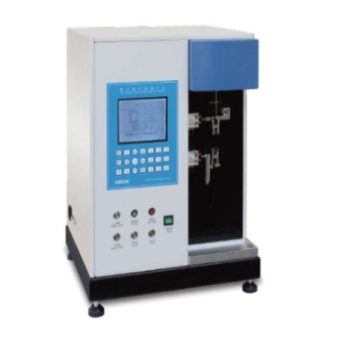


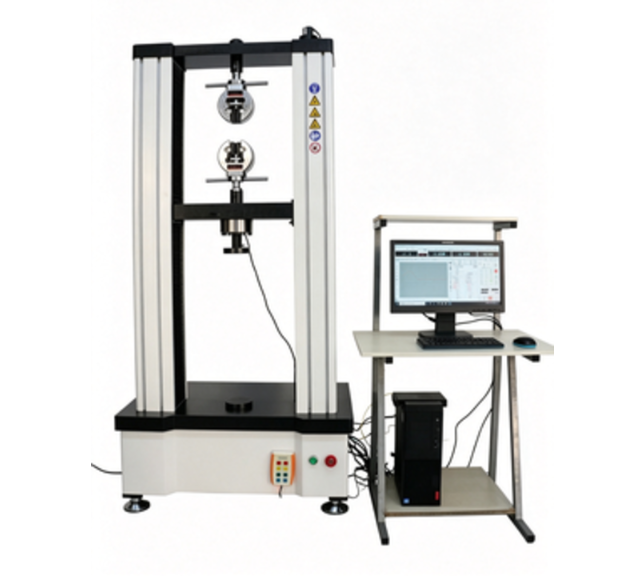
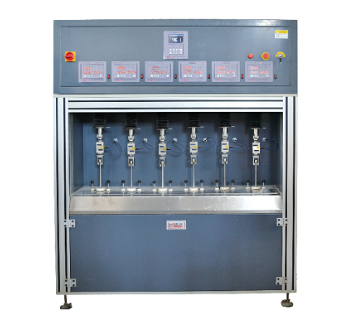
The Electronic Single Fiber Strength Meter is a precision instrument designed to measure mechanical properties of single fibers, including breaking strength, elongation, and modulus. It integrates high-precision pneumatic clamps, microcomputer control, and real-time data acquisition to provide accurate, repeatable, and reliable fiber testing for research, quality control, and textile manufacturing applications.
Application Scenarios
(1) Textile fiber R&D laboratories: testing cotton, wool, silk, synthetic fibers, and specialty fibers for mechanical properties
(2) Quality control in fiber production: assessing single fiber strength and elongation in cotton, wool, silk, polyester, nylon, aramid, and other specialty fibers
(3) Spinning and yarn production: determining fiber properties for carded slivers, roving, and yarn preparation
(4) Composite materials research: evaluating individual fiber strength for reinforcement materials, technical textiles, and fiber-reinforced composites
(5) Educational institutions: teaching fiber mechanical properties and demonstrating tensile testing principles
(6) Textile testing agencies and inspection bodies: standard-compliant verification of fiber strength, elongation, and modulus
(7) Comparative evaluation: assessing fibers from different suppliers, regions, or production batches for uniformity and quality
Compliance Standards
(1) GB/T 14337 — Single fiber strength determination
(2) GB/T 9997 — Cotton fiber testing
(3) GB/T 13835.5 — Wool fiber testing
(4) GB/T 21120 — Silk fiber testing
(5) ISO 5079 — Textile — Single fiber strength determination
(6) ISO 11566 — Wool fiber testing
(7) ASTM D3822 — Standard test method for tensile properties of single fibers
(8) BS 4029 — British single fiber testing standard
Key Features
(1) Microcomputer-controlled system with online communication capability
(2) High-precision, high-speed force measurement system for accurate data
(3) Patented pneumatic clamps providing constant clamping force to prevent fiber damage or slippage
(4) Low-noise and stable drive system with precision ball screws and stepper motors
(5) Direct USB connection for data transfer, report generation, graphics, and database management
(6) Large-screen LCD with Chinese interface and printer output for test reports and curves
(7) Memory function for storing up to 300 test data sets
(8) LED-lit operating area for better visibility and sample handling
Technical Parameters
| Parameter | Specification |
|---|---|
| Mode | Constant Rate of Elongation (CRE) |
| Clamping Method | Pneumatic clamping |
| Force Measurement Range | 0–200 cN |
| Resolution | 0.01 cN |
| Measurement Accuracy | ±0.5% |
| Gauge Length | 5–60 mm (digital setting) |
| Maximum Elongation | 130 mm |
| Tensile Speed | 2–100 mm/min (digital setting) |
| Test Modes | Constant speed tensile, Load at specified elongation, Elongation at specified load, Creep, Initial modulus |
| Data Output Methods | LCD display, printer output of test reports and tensile curves |
| Printer Type | 24-pin dot-matrix |
| Power Supply | AC 220V ±10%, 50 W |
| Dimensions (H×W×D) | 450 × 510 × 580 mm |
Product Advantages
High-precision tensile testing of single fibers for research, QC, and textile manufacturing
Accurate measurement of breaking strength, elongation, and modulus for cotton, wool, silk, synthetic, and specialty fibers
Programmable test modes and digital gauge settings for versatile testing
USB and printer output for reports, curves, and database management
Stable pneumatic clamping prevents fiber damage and ensures repeatable results
LED-lit operating area enhances sample handling and test visibility
FAQ
(1) What is the Electronic Single Fiber Strength Meter?
It is a precision instrument for measuring breaking strength, elongation, and modulus of single fibers.
(2) What is this equipment used for?
It is used for fiber quality assessment, research, spinning preparation, yarn production, and composite fiber evaluation.
(3) What types are available?
Standard CRE (Constant Rate of Elongation) single fiber strength meter; optional configurations for higher-speed testing or multi-fiber evaluation available.
(4) What industry problems can it solve?
Ensures fiber quality and uniformity, supports QC in fiber production, evaluates mechanical properties for R&D, and verifies compliance with textile standards.
(5) How is it operated?
Load a single fiber in pneumatic clamps, set gauge length and tensile speed, start the test; the system records force, elongation, modulus, and generates reports.
Leave Message Get Price