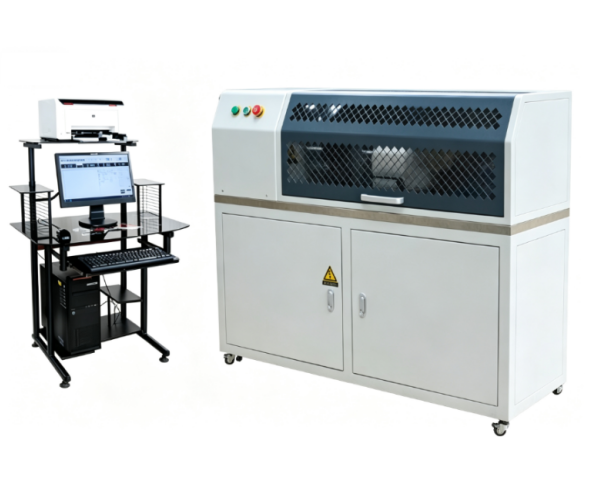
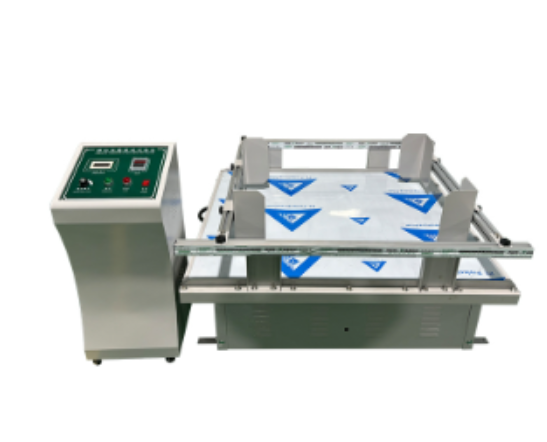
Rubbing alcohol testing equipment



Application
The Rubbing Alcohol Testing Equipment is designed to evaluate the surface resistance of mobile phones, keyboards, and other accessories to abrasion, wear, and chemical attack by alcohol. It is widely used in the plastics, electronics, wire, electrical appliance, and leather manufacturing industries. The equipment simulates repeated friction and rubbing to assess product durability, surface finish longevity, and resistance to everyday handling, including chemical exposure. It can perform alcohol abrasion, pencil eraser abrasion, and scratch testing.
Standards
UL 817: Safety requirements for electrical accessories and surface abrasion resistance
Other relevant international and industry standards for surface abrasion and chemical resistance testing
Technical Parameters
| Parameter | Specification |
|---|---|
| Test Load | 60–1000 g |
| Maximum Load | 5 kg |
| Test Stroke | 10–80 mm (adjustable) |
| Test Speed | 10–100 rpm/min (adjustable via knob) |
| Load Weights Included | 50 g, 80 g, 100 g, 200 g, 500 g |
| Machine Size (W×D×H) | 450 × 380 × 460 mm |
| Machine Weight | 25 kg |
| Power Source | 220 V, 50 Hz |
| Accessories | 2 Malaysia 7017R erasers |
Advantages
Multi-Functionality: Capable of performing alcohol abrasion, pencil eraser abrasion, and scratch tests with a single instrument.
Adjustable Testing Parameters: Test stroke, load, and speed can be freely adjusted to accommodate different product types and materials.
Precision Engineering: Japanese-origin ball drive and servo motor ensure smooth duplex movement and consistent friction.
User-Friendly Operation: Knob-controlled speed display and adjustable stroke make the setup and testing straightforward.
Wide Industry Use: Suitable for plastics, electronics, electrical appliances, and leather products, meeting both manufacturing and QC requirements.
Durable Design: High-quality construction ensures long-term stability and reliable test results.
FAQ
1. What is this tester and what does it measure?
This instrument (often called an alcohol‑abrasion tester or wear tester) is used to assess the abrasion resistance, surface durability and chemical‑mechanical stability of materials like plastics, coated surfaces, painted or printed finishes, keyboard housings, mobile phone shells, and other consumer‑electronic enclosures. It simulates repeated rubbing or friction (including with alcohol or erasers) to reveal how the surface resists wear, scuffing, delamination or coating degradation under real‑world handling or cleaning conditions.
2. Why is abrasion testing important, especially when alcohol or solvents are involved?
Abrasion resistance is crucial because surface coatings and finishes often face friction (touching, rubbing, cleaning) during their lifecycle. When alcohol or solvents are involved — as in cleaning, disinfection, or exposure to moisture/chemicals — the risk of surface damage or coating degradation increases. Testing under such conditions helps ensure long-term durability, appearance retention, and protection of underlying materials even after repeated exposure. This supports quality control, reliability, and user satisfaction, especially for products exposed to wearable or harsh environments.
3. What kinds of materials or surfaces are suitable for testing with this equipment?
Typical test subjects include plastics, painted or coated components, molded housings, printed surfaces or labels, rubber coatings, leather or synthetic leather trimmings, and other polymer-based or coated substrates. It’s especially relevant for consumer electronics, appliances, automotive interior parts, general plastic components, and other products where both abrasion and chemical resistance might matter.
4. What test conditions and parameters can be adjusted to match real‑world uses?
Modern alcohol‑abrasion testers allow adjustment of:
Load / pressure — to simulate light touch, normal handling, or heavy rubbing;
Stroke or rubbing distance — to mimic short rubs (wipe) or longer sliding/friction;
Speed / repetition frequency — from slow to high-frequency abrasion cycles;
Friction medium — e.g. soft cotton soaked in alcohol, erasers, or other materials to simulate different contact surfaces or cleaning methods;
Number of cycles — allowing long-term simulation of repeated use or cleaning.
Because of this flexibility, one can create test protocols close to actual use scenarios (e.g. repeated cleaning with alcohol, wiping, everyday handling).
5. How are the test results evaluated?
After the test cycles, the specimen surface is inspected for signs of wear — such as scratches, coating removal, discoloration, gloss reduction, delamination, or other degradation. In more rigorous protocols, quantitative metrics like mass loss, changes in coating thickness, color/optical property changes, or surface roughness may be measured. Visual inspection alone can be complemented by microscopy or spectroscopy to check for subtle damage.
6. What are the limitations or cautions when using such testers?
Because wear and abrasion tests can be influenced by parameters (load, friction medium, cycles), care must be taken when comparing results — strictly identical test conditions are required for meaningful comparisons. Also, when coatings are very hard or contain dense fillers, the abrasive medium (or friction head) may wear differently, or clog, affecting consistency. In some standards (like in coating abrasion tests), frequent maintenance or “refacing” of the abrasive wheel is needed to ensure consistent contact.
7. How does this test relate to standard abrasion/coating‑resistance tests used globally?
Although alcohol‑abrasion testers are more specialized (simulating chemical + mechanical wear), their function is analogous to standard abrasion tests such as ASTM D4060, which evaluates abrasion resistance of organic coatings under controlled, repeated abrasion cycles using weighted wheels.
Leave Message Get Price