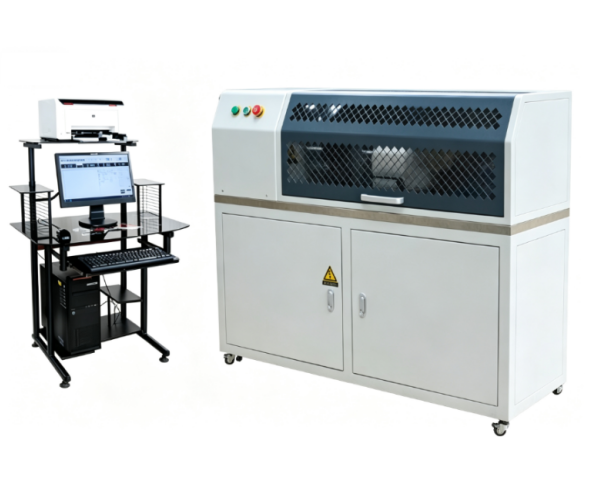
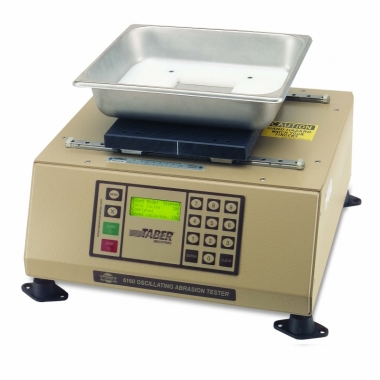
Taber oscillation and wear instrument


Application
The Taber Oscillation and Wear Instrument is designed to evaluate the abrasion resistance and transparency of various materials and coatings. It is widely used for:
Transparent materials, including glass and optical lenses
Organic coatings on plastics, metals, and other substrates
Comparison of reference lenses via the Bayer wear test
Simulating wear and tear under daily-use conditions using solid or liquid abrasive media
This instrument allows testing with a range of abrasives, such as quartz sand, alumina, emery, or glass beads. Liquid abrasive slurries can also be used for combined wear and corrosion tests. Adjustable oscillation stroke and speed provide flexibility for different test scenarios.
Standards
ASTM F735 – Standard Test Method for Abrasion Resistance of Transparent Plastics
ARCA AR-C STP 5.2.5 – Bayer Wear Test
Technical Parameters
| Parameter | Specification |
|---|---|
| Oscillation Stroke Length | 0.25 to 6 inches (user-adjustable) |
| Oscillation Speed | 100–200 cycles/min |
| Sample Exposure Height | ≤ 1 mm above fixture |
| Abrasive Media | Quartz sand, alumina, emery, glass beads |
| Liquid Slurry Compatibility | Yes, optional accessories required |
| Sample Fixture | Fixed bottom-mount fixture |
| Operation Mode | Reciprocating oscillation |
Product Advantages
Versatile Abrasion Testing: Suitable for dry and wet wear tests, including liquid abrasive slurries.
Precise Parameter Control: Adjustable stroke length and oscillation speed for reproducible testing conditions.
Wide Material Compatibility: Supports plastics, metals, coatings, glass, and lenses.
Simulated Real-Life Wear: Randomized abrasive motion mimics daily wear and tear for realistic results.
Bayer Lens Testing Capability: Optional accessories enable standardized comparison with reference lenses.
User-Friendly Operation: Simple sample mounting, clear exposure height control, and easy adjustment of abrasives.
Leave Message Get Price