Multifunctional Rapid Thermal Conductivity Meters


Introduction
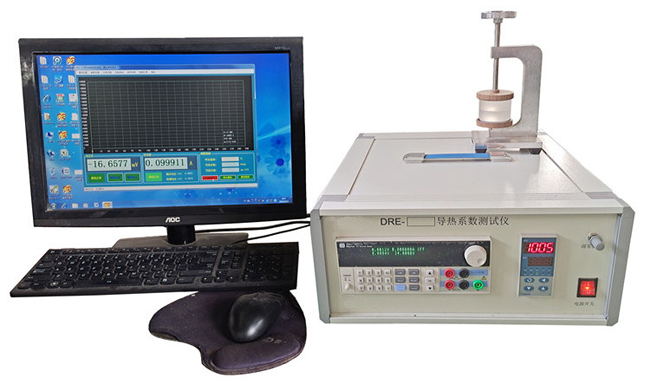
The multifunctional thermal conductivity tester adopts the Transient Plane Source (TPS) method, and is mainly used to measure the thermal conductivity, thermal diffusivity, specific heat capacity, thermal effusivity, and thermal resistance of materials such as solids, powders, coatings, thin films, and anisotropic materials.This instrument is based on TPS technology and uses a Hot Disk sensor as the probe for thermal conductivity measurement.
Advantages of the Hot Disk Method
(1) Direct measurement of heat transfer, significantly reducing testing time;
(2) Not affected by contact thermal resistance as in steady-state methods;
(3) No special sample preparation required—only relatively flat sample surfaces are needed.
Main Technical Specifications
(1) Thermal Conductivity Range:0.0010 – 300 W/(m·K);Resolution:0.0001 W/(m·K)
(2) Measurement Time:1 – 600 seconds
(3) Accuracy:Relative error:≤ 3%;Repeatability error:≤ 3%
(4) Temperature Range:Standard measurement:Room temperature;Optional configurations (at additional cost):Room temperature ~ 150°C (with constant temperature chamber),-40°C ~ 100°C (with high-low temperature chamber)
(5) Sample Size Requirements:Solid bulk samples: Not less than 30 × 30 × 7.5 mm;If a single layer is insufficient, multiple layers can be stacked for testing;Sample surfaces should be relatively flat;Powder and gel materials: Can be tested by direct probe insertion
(6) Reference Standards:ISO 22007-2008;GB/T 32064-2015 (Transient Plane Source method for thermal conductivity and diffusivity of building materials);DZ/T 0276.14-2015 (Geological and Mineral Industry Standard of China – Test methods for rock thermal conductivity);GB/T 11205-2009 (Determination of thermal conductivity of rubber – Transient hot wire method)
(7) Operation:Easy to operate with fast testing speed. Simply place the probe between two sample pieces and obtain thermal conductivity results through simple software operation.
(8) Power Supply:Voltage 220 V;Frequency 50 Hz;Power < 500 W
(9) Communication Interface:USB interface
Probe Technical Specifications
(1) Heating Material:Nickel
(2) Operating Temperature:-50°C to 150°C
(3) Maximum Power:20 W
(4) Maximum Voltage:20 V
(5) Maximum Current:1 A
(6) Resistance:Approximately 10 Ω (refer to the value marked on the probe)
(7) Nickel Wire Specifications:Thickness: 0.01 mm;Width: 0.35 ± 0.03 mm;Spacing: 0.35 ± 0.03 mm
(8) Protective Layer Material:Polyimide film (Kapton);Single layer thickness: 0.06 mm
(9) Probe Diameter:7.5 mm or 15 mm (optional)
(10) Total Probe Thickness (including bonding layer):0.07 ± 0.02 mm
Instrument Configuration
(1) Main testing unit: 1 set
(2) Test probe: 1 piece
(3) Testing software: 1 set
(4) Communication interface and data cable: 1 set
(5) Sample fixture: 1 piece
(6) Computer: 1 unit
(7) Optional: Constant temperature device (available at additional cost)
FAQ
1.What is a multifunctional thermal conductivity tester?
A multifunctional thermal conductivity tester is a device used to measure the thermal conductivity of various materials. It can assess the heat transfer capabilities of solids, liquids, and gases, making it essential for industries such as construction, manufacturing, and research. This tool provides accurate readings that help evaluate material performance under different thermal conditions.
2.How does a thermal conductivity tester work?
Thermal conductivity testers operate by applying a known heat flow through a sample material and measuring the temperature gradient across it. The device typically includes sensors to record the temperature change, allowing for the calculation of thermal conductivity using established formulas. This method ensures precise analysis, which is crucial for quality control and material selection.
3.What are the applications of multifunctional thermal conductivity testers?
Multifunctional thermal conductivity testers are utilized in various applications, including building material assessments, insulation effectiveness evaluation, and product development in electronics and textiles. They are also employed in research and development to analyze new materials for energy efficiency, fire resistance, and thermal insulation, contributing to advancements in multiple industries.
4.What types of materials can be tested?
These testers can analyze a wide range of materials, including metals, plastics, ceramics, composites, and even liquids. Depending on the tester's design, it may also assess thermal properties of materials at varying temperatures, providing a comprehensive understanding of how materials behave under different thermal environments.
5.What factors should I consider when purchasing a thermal conductivity tester?
When selecting a thermal conductivity tester, consider factors such as measurement range, accuracy, ease of use, and durability. Additionally, check if the tester can handle multiple material types and provides data logging features for analysis. It's also essential to evaluate customer support and warranty options, ensuring you invest in a reliable tool.
6.How can I ensure accurate measurements with my thermal conductivity tester?
To ensure accurate measurements, always calibrate the thermal conductivity tester according to the manufacturer's instructions. Maintain a consistent testing environment regarding temperature and humidity, and use properly prepared samples to minimize variables. Regular maintenance checks and following best practices for operation will also help in obtaining reliable results.
Leave Message Get Price