White Light Interferometer
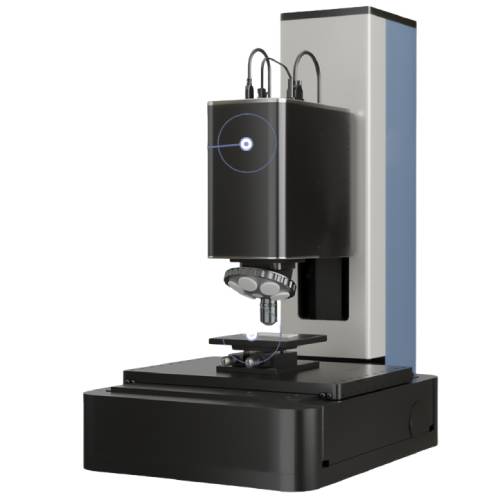


The White Light Interferometer is a non-contact optical surface measurement system designed for high-precision analysis of surface roughness, step height, thin film thickness, and three-dimensional topography. Featuring sub-nanometer vertical resolution, a fully automated precision stage, and white light interferometry combined with phase-shifting techniques, the system provides accurate and reliable surface characterization for a wide range of materials. Its cost-effective design and ease of operation make it suitable for both research and industrial quality control applications.
Application
The White Light Interferometer is widely used for non-contact surface topography and dimensional measurements across multiple industries and material types.
Typical application scenarios and tested products include:
Aerospace components: surface roughness and step height measurement
Automotive parts: coated surfaces and precision machined components
Biomedical materials: surface morphology of bio-materials and coatings
Optical and glass products: lenses, glass substrates, transparent materials
Semiconductor industry: thin films, wafers, and micro-structured surfaces
Polymer and coating materials: film thickness and surface texture analysis
Pharmaceutical products: coated tablets and functional surfaces
Display panels: surface flatness and micro-topography inspection
Standards
The White Light Interferometer supports surface measurement and analysis methods aligned with commonly adopted international standards, including but not limited to:
(1) ISO 25178 – Geometrical Product Specifications (GPS): Surface texture – Areal
(2) ISO 4287 – Surface texture: Profile method – Terms, definitions and parameters
(3) ISO 5436 – Measurement of surface roughness standards
(4) ISO 16610 – Filtration of surface texture data
Parameters
| Parameter | Specification |
|---|---|
| Measurement method | White Light Interferometry (WLI) |
| Vertical resolution | Sub-nanometer |
| Measurement mode | Non-contact optical measurement |
| Illumination source | Four-band LED (Red, Green, Blue, White) |
| Imaging capability | 2D and 3D surface topography |
| Stage type | Fully automatic high-precision stage |
| Stitching function | Automatic large-area image stitching |
| Microscope type | Fully automated optical microscope |
Features
Non-contact surface topography measurement with high vertical accuracy
Sub-nanometer vertical resolution for precise height and roughness analysis
White light interferometry combined with phase-shifting interferometry (PSI)
Four-band LED illumination to support multiple measurement modes
Fully automated optical microscope with easy operation
Automatic stage scanning and image stitching for large samples
Cost-effective design with high measurement accuracy
Accessories
(1) Fully automatic precision XY stage
(2) Four-band LED illumination module (Red, Green, Blue, White)
(3) Zoom imaging optics
(4) Integrated phase-shifting interferometry module
(5) Surface analysis and reporting software
Test Procedures
Place the sample on the precision stage and secure it properly.
Select the appropriate measurement mode, such as white light interferometry or phase-shifting interferometry.
Adjust the zoom optics and focus position according to sample characteristics.
Initiate automatic scanning to acquire surface data without physical contact.
Enable automatic stitching if large-area surface measurement is required.
Analyze roughness, step height, film thickness, and three-dimensional topography using the analysis software.
Maintenance Information
Keep optical components clean to ensure stable measurement accuracy.
Periodically check the calibration status of the precision stage.
Ensure the LED illumination system operates correctly across all wavelength bands.
Store the instrument in a clean, vibration-free environment when not in use.
Perform routine system inspections to maintain long-term measurement reliability.
FAQ
1. What types of measurements can the White Light Interferometer perform?
The White Light Interferometer is designed to measure surface roughness, step height, thin film thickness, and three-dimensional surface topography. Using non-contact white light interferometry, it generates both 2D and 3D surface images with sub-nanometer vertical resolution. This makes it suitable for analyzing a wide range of materials, including metals, coatings, polymers, glass, and semiconductor surfaces, without risking surface damage.
2. How does white light interferometry differ from contact-based surface measurement methods?
White light interferometry is a non-contact optical technique, meaning the surface is measured without physical contact. This eliminates the risk of scratching or deforming delicate samples. In addition, the method provides very high vertical resolution and accurate height measurement over a wide range. Compared with contact stylus methods, white light interferometry offers faster data acquisition, higher repeatability, and the ability to generate full three-dimensional surface maps.
3. What role does phase-shifting interferometry (PSI) play in the measurement process?
Phase-shifting interferometry is used to enhance measurement accuracy, particularly for smooth surfaces. By introducing controlled phase shifts during measurement, PSI enables precise calculation of surface height variations. Combined with white light interferometry, it allows the system to adapt to both smooth and relatively rough surfaces, ensuring accurate results across different sample conditions with minimal operator experience required.
4. Can large samples be measured using this system?
Yes. The White Light Interferometer is equipped with a fully automatic high-precision stage that supports large-area scanning. The automatic stitching function combines multiple scanned regions into a single continuous three-dimensional image. This capability allows efficient measurement of large samples or extended surface areas while maintaining high resolution and measurement accuracy.
Leave Message Get Price