Catheter Balloon Inflation Diameter Tester
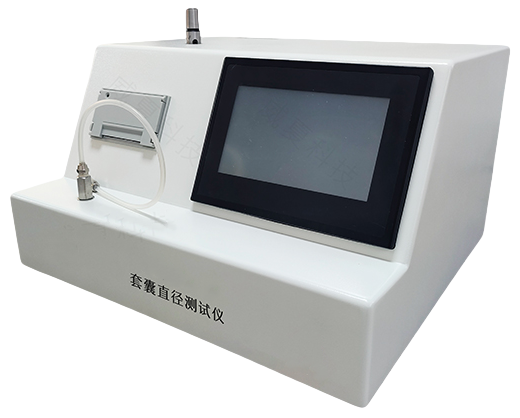


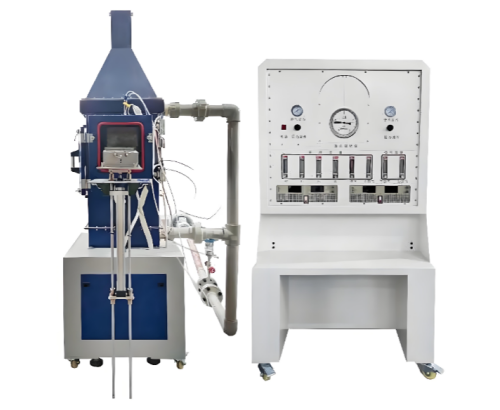
The Catheter Balloon Inflation Diameter Tester is a precision device widely used in the medical field, specifically designed to measure and test the diameter of endotracheal tube cuffs after inflation.
Applications
The catheter cuff inflated diameter tester is mainly used to measure the diameter of the cuffs of medical devices such as endotracheal tubes and tracheostomy tubes after inflation. This measurement is crucial for ensuring the safety and effectiveness of medical devices during use. By accurately measuring the inflated diameter of the cuff, it can help medical staff determine the appropriate amount of inflation. This aims to effectively seal the airway, prevent gas leakage and the aspiration of secretions into the airway, while also avoiding excessive pressure on the tracheal wall. In addition, this tester also helps to reduce complications such as tracheal mucosal injury, ischemia, and necrosis caused by excessive cuff pressure, improving the safety and effectiveness of endotracheal intubation.
Standards
ISO 5367:Medical devices — Connectors for breathing system tubes
YY 0337.1-2002: Endotracheal Intubation Part 1: Common Types of Endotracheal Tubes and Connectors
GB/T 15812.1-2005:Disposable sterile catheters — Part 1: General requirements
YY 0321.1-2009:Tracheostomy Tubes Part 1: Tracheostomy Tubes for Adults
YY/T 0321.2-2021:Tracheostomy Tubes Part 2: Tracheostomy Tubes for Pediatric Use
YY 0321.3-2009:Tracheostomy Tubes Part 3: Tracheostomy Tube Caps and Plugs
YY 0285.6:Disposable sterile intravascular catheters — Part 6: Central venous catheters
Technical Parameters
| Parameter | Specification |
|---|---|
| Testing Range | Usually covers a pressure range of 0 - 10 kPa (or 0 - 1.45 psi) to meet inflation requirements of different cuffs |
| Accuracy | High accuracy (e.g., 0.5%FS full-scale error) to ensure test result accuracy |
| Air Source Pressure | Generally does not exceed 0.7 MPa; air source needs to be provided by the user |
| Air Source Interface | Usually a Φ8 mm polyurethane tube, for easy connection to air source equipment |
| External Dimensions | Compact design for portability:- Main unit: ~300 mm(L)×410 mm(W)×150 mm(H)- Device: ~215 mm(L)×215 mm(W)×240 mm(H) |
| Weight | Moderate (about 25kg) for easy handling and operation |
| Testing Principle | Adopts positive-pressure testing principle: Inflates the cuff with air to stretch/unfold wrinkles (minimizing cuff wall tension), then measures the inflated diameter |
Accessoriess
Standard configuration: Main unit, hydraulic tank, miniature printer, customized connectors
Note: The air source interface of this machine is a Φ8 mm polyurethane tube; the air source must be provided by the user.
Features
Supports three test methods: balloon inflation diameter test, catheter collapse test, and balloon protrusion test.
• Embedded high-speed microcomputer chip control and a simple and efficient human-machine interface provide users with a comfortable and smooth operating experience.
• Equipped with a pressure test tank, capable of handling both gas and liquid, enabling various testing functions.
• Features a dedicated test interface, suitable for various Luer, barbed, and conical connectors.
• Equipped with branded pressure and flow control knobs for convenient operation.
• Overpressure safety protection and power-off memory ensure system stability during testing.
• Configured with a standard RS232 communication port for easy external connection and data transmission between the system and a computer.
• English and Chinese interfaces are freely switchable.
FAQ
1. What is the main purpose of the Catheter Balloon Inflation Diameter Tester?
The Catheter Balloon Inflation Diameter Tester is specifically designed to measure the inflated diameter of cuffs on medical devices such as endotracheal tubes and tracheostomy tubes. By accurately measuring the cuff diameter after inflation, the tester helps determine whether the inflation level is appropriate for clinical use. Proper measurement ensures effective airway sealing, prevents gas leakage and aspiration of secretions, and avoids excessive pressure on the tracheal wall. This makes the tester a critical tool for improving both the safety and effectiveness of endotracheal intubation procedures.
2. Why is measuring the inflated diameter of catheter balloons important in clinical practice?
Measuring the inflated diameter of catheter balloons is crucial because improper cuff inflation can lead to serious complications. Insufficient inflation may cause air leakage and allow secretions to enter the airway, while excessive inflation can exert high pressure on the tracheal wall. This excessive pressure may result in tracheal mucosal injury, ischemia, or even necrosis. By using this tester to accurately assess the cuff’s inflated diameter, medical staff can determine the appropriate inflation level, reduce the risk of complications, and improve overall patient safety during airway management.
3. What test methods are supported by this tester?
The Catheter Balloon Inflation Diameter Tester supports three testing methods: balloon inflation diameter testing, catheter collapse testing, and balloon protrusion testing. These test methods allow users to evaluate different aspects of catheter and cuff performance under controlled pressure conditions. The availability of multiple test modes makes the device suitable for comprehensive performance assessment of endotracheal and tracheostomy tube cuffs.
4. Which standards does the Catheter Balloon Inflation Diameter Tester comply with?
The tester is designed in accordance with several relevant medical device standards, including ISO 5367. YY 0337.1-2002. GB/T 15812.1-2005. YY 0321.1-2009. YY/T 0321.2-2021. YY 0321.3-2009. and YY 0285.6. These standards cover endotracheal tubes, tracheostomy tubes, connectors, and disposable sterile catheters, ensuring the tester is suitable for standardized evaluation of cuff-related medical devices.
5. How should I select a suitable catheter balloon inflation diameter tester?
Selection should consider tested product type, pressure range, fixture requirements, and applicable standards. QINSUN instruments are calibrated and tested before shipment to ensure measurement accuracy. For customized configurations, technical solutions, and customer application cases, please contact QINSUN engineers for professional guidance.
Leave Message Get Price