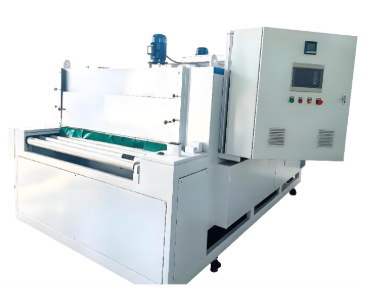
High Temperature Thermal Conductivity Tester
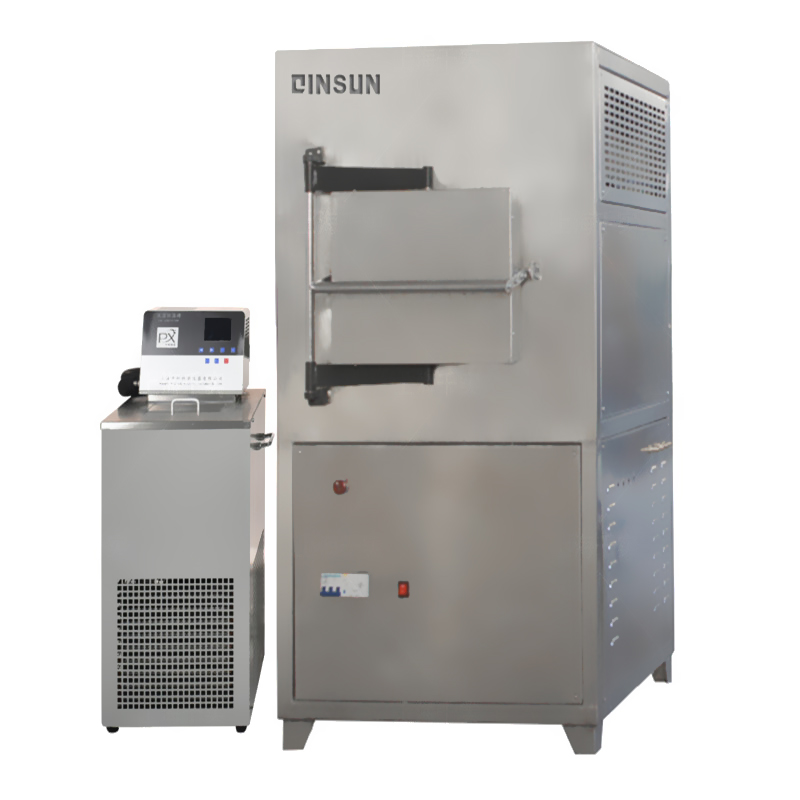


The flat plate thermal conductivity meter, with a water bath constant-temp device and computer-controlled measurements, tests thermal conductivity of homogeneous plate-shaped materials like plastics, rubber, etc. It can also measure granular, bulk, and soft materials. It's widely used by heat-resistant/insulation material makers, quality inspection departments, and research institutions.
Application
The tester is suitable for high-temperature thermal conductivity testing in multiple fields:
Refractory and Insulation Materials: Evaluates ceramic fiber, refractory bricks, insulation boards, and high-temperature insulation materials.
Textiles and Composite Materials: Measures thermal properties of heat-resistant fabrics and composite plates.
Building Materials: Assesses the thermal performance of boards, bricks, and other construction materials.
Research & Development: Supports development of new heat-resistant or insulating materials, as well as quality control of existing products.
The apparatus provides accurate, reliable measurements at temperatures ranging from 200°C to 1200°C, supporting both laboratory research and industrial quality control.
Standards
GB/T 17911-2006: Test methods for refractory ceramic fiber products.
YB/T 4130-2005: Water flow plate method for thermal conductivity of refractories.
ASTM C518: Standard Test Method for Steady-State Thermal Transmission Properties by Means of the Heat Flow Meter Apparatus
IS0 8301: Thermal Insulation — Determination of Steady-State Thermal Resistance and Related Properties — Heat Flow Meter Apparatus
DIN EN 12667: Thermal Performance of Building Materials and Products - Determination of Thermal Resistance by Means of Guarded Hot Plate and Heat Flow Meter Methods - Products of High and Medium Thermal Resistance
Product Advantages
High-Temperature Precision: Operates up to 1200°C with ±1°C accuracy.
Multi-Sample Testing: Simultaneously tests 1–4 specimens.
Automated Control: Fully automatic operation for stable heat flow measurement.
Wide Thermal Range: Covers 0.03–2.00 W/(m·K) for diverse materials.
Uniform Heating: Ensures temperature consistency in the sample chamber.
Product Features
Testing Principle: Based on Fourier’s one-dimensional steady-state heat conduction, measuring heat transfer via water calorimetry.
Key Components:
High-Temperature Furnace: Air-atmosphere heating up to 1200°C.
Calorimeter System: Central and shield flow meters (2.5–25 L/h).
Water Supply Unit: Maintains steady coolant flow (10–100 L/h).
Sample Preparation: Dried at 110°C±5°C or processed per material standards.
Technical Parameters
| Parameter | Specification |
|---|---|
| Operating Mode | Automatic |
| Temperature Range | 200°C–1200°C |
| Temperature Accuracy | ±1°C |
| Thermal Conductivity Range | 0.03–2.00 W/(m·K) |
| Specimen Size | 230mm × 230mm (Thickness: 40–100mm) |
| Flow Rate (Calorimeter) | 30–120 g/min |
| Power Supply | 380V, 50Hz |
| Dimensions | 900mm (L) × 900mm (W) × 1300mm (H) |
| Weight | 260kg |
Accessoriess
The main accessories of a flat plate thermal conductivity tester include: a test head assembly (containing a hot plate, a heat shield, and a cold plate), used to provide a heat source, maintain one-dimensional heat flow, and receive heat; a heating and temperature control system to ensure temperature stability; a cold plate and cooling system to maintain the temperature on the cold side; a temperature measurement and data acquisition module to accurately measure temperature and acquire data; a pressure regulation and clamping structure to fix the sample and adjust the contact pressure; a heat preservation and constant temperature environment device to reduce heat exchange; and a data acquisition and control system to achieve automated testing and data processing.
Maintenance Methods
Scientific Maintenance to Extend Equipment Lifespan
Daily Cleaning
External Cleaning: Wipe the instrument surface with a clean, soft cloth to prevent dust accumulation. Do not use corrosive cleaning agents to avoid damaging the casing.
Internal Cleaning: Internal cleaning (e.g., hot and cold plates) should be performed by qualified personnel to avoid damaging the sensor or circuitry.
Sensor Maintenance
Regularly inspect the PT100 temperature sensor to ensure its surface is clean and undamaged. Dirt or damage may cause measurement errors; replace it promptly.
Calibration and Verification
Regular Calibration: Use standard samples (such as reference materials with known thermal conductivity) for calibration to ensure measurement accuracy. It is recommended to calibrate every 6 months, or adjust according to usage frequency.
Online Dual Calibration: Some models support simultaneous calibration of temperature and system error, providing accuracy, speed, and convenience, improving calibration efficiency.
Electrical System Inspection
Regularly check the power cord, plug, socket, etc., for damage or aging; replace immediately if any abnormalities are found.
Ensure a stable power supply voltage (AC 220V±10%) to avoid voltage fluctuations affecting instrument performance.
FAQ
1. What types of materials can be tested with this tester?
The instrument is designed for homogeneous plate-shaped materials such as plastics, rubber, ceramics, and composite boards. It can also test granular, bulk, or soft materials by using suitable sample holders. The tester is particularly useful for refractory insulation, ceramic fiber boards, high-temperature textiles, and construction materials. Users should ensure that the sample thickness and size meet the instrument’s specification for accurate measurement.
2. What is the maximum temperature and thermal range of the tester?
The instrument can operate from 200°C up to 1200°C with an accuracy of ±1°C. The thermal conductivity measurement range is 0.03–2.00 W/(m·K), which covers low-conductivity insulators as well as moderately conductive materials. This makes it suitable for both high-performance heat insulation materials and industrial-grade ceramics or polymers. Users should verify that the material under test can withstand these temperatures without decomposition.
3. How does the tester measure thermal conductivity?
Thermal conductivity is measured using Fourier’s one-dimensional steady-state heat conduction principle. The hot plate provides a controlled heat flux, while the cold plate and calorimeter system record the heat passing through the sample. The instrument calculates thermal conductivity automatically using the measured temperature difference, sample thickness, and heat flux. This method ensures high accuracy, reproducibility, and compliance with international standards such as ASTM C518 and ISO 8301.
4. How many specimens can be tested simultaneously, and what are the requirements?
The instrument can test 1–4 specimens simultaneously depending on the setup. Each specimen must fit within the standard size of 230 mm × 230 mm with a thickness of 40–100 mm. The clamping system ensures uniform contact pressure across the sample. For accurate results, all specimens must be flat, uniform, and fully dried to avoid measurement errors caused by moisture or uneven thickness.
5. What sample preparation is required before testing?
Samples should be dried at 110°C ±5°C or prepared according to the material’s specific standards. For granular or soft materials, a compression or mold procedure may be necessary to form a uniform plate. The sample surfaces must be clean and free of debris, as dust or unevenness can alter heat transfer and introduce errors.
Leave Message Get Price