Coolant Pulsation Testing Machine
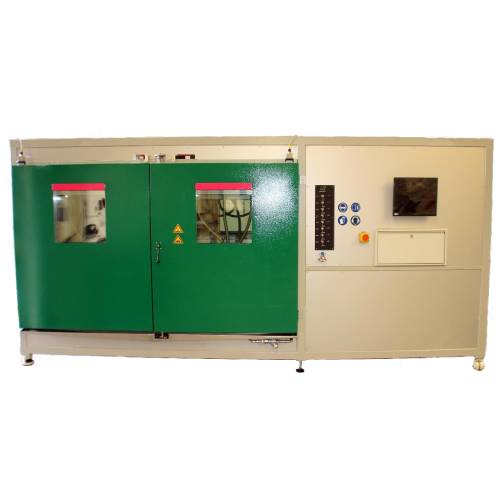


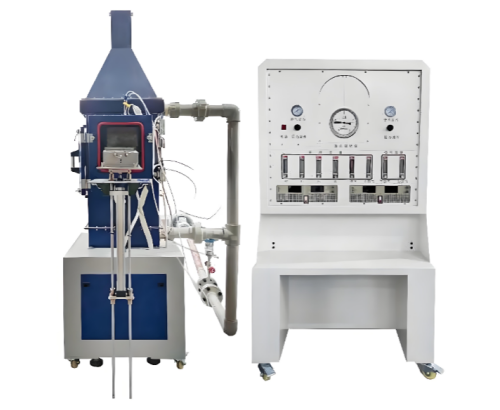
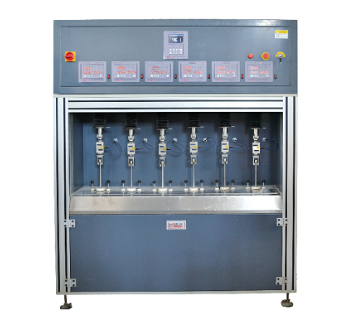
The Coolant Pulsation Testing Machine is a precision testing system designed to evaluate automotive cooling components under dynamic pressure conditions. You can use it to test radiators, rubber hoses, expansion tanks, and other cooling system parts for durability, leakage, and functional performance. The front-and-rear dual-door design allows easy installation and removal of samples, while the system automatically detects leaks and shuts down failed samples to ensure safe, reliable operation.
Application
The Coolant Pulsation Testing Machine is suitable for a wide range of automotive testing applications:
Radiator Testing: Evaluate structural integrity and leak resistance under pulsating pressure and thermal load.
Rubber Hose Testing: Test durability, pressure pulsation resistance, and functional lifespan of coolant hoses, including aramid-reinforced hoses.
Expansion Tank Testing: Verify thermal stability and mechanical durability under dynamic coolant flow.
Component Validation: Conduct system-level verification for cooling components before vehicle integration.
Automotive R&D: Support material selection, design optimization, and durability assessment of cooling systems.
Typical test products include radiators, coolant hoses, expansion tanks, thermoplastic and composite cooling system components.
Standards
The system supports compliance with major automotive industry standards:
TL 889 / TL 874 (4.4) – Volkswagen Group technical specification for cooling system materials and radiator functionality testing.
TL 52361 (6.1.1 / 6.1.2) – Volkswagen Group specification for coolant hoses (including aramid-reinforced) and functional performance (pressure pulsation and long-term static testing).
TL 52682 (6.11 / 6.12) – Volkswagen Group specification for glass-fiber reinforced PA66 used in cooling system components, including dynamic and static durability tests.
GMW15310 – General Motors global engineering standard for materials and component performance, including integrated vehicle/system testing.
GMW14322‑2016 (4.13) – GM global standard for environmental and durability testing with specific requirements.
GMW16288 – GM system-level durability and verification standard for cooling system components.
Parameters
| Parameter Category | Details |
|---|---|
| Equipment Dimensions | 4350 mm × 2520 mm × 2150 mm (W × H × D) |
| Environmental Chamber Dimensions | 1800 × 1000 × 1000 mm (W × H × D) |
| Rated Power | 60 kW |
| Test Medium | Glycol/Water |
| Pressure Range | 0…5 bar |
| Medium Flow Control | Up to approx. 100 l/min |
| Linear Motion Parameters | ±25 mm at 1 Hz ±12 mm at 5 Hz ±6 mm at 10 Hz ±2 mm at 20 Hz |
| Test Medium Temperature Range | -40°C … +150°C |
| Environmental Temperature Control | -40°C … +150°C |
| Test Channels | 8 |
Features
Pressure pulsation testing machine with linear and eccentric motion device.
Pressure range from 0.1 up to max. 5 bar.
Heating of the environmental chamber through monitoring and limiting maximum surface temperature.
Automatic leak detection and leak testing with automatic shutdown of failed samples.
Automatic return pump to prevent coolant leakage.
Windows/LabVIEW-based control unit with integrated data acquisition and recording.
Test Procedures
Ensure installation space allows safe operation and access to all test channels.
Connect the system to the 60 kW power supply and ensure environmental temperature control is set.
Fill the system with glycol/water test medium.
Install the radiator, hose, or expansion tank in the test chamber.
Close front and rear doors to seal the chamber.
Set the desired pressure range, linear motion parameters, and temperature profiles in the control unit.
Start the test program via Windows/LabVIEW interface.
Monitor pressure, motion, temperature, and leak sensors throughout the test.
Automatically shut down any failed or leaking samples.
After testing, safely drain the test medium and allow the chamber to cool before removing samples.
Maintenance Information
Regularly inspect the motion drive, pressure sensors, and leak detection units for wear or damage.
Check glycol/water circulation system for blockages or leaks before each test.
Calibrate sensors and temperature controllers periodically to maintain measurement accuracy.
Clean environmental chamber surfaces and doors to prevent corrosion.
Replace worn seals, gaskets, or insulation as necessary to ensure safe operation.
FAQ
Q1: What is a Coolant Pulsation Testing Machine?
A: A coolant pulsation testing machine is a device that simulates pressure fluctuations in real-world cooling systems. By applying controlled square or sine wave pressure pulses, it tests components like radiators, hoses, and water pumps for leakage, fatigue life, and durability under dynamic pressure conditions, particularly suited for closed-loop cooling systems (e.g., engine or battery cooling circuits).
Q2: How does coolant pulsation testing differ from standard pressure testing?
A: Standard pressure testing applies static high pressure to detect leaks, while pulsation testing uses high-frequency pressure fluctuations (e.g., 100kPa to 160kPa square wave cycles) to mimic real-world conditions. This reveals issues like material fatigue or interface loosening caused by repeated pressure changes, such as cracks or leaks in hoses under long-term pulsation.
Q3: How are pressure parameters set during testing?
A: Parameters are configured based on component design standards:
High-pressure segment: Set to the value specified in drawings (e.g., 160kPa).
Low-pressure segment: Typically 60%-70% of high pressure (e.g., 100kPa).
Pulsation frequency: Adjusted by component type (e.g., battery cooling hoses require 700 hours of continuous testing at up to 20Hz).
Ensure inlet/outlet temperature difference ≤3°C to avoid thermal stress interference.
Q4: Which components require validation via pulsation testing?
A: Key components include:
Radiators and hoses: Check for sealing and structural integrity under pressure fluctuations.
Water pumps: Verify durability of impellers and seals under dynamic pressure.
Battery cooling systems: Ensure no coolant leaks under high-pressure pulses to prevent battery short circuits.
EGR (Exhaust Gas Recirculation) lines: Test resistance to high-temperature pressure pulsation.
Q5: How is component compliance determined after testing?
A: Components must meet:
Leakage: No coolant leakage within 5 minutes (tested at specified pressure).
Structural integrity: No cracks, deformation, or loose connections.
Performance stability: Normal functionality post-test (e.g., water pump flow rate, radiator heat exchange efficiency).
Example: A battery cooling hose must withstand 652 hours of 100kPa-160kPa pulsation without leaks, with surface temperature ≤150°C to pass validation.
Leave Message Get Price