Multifunctional Rapid Thermal Conductivity Tester
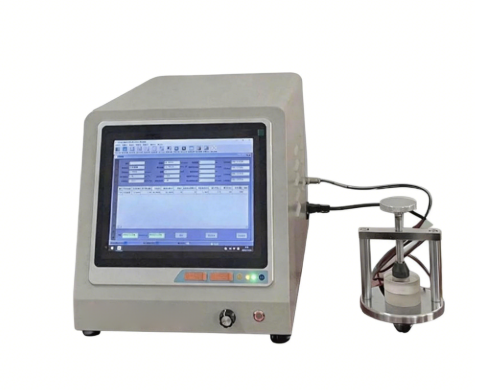


Multifunctional Rapid Thermal Conductivity Tester (Integrated Unit) is a high-precision instrument based on the Transient Plane Source (TPS) method, utilizing a Hot Disk probe. It measures thermal conductivity, thermal diffusivity, specific heat, heat storage coefficient, and thermal resistance of solid, powder, liquid, paste, coating, thin-film, insulation, and anisotropic materials.
The instrument provides rapid and accurate testing, avoiding contact resistance errors inherent in steady-state methods. Minimal sample preparation is required; solid materials only need a relatively flat surface. The tester supports various test protocols and mathematical models for different material types, offering broad applicability, fast testing, and reliable results.
Reference standards: ISO 22007-2:2015. GB/T 32064-2015.
Application
The tester is widely used for thermal characterization of:
Metals, alloys, and graphite
Thermal pastes, silicone, and rubber
Ceramics and composite ceramic materials
Polymers, paper, fabrics, foams, and insulation materials
Concrete, composite panels, and paper honeycomb structures
Anisotropic materials
Typical applications include:
Rapid thermal property testing in R&D and quality control laboratories
Characterization of high and low conductivity materials
Evaluation of thermal behavior in powders, pastes, liquids, coatings, and thin films
Thermal analysis of construction, aerospace, electronics, and insulation materials
Standards
ISO 22007-2:2015 – Determination of Thermal Conductivity and Thermal Diffusivity of Solids by Transient Plane Source (TPS) Technique
GB/T 32064-2015 – Thermal Conductivity Test Method Using Transient Plane Source (TPS) Technique
Parameters
| Item | Specification |
|---|---|
| Thermal conductivity range | 0.001–500 W/(m·K); resolution 0.0001 W/(m·K) |
| Thermal diffusivity range | 0.1–100 mm²/s |
| Heat storage coefficient | 0.1–30 W/(m²·K) |
| Specific heat | 0.1–5 kJ/(kg·°C) |
| Thermal resistance | 0.5–0.000005 mm²·K/W |
| Temperature measurement accuracy | ≤0.0001 °C |
| Measurement relative error | ≤3% |
| Repeatability error | ≤3% |
| Test duration | 1–120 seconds |
| Sample environment temperature | -40–150 °C (standard); optional -50–250 °C, vacuum environment available |
| Probe diameter | Standard Φ15 mm; optional Φ30 mm, Φ15 mm, Φ7.5 mm, Φ4 mm |
| Sample types | Solid blocks, powders, pastes, liquids, coatings, thin films, insulation materials, anisotropic materials |
| Automation | Full software-controlled measurement, parameter analysis, and report output |
| Power supply | AC 220 V ±10%, 50/60 Hz; total power <500 W |
| Form factor | Integrated compact unit, desktop installation |
Features
Rapid measurement: 1–120 seconds testing time saves significant laboratory time.
No contact resistance influence: TPS method avoids errors from contact resistance in steady-state methods.
Minimal sample preparation: Solid samples require only a relatively flat surface; powders, pastes, and liquids are easily accommodated with specialized test holders.
Versatile testing: Supports thin materials, high thermal conductivity (100–500 W/m·K), low conductivity insulation (0.010–0.050 W/m·K), and anisotropic materials.
Full automation: Software-controlled testing, data analysis, and report generation.
Compact design: Integrated unit saves space and allows easy installation.
Accessories
Main instrument
Analysis software (Chinese & English versions)
Two quartz reference samples
Accessory kit: paste, powder, and liquid test holders; sample fixture for solid materials
Test Procedures
Prepare the sample according to its state: solid, powder, paste, liquid, or thin film. Solid samples require a relatively flat surface.
Place the Hot Disk probe on or within the sample. Use the appropriate fixture for powders, pastes, or liquids.
Configure test parameters via the software, including probe diameter, temperature, and material type.
Start the test; the software records temperature changes over time.
Software calculates thermal conductivity, thermal diffusivity, specific heat, heat storage coefficient, and thermal resistance.
Review data and generate the report.
Maintenance Information
Keep the Hot Disk probe clean and free from residues.
Calibrate periodically using quartz reference samples.
Check the integrity of sample holders and fixtures before each test.
Maintain a stable laboratory environment to ensure measurement accuracy.
Store the instrument in a dry environment to protect electronic and thermal components.
FAQ
1. What types of materials can tester test?
The tester can test metals, alloys, graphite, thermal pastes, silicone, rubber, ceramics, polymers, paper, fabrics, foams, concrete, composite panels, honeycomb boards, powders, liquids, pastes, coatings, thin films, insulation materials, and anisotropic materials. The system adapts to various states using dedicated test holders.
2. How fast is the measurement process?
Measurements typically take 1–120 seconds, depending on sample type and probe configuration. This speed is achieved using the TPS method, which measures transient heat propagation, eliminating the lengthy stabilization times required in steady-state methods. The software automates the entire process from data acquisition to report generation.
3. Does tester require sample preparation?
For solid materials, only a relatively flat surface is needed. Powders, pastes, and liquids are placed into specialized sample holders. Thin films, high-conductivity materials, and insulation require specific mathematical models integrated into the software to ensure accurate results without extensive sample preparation.
4. Can tester operate under extreme temperatures or vacuum conditions?
Yes. The instrument can be optionally equipped with high- and low-temperature test chambers (-40–250 °C) and vacuum test modules. These options must be specified at the time of purchase and are subject to additional agreement and fees.
Leave Message Get Price