Thermal Conductivity Tester - Heat Flow Method
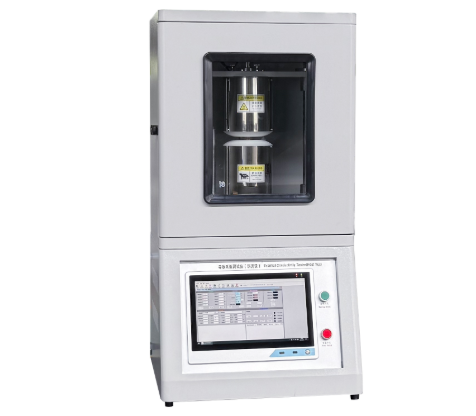


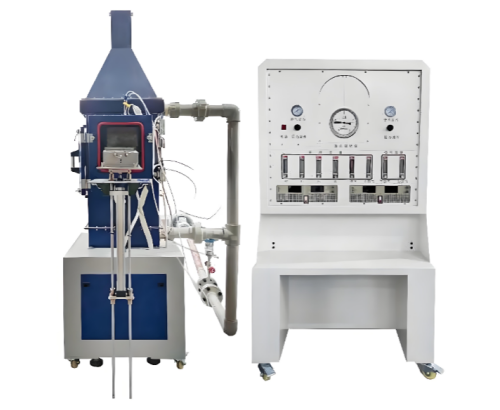
Thermal Conductivity Tester (Heat Flow Method) is a high-precision instrument designed for measuring the thermal resistance, thermal conductivity, and interface contact thermal resistance of thin heat conductors, solid electrical insulation materials, thermal grease, resins, rubber, beryllium oxide ceramics, and aluminum oxide ceramics. The device can test solid sheet materials directly, and with the use of a sample frame, it can also measure powdered and paste materials. The tester is designed and manufactured in full compliance with ASTM D5470-2017 standards and has benefited from over 20 years of production experience, ensuring reliability, mature performance, and high testing accuracy. The system features servo-controlled precise automatic pressing, automatic thickness measurement, 6-point temperature gradient detection, and computer-controlled fully automatic operation. The built-in thermal guard around the test rod reduces environmental temperature influence, allowing accurate measurements of thermal conductivity, thermal resistance, and interface contact thermal resistance under varying pressures and temperatures.
The instrument is widely used in universities, research institutions, quality inspection laboratories, and industrial production plants for material thermal property analysis.
Application
This tester is suitable for testing:
Thin heat conductors
Solid electrical insulation materials
Thermal greases, resins, and rubber
Beryllium oxide ceramics and aluminum oxide ceramics
Aluminum substrates, composite boards, and thermal pads
Typical applications include:
Academic research: Measurement of material thermal properties
Industrial quality control: Verifying thermal performance of production materials
R&D labs: Testing new thermal interface materials (TIMs)
Production sites: Monitoring and screening high-thermal-conductivity materials
Standards
The instrument complies with:
MIL-I-49456A – Insulating Sheet Material, Thermally Conductive Resin, Glass-Fiber Reinforced Thermal Materials
GB/T 5598-2015 – Method for Determining Thermal Conductivity of Beryllium Oxide Ceramics
GB/T 29313-2017 – Test Methods for Thermal Conductivity of Electrical Insulation Materials
ASTM D5470-2017 – Test Method for Thermal Transmission Properties of Thin Thermally Conductive Solid Electrical Insulation Materials
Parameters
| Item | Specification |
|---|---|
| Thermal conductivity range | 0.01–50 W/m·K (standard), 5–500 W/m·K (high conductivity mode, automatic software switching) |
| Thermal resistance range | 0.05–500 cm²·K/W |
| Sample size | Φ30 mm or 20×20 mm (standard); custom sizes: Φ15. Φ50. 25.4×25.4 mm |
| Sample thickness | 0.001–50 mm (standard); typical 0.02–20 mm |
| Hot plate temperature range | Room temperature–99.99 °C (standard); optional 299.9 °C or 500 °C |
| Cold plate temperature range | 0–99.99 °C; precision 0.01 °C (with high-precision low-temperature water bath) |
| Pressure range | 0–1000 N; servo motor controlled; precision 0.1 N |
| Thickness measurement range | 0–50 mm; resolution 0.001 mm; automatic |
| Sample quantity | 1 piece (single or stacked layers) |
| Measurement accuracy | Thermal conductivity/thermal resistance ≤3%; contact thermal resistance ≤5% |
| Test modes | Thermal resistance under varying pressures; material thermal conductivity; contact thermal resistance at different pressures; aluminum/composite boards; aging reliability tests; high-conductivity materials; compression performance tests |
| Automation | Computer-controlled fully automatic measurement and report output |
| Power supply | 220 V / 50 Hz; 1000 W |
Features
High-precision measurement of thermal conductivity, thermal resistance, and interface contact thermal resistance
Automatic servo-controlled pressing and thickness measurement
6-point temperature gradient detection enhances measurement accuracy
Built-in thermal guard reduces environmental temperature influence
Suitable for both solid sheets and powder/paste materials
Fully computer-controlled with data recording and printing
Compatible with high-conductivity materials measurement using optional modules
Accessories
Main instrument
Analysis software (Chinese & English versions)
HX-1008 precision low-temperature constant temperature water bath (temperature control ±0.01 °C)
Calibration reference samples (2 pieces)
Sample accessories set (thermal grease, paste, powder test boxes, stamping molds for sheet samples)
Test Procedures
Prepare the sample according to specified size and shape. Solid sheets or stacked layers can be used; powder/paste requires a sample frame.
Place the sample between the hot and cold plates.
Set desired hot and cold plate temperatures via software.
Apply pressure using the servo-controlled mechanism.
Start the measurement; the system automatically records temperature gradients and thickness.
Wait for measurement completion; the software calculates thermal conductivity, thermal resistance, and contact thermal resistance.
Save and print results as required.
Maintenance Information
Keep hot and cold plates clean and free of residue.
Calibrate regularly using reference samples.
Inspect heat guards and pressure mechanisms for proper operation.
Maintain stable laboratory temperature to ensure measurement consistency.
Ensure proper water bath operation for cold plate stability.
FAQ
1. What materials can tester measure?
This tester can measure thin heat conductors, solid electrical insulation materials, thermal greases, resins, rubber, beryllium oxide ceramics, aluminum oxide ceramics, aluminum substrates, and composite boards. It can also measure powders and pastes with the use of a sample frame.
2. How accurate is the measurement?
The thermal conductivity and thermal resistance measurements have an accuracy of ≤3%, while contact thermal resistance measurements have an accuracy of ≤5%. The use of 6-point temperature gradient detection and thermal guards ensures precise results even under varying pressures and environmental conditions.
3. Can this tester test high-conductivity materials?
Yes. This tester supports a high-conductivity mode ranging from 5–500 W/m·K. The computer software automatically switches between standard and high-conductivity modes. Optional modules can further enhance measurement capabilities for high-conductivity materials.
4. What types of samples can be used?
Solid sheets, stacked layers, powdered, and paste materials can all be tested. Sample frames are required for powders or pastes. Standard sample sizes are Φ30 mm or 20×20 mm, but custom sizes are available. Thickness ranges from 0.001–50 mm.
Leave Message Get Price