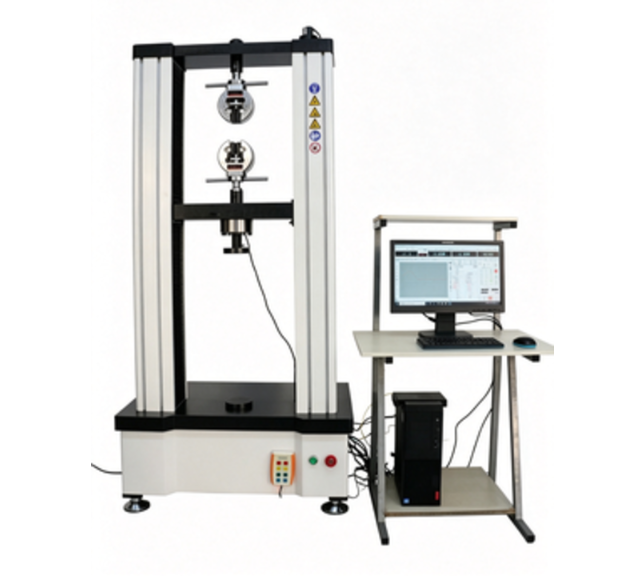
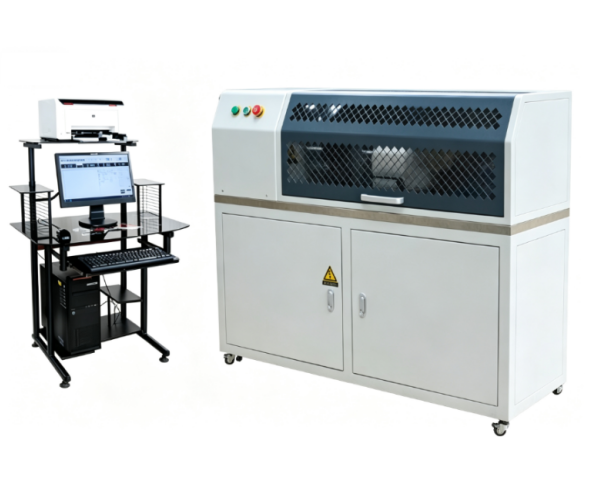
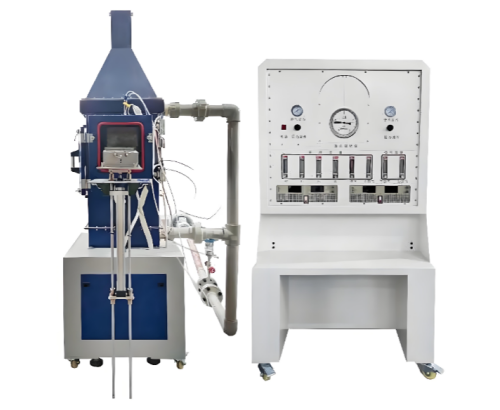
Transient Laser Flash Thermal Conductivity Tester
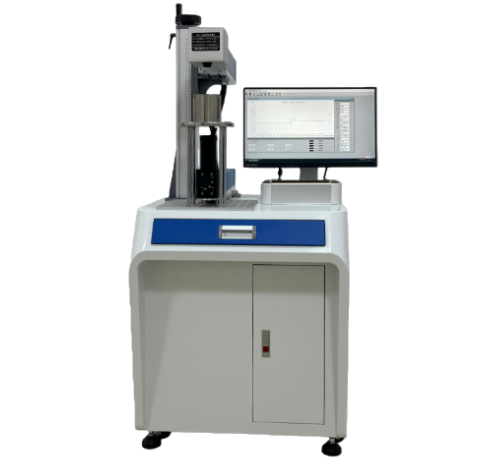


Transient Laser Flash Thermal Conductivity Tester is a high-precision instrument designed to measure thermal diffusivity and thermal conductivity of high-conductivity solid materials, such as metals, diamond, graphite, and other advanced materials. Based on the laser flash method, the instrument delivers a short, high-intensity energy pulse to the sample surface, causing a temperature rise on the rear surface. The time to reach half of the maximum rear-surface temperature (half-rise time) is recorded and processed by a dedicated mathematical model to calculate thermal diffusivity and thermal conductivity. The instrument offers rapid measurement, high accuracy, wide temperature applicability, and non-contact testing, making it indispensable for research, industrial quality control, and production monitoring.
Application
The tester is suitable for testing thermal properties of:
Metals, alloys, and advanced ceramics
Graphite, graphene, silicon carbide, diamond
Thermal interface materials and high-conductivity composites
Applications include:
Materials research in universities and institutes
Quality control in industrial production
R&D laboratories for advanced thermal management materials
Rapid thermal testing for both research and industrial applications
Standards
The instrument complies with the following international and national standards:
GB/T 22588-2008
Flash Method for Measuring Thermal Diffusivity or Thermal Conductivity of Materials
ASTM E1461-2022
Standard Test Method for Thermal Diffusivity of Solids by the Flash Method
GB/T 42919.4-2023
Plastics – Determination of Thermal Conductivity and Thermal Diffusivity – Part 4: Laser Flash Method
ISO 22007-4:2017
Plastics – Determination of Thermal Conductivity and Thermal Diffusivity – Part 4: Laser Flash Method
Parameters
| Item | Specification |
|---|---|
| Sample size | Ø12.5 × 0.5–5 mm; square 10 × 10 mm; thickness 1–5 mm |
| Thermal conductivity range | 0.1–2000 W/m·K |
| Thermal diffusivity range | 0.1–1000 mm²/s |
| Accuracy | Thermal diffusivity ±4%, Specific heat ±5% |
| Test temperature range | Room temperature; RT–200 °C, RT–300 °C, RT–500 °C (optional) |
| Temperature precision | ≤0.1 °C with high-temperature inert gas protection |
| Heating rate | ≥5 K/min |
| Repeatability | Deviation <±3% |
| Laser source | Max 15 J/pulse, pulse width 0.1–10 ms, continuous adjustment, software controlled |
| Laser spot | Adjustable |
| Detector | Infrared MCT-CT, air-cooled |
| Sampling frequency | Up to 200 kHz |
| Control system | PLC + Windows, fully automatic software for measurement, analysis, and report generation |
| Power supply | AC 220 V, 500 W |
Features
High-precision transient laser flash method for thermal diffusivity and conductivity
Non-contact testing, suitable for small samples
Rapid measurement, wide temperature range (room temperature to 500 °C)
Suitable for metals, ceramics, graphite, diamond, graphene, silicon carbide
Accurate data processing via dedicated mathematical models
Full automation: laser control, temperature control, data acquisition, calculation, and report generation
Optional high-temperature inert gas protection for reactive materials
Accessories
Main instrument
Analysis software package
Computer (e.g., Lenovo or user-specified)
Calibration reference samples (2 pieces)
Graphite spray (imported, 3 bottles)
Test Procedures
Prepare a flat, parallel sample with precise thickness measurement.
Apply graphite coating on transparent or semi-transparent samples, if necessary.
Place the sample in the copper sample holder and align it precisely with the laser and infrared detector.
Set laser pulse energy, pulse width, and temperature parameters via the control software.
Start the measurement sequence; the system automatically controls the laser pulse, temperature, and data acquisition.
Record the rear-surface temperature rise and compute half-rise time.
Use the software to calculate thermal diffusivity and thermal conductivity.
Review, store, and export the measurement report.
Maintenance Information
Keep laser optics clean and free from dust.
Ensure the sample holder and infrared detector are properly aligned.
Replace graphite spray bottles as needed for accurate absorption on transparent samples.
Maintain stable AC power supply and proper environmental conditions.
Perform regular calibration using reference samples to ensure measurement accuracy.
FAQ
1. What materials can the tester test?
The tester can measure thermal diffusivity and conductivity of metals, alloys, ceramics, graphite, graphene, silicon carbide, diamond, and other high-conductivity solids. It is particularly suitable for research and quality control in advanced thermal materials. Both small and thin samples can be measured, making it versatile for lab and industrial applications.
2. How does the laser flash method work?
The front surface of a thin sample is irradiated with a short, high-intensity laser pulse. The rear-surface temperature rises, and the time to reach half of the maximum temperature (half-rise time) is recorded. This data, combined with the sample thickness and density, is processed using a mathematical model to calculate thermal diffusivity and thermal conductivity. The method is fast, non-contact, and suitable for high-precision measurements.
3. What is the measurement accuracy and repeatability?
Thermal diffusivity can be measured with ±4% accuracy, and specific heat with ±5%. The repeatability between two consecutive measurements is <±3%. Temperature is controlled with ≤0.1 °C precision, ensuring reliable results for metals, ceramics, and high-conductivity materials.
4. Are there special requirements for sample preparation?
Yes. Samples must be flat and parallel, with precise thickness measurement as it directly affects calculations. Transparent or semi-transparent materials require a graphite coating for laser absorption. Any measurement error in thickness, density, or specific heat will propagate into the final thermal conductivity calculation, so careful sample preparation is essential.
Leave Message Get Price