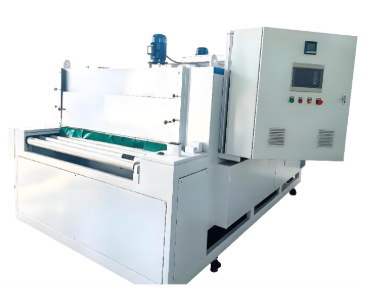
Photovoltaic Acid Mist Test Chamber
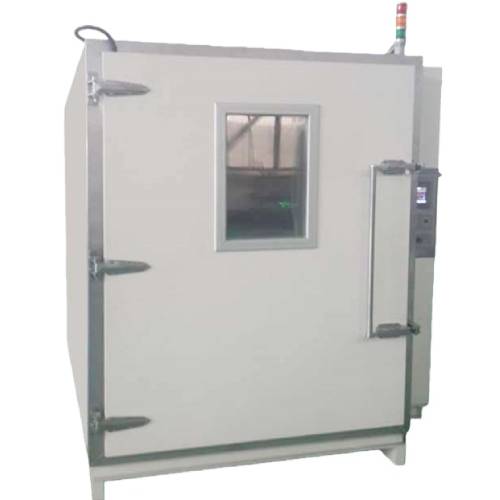


The Photovoltaic Acid Mist Test Chamber is a specialized environmental simulation system designed to replicate highly corrosive coastal and industrial atmospheres. By precisely controlling salt mist concentration, multi-gas concentrations, temperature, and humidity, this chamber accelerates the degradation process of photovoltaic materials. It allows you to evaluate the corrosion resistance and predict the operational lifespan of PV modules exposed to harsh, salt-laden, or chemically aggressive environments.
Applications
The Photovoltaic Acid Mist Test Chamber is a specialized device designed to simulate coastal environments with high salt fog concentrations, enabling the evaluation of photovoltaic modules' corrosion resistance. Its core function involves precisely controlling salt mist concentration, temperature, and humidity to accelerate material aging processes, thereby assessing product lifespan under harsh environmental conditions.
Standards
IEC 60068-2-42. IEC 60068-2-43. IEC 60068-2-60
GB/T 10125 Artificial Atmosphere Corrosion Tests - Salt Spray Test
ISO 9227 Corrosion Tests under Artificial Atmospheres - Salt Spray Test
ASTM B117 Laboratory Simulation of Salt Spray Environments (e.g., Marine or Humid Climates)
Features
1.Multi-Gas Synergy: Unlike standard salt spray boxes, this system allows you to introduce $H_2S$, $NO_2$, and $Cl_2$ simultaneously, providing a more realistic "industrial-marine" complex environment.
2.Large-Format Throughput: The internal architecture is optimized to hold six full-sized PV modules, ensuring your testing throughput meets industrial R&D demands.
3.High-Precision Flow Control: Equipped with advanced flowmeters (accuracy $<\pm 1\%$), giving you total confidence in the repeatability of gas concentration levels.
4.Corrosion-Resistant Build: The chamber interior is constructed from reinforced, high-temperature resistant plastics or specialized alloys to withstand acidic and saline exposure without self-corrosion.
5.Automated Cycle Management: You can program complex sequences of spraying, drying, and humidifying to simulate changing weather patterns over a single test period.
Parameters
| No. | Item | Specifications |
|---|---|---|
| 1 | Temperature Range | +10°C ~ +70°C |
| 2 | Humidity Range | 40% ~ 98% RH (adjustable) |
| 3 | Test Capacity | 6 pieces of 2m × 1.2m photovoltaic modules |
| 4 | Test Gases | Four gases: SiO₂ (Silicon Dioxide), H₂S (Hydrogen Sulfide), NO₂ (Nitrogen Dioxide), Cl₂ (Chlorine).Concentrations can be automatically adjusted according to standard requirements.Flow meter control accuracy: better than ±1% |
Accessories
1.Adjustable Sample Racks: Specialized holders designed to support heavy PV modules at the required angles.
2.Gas Concentration Monitoring System: Real-time sensors for toxic/corrosive gas levels.
3.Exhaust Gas Scrubber: An integrated neutralization unit to safely treat acid mists and gases before venting to the outside.
4.High-Precision Saltwater Reservoir: Includes automatic level monitoring and pre-heating capabilities.
5.Air Compressor Interface: High-stability pressure regulator for consistent mist atomization.
Test Procedures
1.Preparation
Sample Preparation: Clean the samples and secure them on the sample rack, ensuring they do not touch each other.
Solution Preparation: Prepare a 5% NaCl solution (pH 6.5-7.2) according to the standard.
2.Power-Up and Parameter Settings
Power Connection: Connect the power supply and turn on the main switch.
Parameter Settings:
Temperature: 35°C ± 2°C (salt spray phase) or 40–60°C (drying phase).
Humidity: 85% RH ±5%.
Test Cycle: Set the number of cycles and duration for spraying, drying, and humidification.
3. Test Operation
Start Test: After confirming parameters are correct, press the “Start” button.
Spray Inspection: Once temperature is reached, the spray system automatically activates. Observe spray uniformity.
Operational Monitoring:
Daily checks of temperature and spray volume.
Periodically replenish salt solution (recommended every 24 hours).
Monitor pressure gauge (0.7-1.5 kgf/cm²).
4. Test Conclusion
Shutdown Procedure: Turn off spray switch, allow temperature to drop below 40°C before disconnecting power.
Sample Removal: Retrieve specimens for corrosion assessment.
FAQ
1. Can I test different sizes of modules simultaneously?
Yes, provided the total area does not exceed the capacity and the modules do not shield one another from the mist. The adjustable racking system allows you to mix and match smaller modules with standard $2\text{m}$ panels.
2. What is the advantage of the $1\%$ flowmeter precision?
Corrosion rates are highly sensitive to gas concentration. A $\pm 1\%$ precision ensures that your test results are not only accurate but also reproducible in other labs, which is a key requirement for international certification.
3. Does the "Acid Mist" environment affect the electrical insulation test of the PV module?
Absolutely. One of the primary purposes of this test is to see if corrosive ions penetrate the junction box or backsheet. You should perform an insulation resistance (Wet Hi-Pot) test immediately after the chamber cycle to check for internal leakage paths.
4. How do you prevent salt spray from settling unevenly across the $6$ large modules?
The chamber utilizes a centralized tower atomization system or multiple distributed nozzles combined with an internal air-circulating fan. This ensures the mist remains in a state of uniform suspension, preventing "dead zones" where corrosion might be slower.
Leave Message Get Price