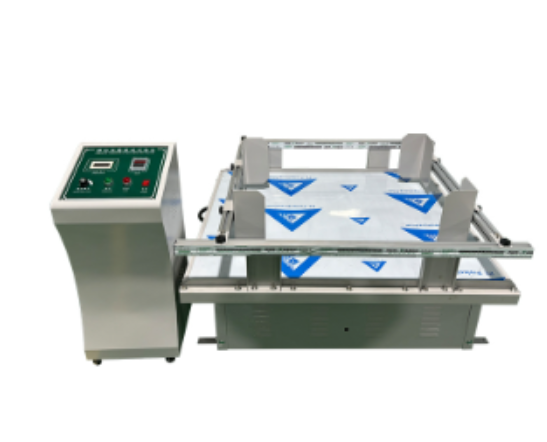
Large-Scale Composite Salt Spray Test Chamber
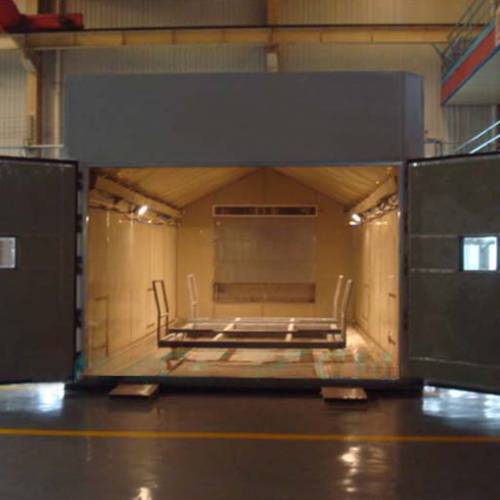


The Large-Scale Composite Salt Spray Test Chamber is a professional environmental simulation instrument designed to replicate complex corrosion conditions, including high-salt, high-humidity, and temperature-humidity cycles. You can use it to test full vehicles, large components, or batch samples for corrosion resistance, providing reliable data for product development, quality control, and durability verification in automotive, aerospace, and defense industries.
Applications
1. Automotive Industry
Testing the corrosion resistance of complete vehicles, bodies, chassis, and new energy vehicle battery packs in coastal and frigid regions is a critical validation step for export model development.
2. Aerospace and Defense
Evaluating the reliability of aircraft components and military equipment under high salt fog and extreme temperature/humidity conditions ensures service life.
3. Large Structural Components
Simulating harsh environments like chemical plants and marine atmospheres to validate long-term corrosion resistance for items such as corrosion-resistant pipelines, photovoltaic modules, and ship components.
Standards
GMW 14872 Simulating the Corrosion Resistance of Automotive Components in Alternating Salt Spray, Humidity, and Dry Environments
GJB 150.11A Salt Spray Testing for Military Equipment
GB/T 10125-2021 Artificial Atmosphere Corrosion Testing—Salt Spray Test
ASTM B117 Simulating Complex Corrosion Environments (Marine, Chemical, etc.) to Evaluate Material or Coating Corrosion Resistance
ISO 9227:2022 Corrosion tests under artificial climatic conditions—Salt spray test
ASTM G85 Standard Test Method for Modified Salt Spray Test
GB/T 2423.17 Salt spray test for electrical and electronic products
GB/T 2423.18 Combined salt spray test
Parameters
| Item | Specifications | Features |
|---|---|---|
| Working Chamber Dimensions | 10–18 m (L) × 3–5 m (W) × 3–4 m (H) | Customizable, suitable for whole vehicles or large components |
| Salt Spray Modes | Switchable between NSS/ASS/CASS modes | Meets different corrosion intensity requirements |
| Temperature Range | -40°C ~ 150°C (higher in some expanded models) | Supports combined temperature-humidity and salt spray tests |
| Salt Spray Settling Rate | 1–2 mL/80 cm²/h, digitally displayed and automatically adjustable | Complies with GB/T 10125. ASTM B117. and other standards |
| Safety Protection | Over-temperature protection, water shortage alarm, leakage protection | Prevents sample damage |
Features
1. Composite Environmental Simulation
2. Large-Scale Testing Capacity
3. High-Precision Control and Intelligent Operation
4. Corrosion-Resistant Structural Design
Accessories
Touchscreen programmable control panel
Salt spray generator and dosing system
Temperature and humidity sensors
Automated data logging and monitoring software
Sample racks, lifting platforms, and access doors
FAQ
1. What types of samples can be tested?
You can test full vehicles, vehicle bodies, battery packs, pipelines, photovoltaic modules, aircraft components, and other large-scale structures requiring corrosion evaluation.
2. How is the salt spray deposition rate controlled?
The chamber digitally controls the deposition rate at 1–2 mL/80 cm²/h, automatically adjusting for uniformity according to the selected test mode.
3. Can it perform multi-environment cyclic testing?
Yes, you can program alternating cycles of salt spray, high/low temperature, humidity, and drying/condensation sequences.
4. What safety features are included?
Over-temperature protection, low water alarm, leakage protection, and programmable alarms for abnormal operating conditions.
5. How large of a component can be tested?
Chambers are typically 10–18 m long, 3–5 m wide, and 3–4 m high, accommodating full-size vehicles or large structural components.
6. Can the chamber simulate coastal and industrial environments?
Yes, by combining NSS/ASS/CASS salt spray modes with temperature-humidity cycles, it replicates real-world marine, industrial, and polluted atmospheric conditions.
Leave Message Get Price