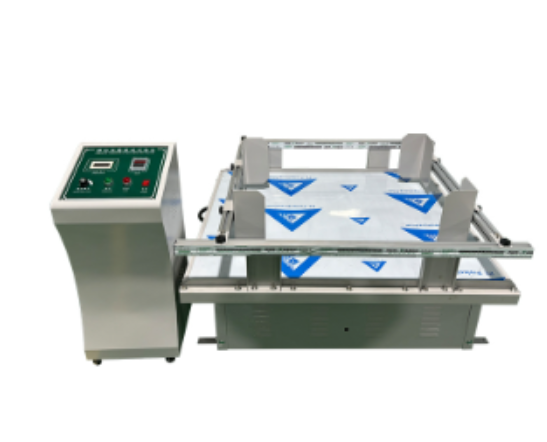
Seatbelt Test Dummy ECE R16
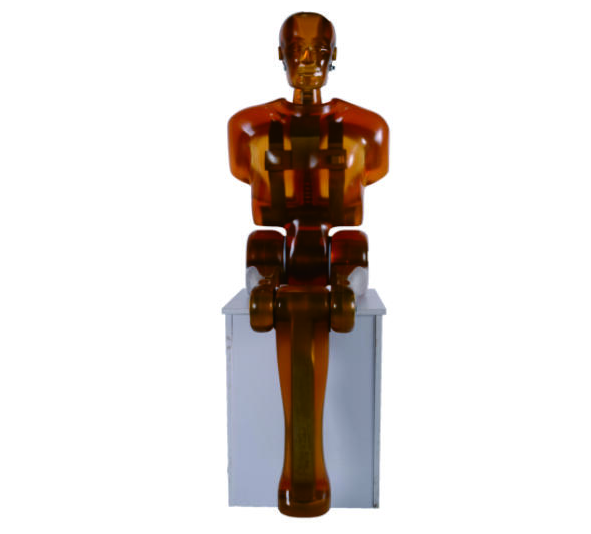


The ECE R16 crash test dummy is a professional anthropomorphic test device representing a 50th percentile adult male. You can use it for dynamic seatbelt testing, vehicle restraint system evaluation, and occupant injury analysis. Its design accurately reflects human mass distribution and body dimensions, making it compatible with test sleds, vehicle seats, and other restraint system loading devices. The dummy complies with GB 14166-2013 and ECE R16, enabling regulatory and certification testing.
Application
You can use this dummy in a variety of scenarios:
(1) Dynamic performance testing of automotive seatbelts;
(2) Vehicle seat restraint system development and validation;
(3) Front-impact crash simulation experiments;
(4) Optimization of seatbelt design and evaluation of occupant injury risk;
(5) Regulatory compliance testing according to GB 14166-2013 and ECE R16;
(6) High-repetition crash research and laboratory experiments;
(7) Supporting automotive safety certification and seatbelt R&D projects.
Standards
You can conduct tests using this dummy in accordance with the following standards:
(1) GB 14166-2013 — Motor Vehicle Occupant Restraint System Crash Test Dummy;
(2) ECE R16 — Uniform Provisions Concerning the Approval of Vehicles with Regard to Safety Belts;
(3) ISO 15830 — Road Vehicles — Side Impact Dummies for Restraint System Assessment;
(4) Additional applicable regional or NCAP requirements for safety belt testing.
Parameters
Body Dimensions
| No. | Parameter | Dimension (mm) |
|---|---|---|
| 1 | Head Width | 160 ± 5 |
| 2 | Shoulder Width | 465 ± 5 |
| 3 | Trunk Width at Hip | 120 ± 5 |
| 4 | Hip Width | 340 ± 5 |
| 5 | Knee Center to Foot Height | 510 ± 10 |
| 6 | Hip Center to Foot Height | 990 ± 10 |
| 7 | Upper Trunk Plane to Foot Height | 1470 ± 10 |
| 8 | Head Bolt Center to Foot Height | 1600 ± 10 |
| 9 | Head Top to Foot Height | 1750 ± 10 |
| 10 | T-Point Height | 720 ± 5 |
| 11 | P-Point Height | 320 ± 5 |
Mass Distribution
| No. | Component | Mass (kg) |
|---|---|---|
| 1 | Head Assembly | 4.0 ± 0.2 |
| 2 | Neck Assembly | 0.7 ± 0.1 |
| 3 | Torso Assembly | 29.7 ± 1.0 |
| 4 | Thigh Assembly (L/R) | 12.3 ± 0.3 |
| 5 | Lower Leg Assembly | 8.4 ± 0.3 |
| 6 | Hip Joint | 3.1 ± 0.1 |
| 7 | Knee Assembly | 1.1 ± 0.1 |
| 8 | Outer Cover + Chest Pad | 1.1 ± 0.1 |
| 9 | Total Weight (with calibration mass) | 75.5 ± 1.0 |
Sensor Configuration
| Location | Sensor Type | Channel |
|---|---|---|
| Chest | Wire Pull Displacement Sensor | 1 |
| Pelvis | Wire Pull Displacement Sensor | 2 |
Features
(1) Accurately represents a 50th percentile adult male in terms of mass distribution and dimensions.
(2) Modular construction allows you to replace thighs, lower legs, and torso components.
(3) Eliminates forearms while retaining single lower legs for dedicated seatbelt testing.
(4) Soft chest pad enhances realistic seatbelt load simulation.
(5) Fully compliant with GB 14166-2013 and ECE R16, supporting certification tests.
(6) Metal skeleton with polyurethane covering ensures strength, durability, and realistic biomechanical response.
Maintenance Information
(1) Store the dummy in a clean, dry environment to prevent corrosion or material degradation.
(2) Regularly inspect the metal skeleton and polyurethane covering for cracks or deformation.
(3) Periodically calibrate sensors following manufacturer guidelines.
(4) Immediately replace worn or damaged components to ensure testing accuracy.
(5) Keep assembly and mounting instructions accessible to ensure consistent setup.
FAQ
(1) What is this product?
You can consider this dummy a 50th percentile male anthropomorphic test device designed specifically for dynamic seatbelt testing and occupant restraint evaluation. It simulates human mass, body shape, and biomechanical response during crash or sled testing.
(2) What is this product used for?
You use it to assess seatbelt performance, validate vehicle restraint systems, optimize seatbelt design, and evaluate occupant injury risk in dynamic crash conditions. It is also used to meet regulatory requirements for GB 14166-2013 and ECE R16.
(3) How does this product work?
The dummy’s metal skeleton represents bones, while the polyurethane covering simulates soft tissue. During testing, you record displacement at the chest and pelvis with wire pull sensors, which allows you to analyze seatbelt tension, occupant motion, and potential injury metrics.
(4) Why is this product important?
Using this dummy enables you to safely and repeatedly evaluate seatbelt systems without risking human injury. It ensures regulatory compliance, supports vehicle and seat design improvements, and provides reliable, reproducible data for research or certification.
(5) Which industries is this product suitable for?
It is suitable for automotive manufacturers, seat and seatbelt developers, certification laboratories, and research institutions. It can also be used in academic crash research and high-repetition dynamic testing where accurate human surrogate data is required.
Leave Message Get Price