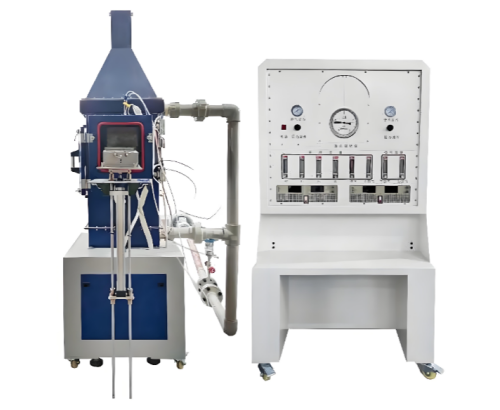
Fabric Water Vapor Transmission Tester
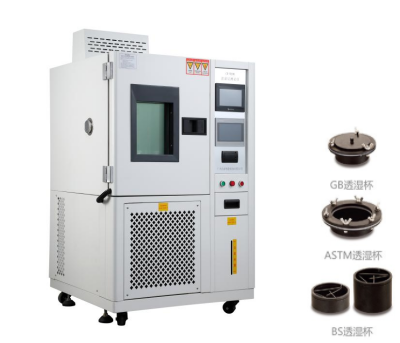


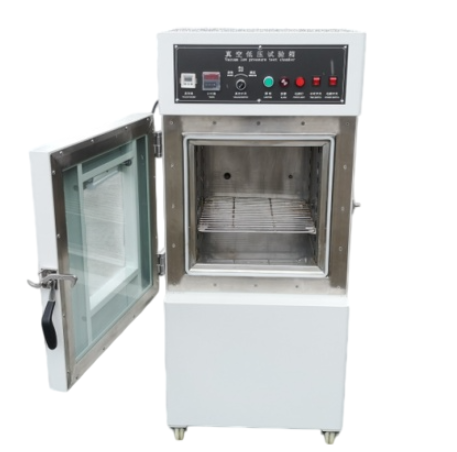
The Fabric Water Vapor Transmission Tester is designed to measure the moisture permeability of various fabrics, including medical protective clothing, outdoor jackets, breathable coated fabrics, and nonwoven garment materials such as wadding and space cotton. The instrument evaluates the fabric’s breathability by determining the amount of water vapor passing through the material under controlled temperature and humidity conditions.
Application
The tester is suitable for:
Medical protective garments and surgical apparel
Outdoor and sportswear jackets
Breathable coated fabrics and membranes
Nonwoven garment materials such as wadding, padding, and space cotton
Evaluation of fabric comfort, breathability, and protective performance in clothing and technical textiles
Standards
The Fabric Water Vapor Transmission Tester complies with national and international standards:
(1) YY 0506 – Surgical sheets, gowns, and cleanroom clothing for patients and healthcare personnel (China)
(2) GB 19082-2009 – Technical requirements for medical disposable protective clothing (China)
(3) GB/T 12704 – Test method for water vapor transmission of fabrics – Cup method, A-type, absorption (China)
(4) ASTM E96-00 – Standard test methods for water vapor transmission of materials (USA)
(5) JIS L 1099 – Method for determining water vapor permeability of textiles, cup method A1, absorption (Japan)
(6) BS 7209 – Textiles – Method for determination of water vapor transmission (UK)
(7) ISO 11092 – Textiles – Measurement of thermal and water-vapor resistance under steady-state conditions (International)
Parameters
| Parameter | Specification |
|---|---|
| Sample chamber temperature | -20 ~ 100 °C, resolution 0.1 °C |
| Temperature control accuracy | ±0.5 °C |
| Sample chamber humidity | 20% RH ~ 98% RH |
| Humidity control accuracy | ±2% RH (within 90% RH) |
| Humidification capacity | ≥ 300 ml/h |
| Sample chamber heating power | 0.6 kW |
| Drying chamber heating power | 1.8 kW |
| Drying chamber temperature | Room temperature ~ 199 °C |
| Test duration | 1 ~ 999 h 59 min |
| Airflow speed | 0.02 ~ 1.5 m/s, adjustable (displayed on LCD) |
| Standard cups | 6 pcs national standard cups (diameter 60 mm), 1 rotating rack |
| Optional cups | ASTM E96 (diameter 70 mm) or other customized cups |
| Power supply | AC 220 V, 50 Hz |
Features
Color touch screen with Chinese/English interface and intuitive human-machine interaction
High-precision temperature and humidity sensors with PID control for minimal fluctuation
Calibration function for temperature and humidity to prevent sensor drift over long-term use
PLC control with modular design; real-time display of temperature, humidity, and timing
Automatic calculation of WVT (g/(h·m²)), WVP (g/(h·mmHg·m²)), PV, and g·cm/(h·mmHg·m²)
Records temperature and humidity curves; supports large-scale data processing, reporting, and printing
Compatible with multiple standards and measurement methods, including customized setups
Accessories
(1) Main unit – 1 pc
(2) Standard water vapor cups – 6 pcs (national standard)
(3) Rotating cup rack – 1 pc
(4) Product certificate – 1 pc
(5) User manual – 1 pc
(6) Delivery note – 1 pc
(7) Acceptance form – 1 pc
(8) Product brochure – 1 pc
Maintenance Information
Clean sample cups and rotating racks after each test.
Inspect humidity and temperature sensors periodically.
Replace or service the heating and airflow systems if efficiency decreases.
Verify calibration using reference standards regularly.
Avoid placing the instrument in humid or corrosive environments for prolonged periods.
FAQ
What is this product?
A precision instrument for measuring fabric water vapor transmission.
What is it used for?
To evaluate breathability and moisture permeability of textiles and nonwoven materials.
Why is it important?
Ensures comfort, protective performance, and compliance with international standards.
Which industries is it suitable for?
Medical textiles, sportswear, technical textiles, and research laboratories.
What types of materials can be tested?
Fabrics, coated textiles, wadding, padding, space cotton, and nonwoven garment materials.
Leave Message Get Price