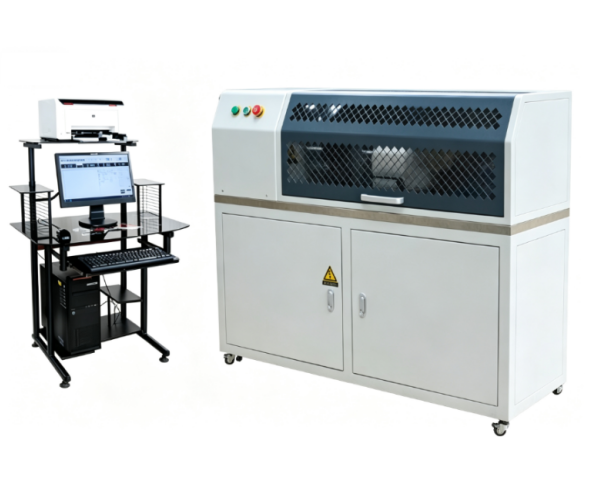
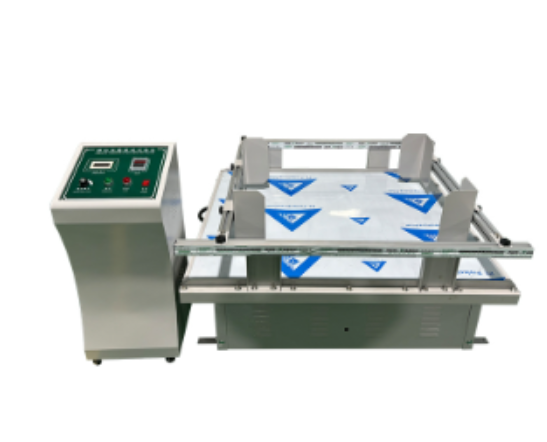
Automotive Wire Sand Belt Abrasion Tester
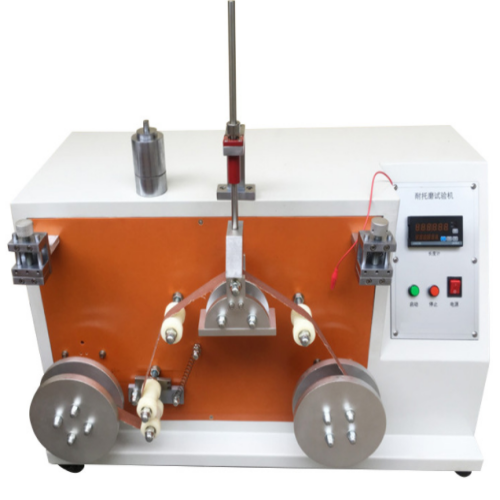


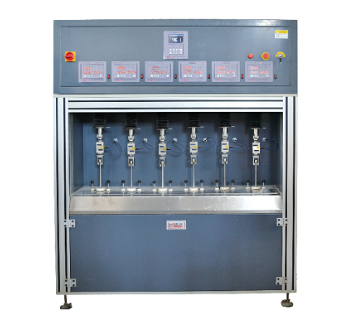
The Automotive Wire Sand Belt Abrasion Tester is designed to evaluate the abrasion resistance of automotive wires and cables. It simulates mechanical wear conditions under controlled load and movement, ensuring that the insulation and outer sheath can withstand operational stress and mechanical friction. The instrument delivers accurate and repeatable results through precise control of sand belt speed, applied load, and abrasion angle.
Application
This tester is suitable for:
Automotive wire and cable insulation testing for durability verification
Wiring harness manufacturing quality control
R&D of automotive wire insulation materials
Laboratory testing for compliance with automotive standards
Evaluation of resistance to mechanical wear for small-diameter wires
Standards
The instrument conforms to the following standards:
(1) QC/T 730-2005 — Automotive wire mechanical properties test
(2) SAE J1128-2005 — Standard for low-voltage automotive wires
(3) DIN 72551 — Test methods for electrical wires
(4) ISO 6722 — Road vehicles — low voltage cables
(5) JASO D618 — Japanese Automotive Standard for wire insulation durability
Parameters
| Item | Specification |
|---|---|
| Applicable wire diameter | < 15 mm |
| Sand belt length counter | 0–999,999 mm |
| Sand belt speed | 1500 mm/min |
| Sand belt support radius | 3.5 mm |
| Test voltage | 24 V |
| Applied load | 20 g / 50 g / 100 g / 200 g (2 pcs) / 500 g / 900 g / 1000 g |
| Load holder weight | 65 g (0.63 N ± 0.05 N) |
| Sand belt and sample angle | 29° |
| Conductive strip width | 10 mm |
| Conductive strip spacing | 75 mm or 150 mm |
| Power | 200 VA / 220 V 50 Hz |
| Sand belt grit options | 80#, 150#, 180#, 400# |
Features
Precise abrasion simulation: Sand belt speed and angle are adjustable for consistent testing.
Multiple load options: Supports a wide range of applied weights to simulate real-world mechanical stress.
High repeatability: Counter tracks total belt travel for accurate and reproducible test results.
Standardized testing setup: Complies with major automotive and international standards.
Flexible sand belt selection: 80# to 400# grit belts available to simulate different abrasion conditions.
Accessories
(1) Sand belts (80#, 150#, 180#, 400#)
(2) Load holders and weights
(3) Conductive strips for wear detection
(4) Sample clamps and fixtures
(5) User manual and calibration tools
Test Procedures
Mount the wire sample securely in the clamps, ensuring proper alignment with the sand belt.
Select the appropriate sand belt grit and install it on the drive rollers.
Set the desired applied load and ensure the load holder is properly positioned.
Set sand belt travel distance, speed, and number of cycles on the control panel.
Start the test; the sand belt moves continuously, applying uniform abrasion to the wire.
Monitor the test progress; the machine stops automatically after reaching the preset distance.
Inspect the wire insulation for wear, cracks, or damage and record the results.
Maintenance Information
Inspect sand belts before each test and replace worn or damaged belts.
Keep support rollers, guides, and load holders clean to ensure uniform abrasion.
Periodically calibrate the travel counter and verify applied load weights.
Lubricate moving parts as recommended to maintain smooth operation.
Check electrical connections and conductive strips for integrity before testing.
FAQ
What is this product?
A tester for evaluating the abrasion resistance of automotive wire insulation and outer sheath.
What is it used for?
Determines how well automotive wire insulation withstands mechanical wear and friction.
Why is it important?
Ensures automotive wiring durability and reliability, preventing insulation failure in vehicles.
Which industries use this product?
Automotive wire and cable manufacturing, R&D laboratories, and quality control facilities.
What types are available?
Models with different sand belt widths, grit options, and applied load capacities.
Leave Message Get Price