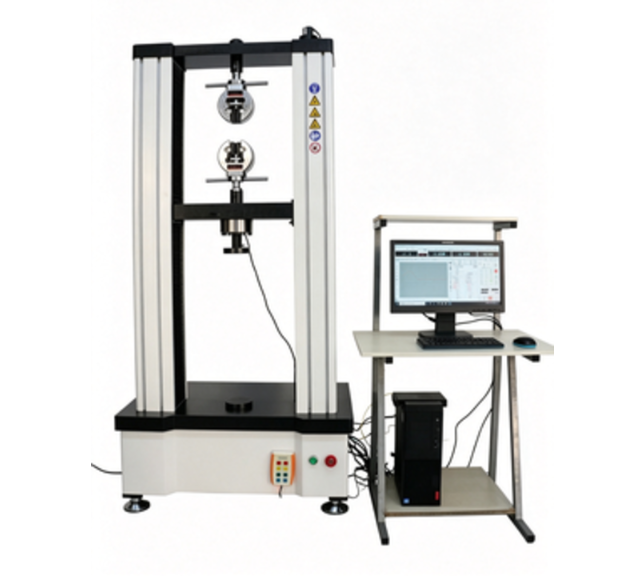
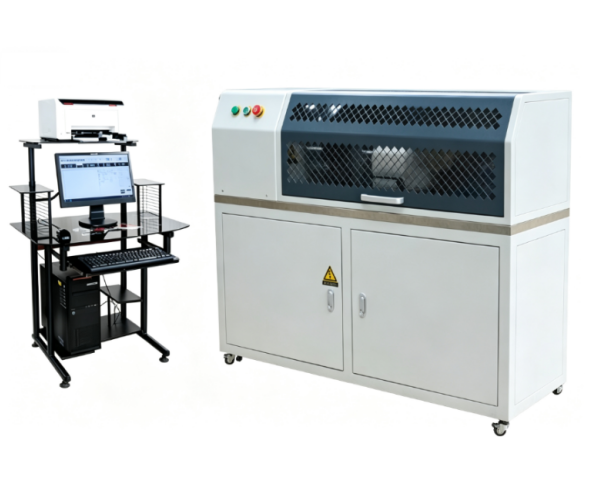
Extruded Sheath Abrasion Tester for New Energy Wires and Cables
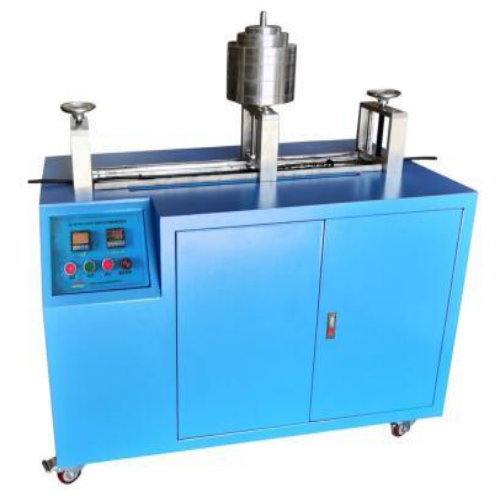


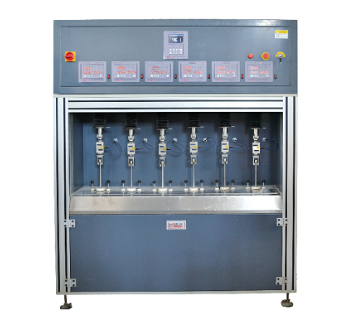
The Extruded Sheath Abrasion Tester is designed for evaluating the abrasion resistance of plastic outer sheaths on wires and cables with diameters of 30 mm or greater. It simulates mechanical wear conditions, ensuring that cable sheaths can withstand long-term handling, installation, and operational abrasion without degradation. The instrument provides precise control over abrasion speed, force, and cycle count, delivering repeatable and reliable test results.
Application
The tester is suitable for abrasion resistance evaluation of:
(1) New energy cables with extruded plastic outer jackets
(2) Electric vehicle charging cables and renewable energy cables
(3) Power distribution and control cables
(4) High-voltage cable sheath materials
(5) Cable material formulation development and quality control
(6) Third-party inspection and certification laboratories
Standards
The instrument conforms to international and national standards for cable sheath abrasion testing:
(1) JB/T 10696.6-2007 — Methods for mechanical and physical properties of wires and cables, Part 6: Extruded sheath abrasion test
(2) GB/T 12706.3-2008 — High-voltage cables, Part 3: Extruded insulation and sheath tests
(3) GB/T 33549 — Electrical cables: outer sheath abrasion test
(4) CQC 1103-1105-2015 — Cable outer sheath abrasion testing standards
Parameters
| Item | Specification |
|---|---|
| Test diameter range | 10 mm ≤ D < 90 mm |
| Abrasion head curvature radius | R1.5 mm (standard: 1–2 mm) |
| Abrasion stroke length | ≥600 mm |
| Abrasion speed | 150–300 mm/s, adjustable |
| Abrasion cycles | Up to 9999, programmable |
| Weighting/Load | 1 N, 5 N, 10 N ×1; 20 N, 100 N ×2; 50 N ×3 (for D>90 mm, optional 50 N & 100 N) |
| Automatic reversing | Yes, uniform abrasion speed |
| Environment temperature control | Test cannot start if ambient temperature is outside 20 ± 5 °C |
| Power supply | AC 220 V, 50/60 Hz, 1 kW |
Features
High-precision abrasion control: Adjustable speed and stroke length ensure uniform testing.
Automatic reversing mechanism: Ensures even wear across the sample surface.
Load flexibility: Multiple selectable weights to simulate various abrasion pressures.
Temperature monitoring: Prevents testing under unsuitable ambient conditions.
Wide diameter applicability: Supports 10–90 mm cable diameters, with optional configuration for larger cables.
User-friendly operation: Digital control and programmable abrasion cycles allow repeatable testing.
Accessories
(1) Standard set of abrasion heads
(2) Weight sets: 1 N, 5 N, 10 N, 20 N, 50 N, 100 N
(3) Sample mounting clamps
(4) Environmental temperature sensor
(5) Power connection cable and user manual
Maintenance Information
Regularly inspect abrasion heads for wear and replace if necessary.
Keep the guide rails and moving parts clean and lubricated to ensure smooth motion.
Verify weight sets are accurate and free of deformation.
Check electrical connections and temperature sensors before each test session.
Periodically calibrate speed and stroke parameters for precise operation.
After-Sales Service
(1) Provide professional equipment selection consultation according to testing standards and customer requirements.
(2) Offer installation guidance, operation training, and technical documentation after delivery.
(3) Provide remote technical support for equipment operation and troubleshooting.
(4) Supply original spare parts and long-term maintenance services.
(5) Provide customized solutions for different specimen sizes, test cycles, and laboratory requirements.
FAQ
1.What is this product?
A tester designed to evaluate the abrasion resistance of extruded plastic sheaths on wires and cables.
2.What is it used for?
Determines how well cable outer sheaths withstand mechanical wear during handling, installation, and operation.
3.Why is cable sheath abrasion testing important?
Cable outer sheaths may suffer friction damage during installation, transportation, and long-term operation. Abrasion testing helps evaluate whether sheath materials can maintain mechanical protection performance, prevent insulation exposure, and improve cable reliability and service life.
4.Which industries use this product?
New energy, automotive, electrical cable manufacturing, R&D laboratories, and quality assurance facilities.
5.What types are available?
Models supporting different cable diameters, variable stroke lengths, adjustable abrasion loads, and optional environmental monitoring.
Leave Message Get Price