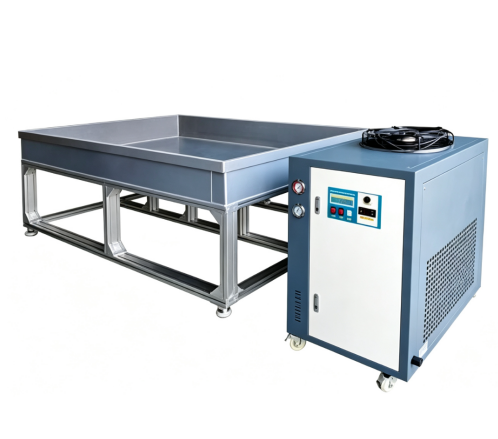
Automotive Connector Salt Spray Test Chamber
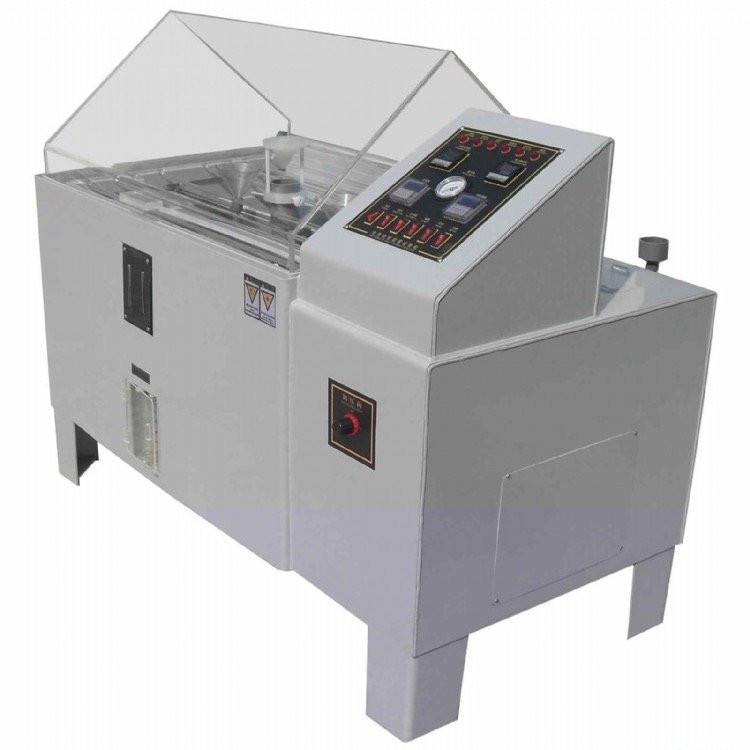


The Automotive Connector Salt Spray Test Chamber is designed to evaluate the corrosion resistance of various surface treatments on automotive connectors and components. It simulates prolonged exposure to corrosive environments, enabling the assessment of metallic plating, coatings, organic and inorganic films, anodizing, anti-rust oils, and chemical conversion treatments. The chamber ensures reproducible and standardized testing to verify long-term corrosion protection of finished products.
Application
This test chamber is suitable for testing corrosion resistance on:
Metallic connectors with electroplated surfaces
Coated components including paints and powder coatings
Anodized aluminum parts
Automotive hardware with anti-rust oils or chemical conversion layers
Electromechanical devices requiring long-term salt spray exposure resistance
The chamber can perform both neutral salt spray (NSS) and acidic salt spray (ASS) tests, making it versatile for a wide range of corrosion testing applications in automotive and electronics manufacturing.
Standards
The chamber supports multiple national and international standards:
(1) GB/T 2423.17 — Environmental testing for electrical and electronic products: Salt spray method
(2) CNS 3627, 3885, 4159, 7669, 8886 — Corrosion test standards for various materials
(3) JIS D-0201, H-8610 — Japanese industrial standards for corrosion testing
(4) K-5400, Z-2371 — Regional corrosion test methods
(5) ISO 3768, 3769, 3770 — International corrosion testing standards
(6) ASTM B-117, B-268 — American Society for Testing and Materials salt spray methods
(7) GJB 150 — Military standard for corrosion testing of electronic and electrical components
Parameters
| Item | Specification |
|---|---|
| Test chamber material | PVC panels, temperature resistance up to 80℃ |
| Chamber cover | Transparent acrylic impact-resistant panel |
| Operating temperature | Adjustable, controlled horizontally |
| Neutral salt spray (NSS) | Chamber: 35±1℃; Saturated air vessel: 47±1℃ |
| Acidic salt spray (ASS) | Chamber: 50±1℃; Saturated air vessel: 63±1℃ |
| Test solution | NaCl 500g × 2 bottles; Glacial acetic acid 500g × 1; NaOH 500g × 1 |
| pH monitoring | Litmus paper included |
| Measuring tools | Standard measuring cylinder and dosing device |
| Power supply | AC220V/50Hz |
| Chamber dimensions | Customizable according to order |
Features
Durable Construction: Chamber made from high-quality PVC resistant to high temperature and chemical corrosion.
Transparent Observation: Acrylic cover allows real-time monitoring of the corrosion test.
Precise Temperature Control: Independent control of test chamber and saturated air vessel ensures uniform and stable temperature conditions.
Versatility: Supports both neutral and acidic salt spray testing to cover a wide range of corrosion test scenarios.
Standardized Reproducibility: Complies with national and international test standards for consistent results.
Safe Operation: Corrosion-resistant materials and secure design prevent leaks and ensure operator safety.
Accessories
(1) Test reagents: NaCl 500g ×2, Glacial acetic acid 500g ×1, NaOH 500g ×1
(2) pH indicator: Litmus paper
(3) Standard measuring cylinder
(4) Dosing apparatus
(5) Sample racks (optional)
(6) Temperature and timing control module
Test Procedures
Prepare the test solution according to the standard (NSS or ASS) and fill the chamber.
Mount test samples on the provided racks inside the chamber.
Set the desired test parameters: temperature, spray duration, and type of salt spray.
Start the test and monitor the samples through the transparent chamber cover.
Periodically check the pH and solution concentration to ensure consistent test conditions.
At test completion, remove samples and evaluate surface corrosion visually and/or with microscopy.
Clean the chamber and prepare it for the next test cycle.
Maintenance Information
Regularly clean the chamber, spray nozzles, and sample racks to avoid salt buildup.
Replace test solutions and reagents according to usage frequency to maintain accuracy.
Inspect PVC panels and acrylic covers for cracks or chemical damage.
Check temperature control sensors and heaters for proper functioning.
Periodically calibrate timers and temperature controllers to ensure test reproducibility.
FAQ
What is this product?
A test chamber designed to evaluate corrosion resistance of automotive connectors and components under salt spray conditions.
What is it used for?
Simulates long-term exposure to corrosive environments to verify durability and protective surface treatments.
Why is it important?
Ensures components can withstand harsh environmental conditions, preventing premature corrosion failure in vehicles.
Which industries use this product?
Automotive, electronics, electrical appliances, and other industries requiring corrosion resistance testing.
What types are available?
Neutral salt spray (NSS), Acidic salt spray (ASS), and custom chambers with larger capacity or programmable cycles.
Leave Message Get Price