Automotive Connector Air Tightness Testing System
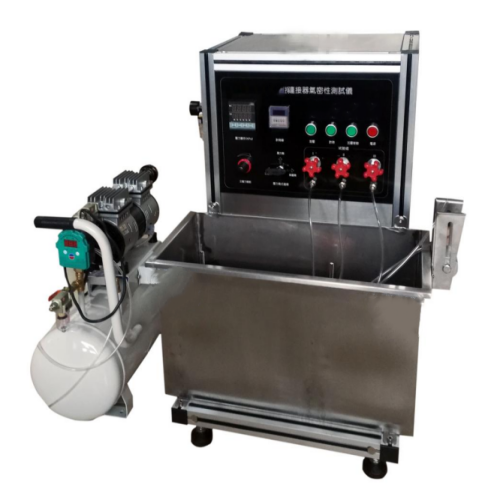


The Automotive Connector Air Tightness Testing System is designed to evaluate the airtightness and sealing performance of automotive connectors, housings, and other components. Using precise pressure control, it enables non-destructive testing of various product shapes, ensuring leak-free operation under both positive and negative pressure conditions. The system provides reliable and repeatable testing, making it ideal for quality control, R&D, and production verification in the automotive and related industries.
Application
This system is suitable for a wide range of industries and products requiring airtightness verification:
Automotive industry: Engine housings, oil pumps, pipelines, valves, airbags, connectors, and battery casings.
Consumer and industrial products: Outdoor electronic enclosures, water tanks, compressed air devices, and sealed workspaces.
Safety and critical systems: Firefighting equipment, HVAC ducts, and gas cylinders.
Testing objectives: Detect leaks, validate sealing materials, evaluate assembly integrity, and assess manufacturing consistency.
Standards
The testing system can comply with multiple international and industry standards related to airtightness and pressure testing:
(1) ISO 11607 — Packaging for terminally sterilized medical devices (airtight requirements applicable to connectors)
(2) IEC 60529 — Ingress protection (IP) rating for enclosures
(3) DIN 40050-9 — Protection of electrical connectors in vehicles
(4) SAE J1739 — Automotive leak detection procedures
(5) GB/T 2423.29 — Environmental testing for automotive electronic components
(6) QC/T 743 — Automotive connector performance verification
(7) ASTM D6653 — Pressure testing methods for leak detection
Parameters
| Item | Specification |
|---|---|
| Positive pressure range | 0–0.5 MPa, digital display, programmable control |
| Negative pressure range | -0.1– -0.49 MPa (optional max -0.89 MPa) |
| Air source | Silent compressor for positive pressure |
| Test head connections | 3 sets, tube diameters: 3 mm, 5 mm, 7 mm, or customized |
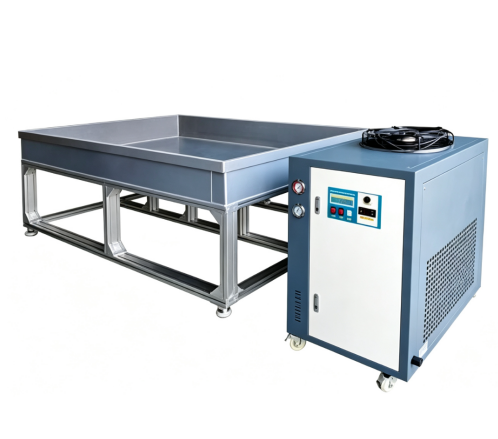
| Test water tank | 400 × 200 × 200 mm |
| Timer | 0–999.9 S/M/H, programmable |
| Pressure program | Supports stepwise or continuous pressure application |
| Control interface | Digital display, manual/automatic mode |
| Dimensions | Customizable according to setup |
| Power supply | AC 220V/50Hz (standard), optional 380V |
Features
Dual Pressure Capability: Provides both positive and negative pressure for comprehensive airtightness testing.
Programmable Testing: Supports stepwise or continuous pressure applications according to test protocols.
Non-Destructive Testing: Ensures products remain intact while detecting leaks.
Digital Display & Control: Real-time monitoring of pressure values and automated regulation.
Flexible Connection Heads: Multiple adapters allow testing of connectors, tubes, and housings of different sizes.
Integrated Timer: Accurate measurement of pressure duration and automatic stop at preset times.
Quiet Operation: Low-noise compressor reduces operational disturbances in lab or production environments.
Accessories
(1) Set of pressure regulators and valves
(2) Digital pressure display module
(3) Multiple connector adapters (3 mm, 5 mm, 7 mm, or customized)
(4) Water tank for leak visualization
(5) Timer and control panel
(6) Optional negative pressure source (vacuum pump)
(7) User manual and calibration certificate
Test Procedures
Connect the product to the appropriate test head adapter.
Fill the water tank if visual leak detection is required.
Set positive and/or negative pressure values or select a pressure program.
Start the test and monitor the pressure values on the digital display.
Observe for any leaks using the water immersion method or pressure drop detection.
Record test duration and results; the system automatically stops upon completion.
Release pressure safely and remove the tested component.
Analyze results to verify compliance with design and quality standards.
Maintenance Information
Regularly inspect and clean pressure valves and tubing to prevent blockages.
Ensure the water tank and connectors are free from debris or corrosion.
Periodically calibrate the pressure sensors and digital display to maintain accuracy.
Check compressor operation, oil levels (if applicable), and air filters.
Inspect seals and gaskets on adapters to ensure airtight testing.
Store the system in a dry, temperature-controlled environment when not in use.
FAQ
What is this product?
A system for testing the airtightness and sealing integrity of automotive connectors and other components.
What is it used for?
To detect leaks, verify sealing quality, and ensure component reliability under both positive and negative pressure conditions.
Why is it important?
Prevents failures in critical automotive systems, such as fuel, air, and electrical circuits, by ensuring airtight seals.
Which industries use this product?
Automotive manufacturing, electronics, industrial equipment, and safety-critical device production.
What types are available?
Standard positive pressure model, combined positive/negative pressure model, and fully programmable automated test system.
Leave Message Get Price