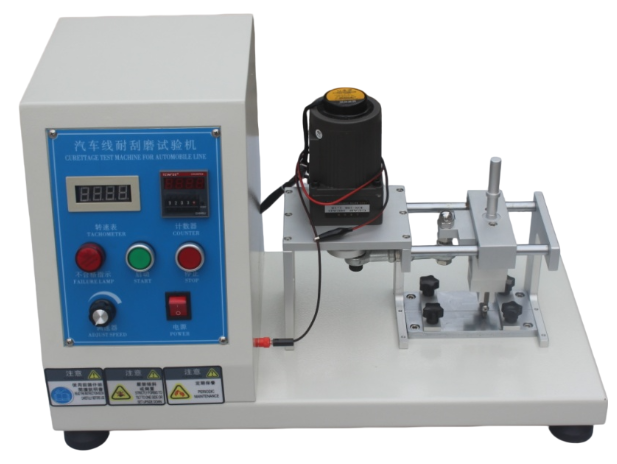
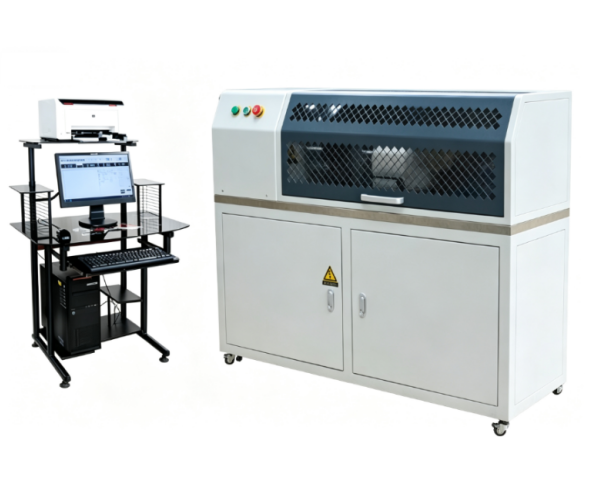
Reciprocating Abrasion Tester
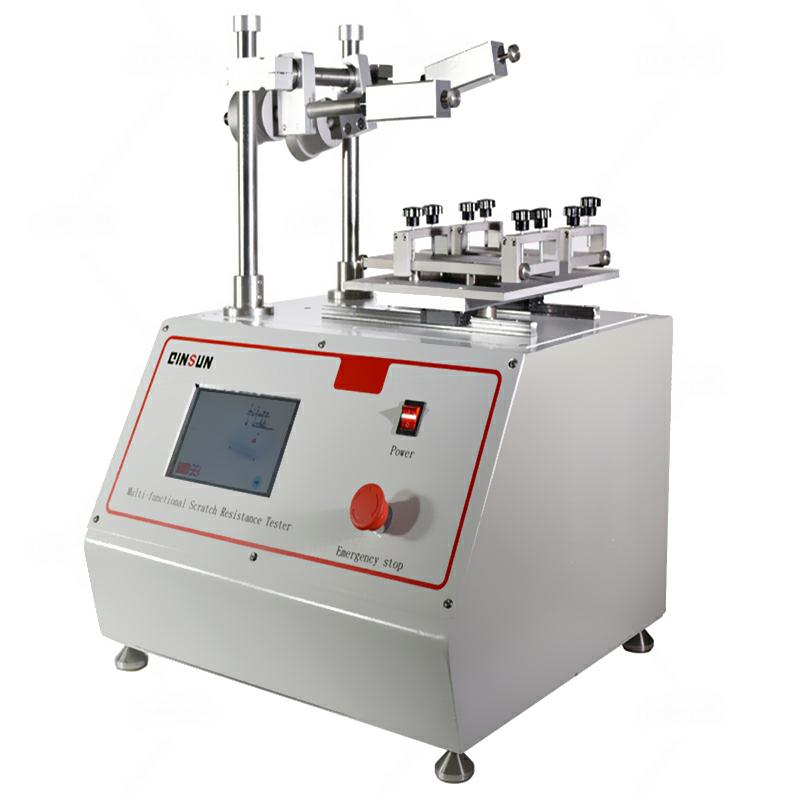


The Reciprocating Abrasion Tester is designed to evaluate the scratch resistance and wear performance of coatings, plastics, decorative fabrics, automotive interior materials, and pile fabrics. It uses a reciprocating motion with adjustable stroke and speed, combined with precise load application, to simulate material wear under controlled laboratory conditions. The instrument provides accurate, repeatable results suitable for compliance testing against multiple international standards.
Application
(1) Abrasion and scratch testing of automotive interior plastics and fabrics
(2) Evaluation of coated surfaces, decorative panels, and pile textiles
(3) Performance verification for coatings and protective layers
(4) Laboratory quality control and R&D for materials subject to friction
(5) Custom wear testing using different abrasive media for specific products
Standards
(1) ASTM F2496 – Standard Test Method for Abrasion Resistance
(2) ISO 1518-1 – Paints and Varnishes: Scratch Test, Part 1
(3) ISO 1518-2 – Paints and Varnishes: Scratch Test, Part 2
(4) GME 60248
(5) D44 1221
(6) D14 1055-2004
(7) D42 1775-03-2001
Parameters
| Parameter | Specification |
|---|---|
| Stroke Range | 6 – 120 mm, adjustable |
| Reciprocating Speed | 1 – 100 cycles/min, stepless adjustable |
| Control System | LCD screen, programmable for speed, cycles, and test parameters |
| Workstations | 2, simultaneous operation to save time |
| Load Application | Lever balance principle, adjustable weights and friction heads |
| Weight | Approx. 48.5 kg |
| Dimensions (W×D×H) | 532 × 471 × 630 mm |
| Power Supply | 220 V, 50 Hz, 1 A |
Features
(1) LCD control with real-time display of test status and parameters.
(2) Adjustable stroke and speed for customizable wear simulation.
(3) Lever balance system ensures precise load application on the sample surface.
(4) Two workstations allow parallel testing for increased efficiency.
(5) Compatible with various abrasives and friction heads to meet different standards and testing requirements.
(6) High repeatability and reliability for laboratory and quality control applications.
Accessories
(1) Main unit ×1
(2) Test arm kits ×2
(3) Weight set ×6 (1N, 2N, 2.5N, 5N, 10N, 24N)
(4) Ø15 abrasion heads ×2 (semi-circular R18, 40 mm length)
(5) Sample fixtures ×2
(6) Brush ×1
(7) Abrasive repair sandpaper ×1 pack (20 sheets)
(8) Stainless steel abrasive holder
(9) CS-10 abrasion heads ×2
(10) H-18 abrasion heads ×2
Test Procedures
Secure the sample on the horizontal sample table using the provided fixtures.
Install the desired friction head and apply the corresponding weight using the lever balance system.
Set the stroke, reciprocating speed, and number of cycles on the LCD control screen.
Start the reciprocating abrasion test.
Observe wear patterns and record data for evaluation.
Replace abrasive media or adjust load as necessary for further tests.
Maintenance Information
(1) Regularly inspect and replace worn friction heads and abrasive media.
(2) Keep test arms and sample fixtures clean and free of debris.
(3) Check the lever balance system and weights periodically for accuracy.
(4) Lubricate moving parts to ensure smooth reciprocating motion.
(5) Verify electrical connections and maintain a stable power supply.
FAQ
What is this product?
It is a Reciprocating Abrasion Tester used to assess scratch resistance and wear performance of various materials.
What is it used for?
To simulate mechanical wear and evaluate material durability under controlled laboratory conditions.
Why is it important?
Ensures coatings, fabrics, and plastics meet performance standards, providing reliable data for quality control and R&D.
Which industries is it suitable for?
Automotive interiors, coatings, plastics, textiles, and laboratory testing facilities.
What are the similar products?
Taber Abrasion Tester, Multi-Directional Abrasion Tester, Wear Testing Machines, and Reciprocating Friction Testers.
Leave Message Get Price