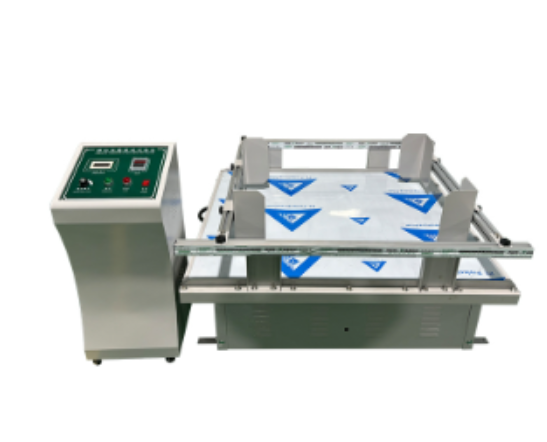
Veslic Leather Crocking (Friction Colorfastness) Tester
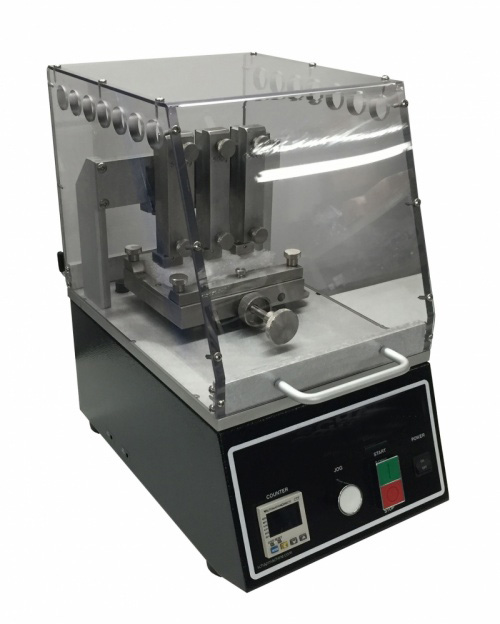


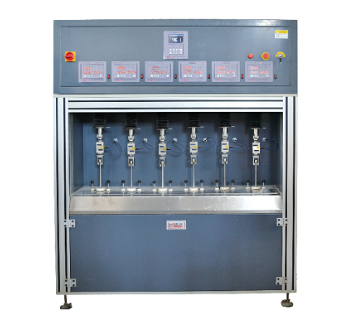
The Veslic Leather Crocking Tester is designed to evaluate the colorfastness of leather, textiles, vinyl, stitched seams, plastics, and other materials under friction conditions. It simulates wear-related color changes, including dry and wet testing. The instrument features three independent test stations, each capable of applying loads of 500 g or 1000 g. Samples are clamped and secured on a vibration test bed, with up to 25% tension applied during testing.
Application
The Veslic Leather Crocking Tester is suitable for:
Evaluation of leather and textile friction colorfastness
Assessment of stitched seams and vinyl material durability
Simulating real-life friction scenarios, such as shoe-to-shoe contact or crossed-leg wear
Dry and wet testing using deionized water or synthetic sweat
Testing with alternate friction materials such as rubber pads, sandpaper, or cotton fabrics
Typical Test Products Include:
Automotive leather seats and upholstery
Footwear leather and synthetic leather
Garments, gloves, and fashion accessories
Plastic and coated materials
Standards
The tester is compliant with the following standards:
(1) BS 1006 UK-LG
(2) IUF 450
(3) SLF 450
(4) DIN 53-339
(5) EN ISO 11640
(6) Veslic C4500
(7) Veslic C4505
(8) Veslic C4580
Parameters
| Parameter | Unit | Value |
|---|---|---|
| Product weight | lbs / kg | 46 / 21 |
| Shipping weight | lbs / kg | 120 / 54 |
| Dimensions (L×W×H) | inches | 10 × 10 × 20 |
| Shipping dimensions (L×W×H) | inches | 21 × 21 × 32 |
| Number of test stations | – | 3 |
| Individual load per station | g | 500 / 1000 |
| Applied tension on sample | % | 25 |
Features
Three independent test stations for simultaneous testing
Adjustable load per station (500 g or 1000 g)
Supports dry and wet friction testing
Compatible with different friction pads: felt, rubber, sandpaper, cotton, or other materials
Color change evaluation under standard multi-light source color lamp or grey scale comparison
Durable construction for long-term use
Accessories
(1) Cutting mold for sample preparation
(2) Veslic felt pads for friction testing
(3) Optional rubber pads for shoe friction simulation
(4) Additional friction materials (sandpaper, cotton fabric)
Test Procedures
Prepare the sample using the cutting mold and secure it on the test bed.
Set the desired load (500 g or 1000 g) on each test station.
Install the friction pad (felt, rubber, or other material) in the adjustable bracket.
Apply 25% sample tension for the test.
Start the test cycle; each station operates independently.
Evaluate color change using a standard grey scale or multi-light source color lamp.
Record results for reporting or comparison.
Maintenance Information
Clean friction pads and sample holders after each test.
Inspect load application mechanisms and ensure proper calibration.
Verify the tension adjustment and test cycle functionality regularly.
Keep the instrument in a dry environment to prevent corrosion.
Replace worn friction pads to maintain testing accuracy.
FAQ
1. What is this product?
It is a leather and material friction colorfastness tester with three independent test stations.
2. What is it used for?
It evaluates the color change of leather, textiles, vinyl, and plastics under friction conditions, including dry and wet testing.
3. Why is this product important?
It ensures material durability and color stability under wear conditions, critical for automotive, footwear, and apparel industries.
4. Which industries is it suitable for?
Automotive leather, footwear, fashion apparel, synthetic leather, and plastics manufacturing.
5. What are similar products?
Crocking testers for textiles and leather
Friction wear simulators
Colorfastness evaluation instruments
Leave Message Get Price