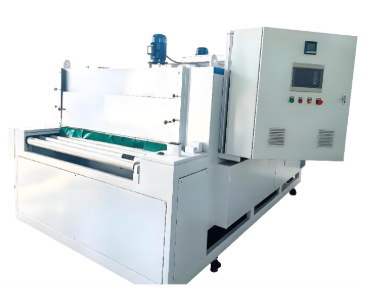
SCHAP Fogging Tester
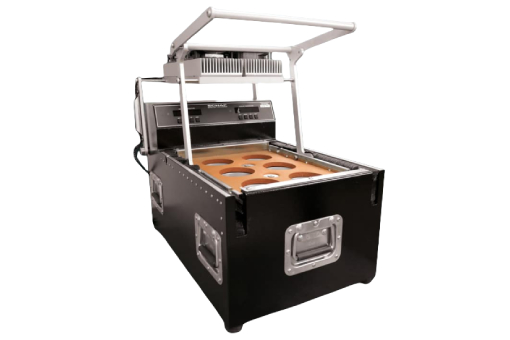


The SCHAP Fogging Tester is designed to evaluate the fogging performance of automotive interior materials, coated fabrics, and leather. The system accommodates six 1-liter beakers for multiple test specimens and allows the use of cost-effective square glass plates for all tests. Advanced solid-state heating and cooling technology ensures precise thermal control, eliminates the need for complex fluid systems, and maximizes uptime, delivering reliable and reproducible test results.
Application
The SCHAP Fogging Tester is applicable for:
Fogging performance evaluation of automotive interior materials, plastics, coatings, and leather
Quality assurance of non-metallic interior parts during production
Research and development of coatings and polymer surfaces for low-fog performance
Comparative testing of supplier materials to automotive OEM specifications
Typical Test Products Include:
Automotive dashboards, instrument panels, and center consoles
Door panels, headliners, and trim materials
Leather seats and upholstery
Polymeric or coated fabrics used in interiors
Standards
The SCHAP Fogging Tester complies with the following standards:
(1) ISO 6452-2007 – Rubber or plastic coated fabrics: Determination of fogging performance
(2) DIN 75201-1992 – Automotive interior materials: Fogging performance determination
(3) SAE J1756-1994 – Automotive interior materials: Fogging characteristics test
(4) QB/T 2728-2005 – Leather: Determination of fogging properties
(5) BS EN 14288-2004 – Leather: Physical and mechanical tests: Fogging characteristics
(6) PV 3920 – Non-metallic interior material fogging value (F)
(7) PV 3015 – Volkswagen Fogging Test Standard
(8) ES-X83231 – Interior material fogging performance test
(9) NES M0141-2006-1 – Interior material fogging test
(10) D45 1727-2006 – Driver compartment interior padding material fogging performance
(11) GM 9305P-1992 – Automotive interior material fogging determination
(12) TSM 0503G – Toyota non-metallic material fogging standard
Parameters
| Parameter | Unit | Value |
|---|---|---|
| Tester weight | lbs / kg | 170 / 77 |
| Shipping weight | lbs / kg | 230 / 104 |
| Number of stations | – | 6 (meets DIN 75201 / ISO 17071 / SAE J1756) |
| Dimensions (D × W × H) | inch / mm | 25 × 16 × 17 / 406 × 635 × 432 |
| Temperature range (hot) | °C | 50 – 120 |
| Temperature range (condensation) | °C | 20 – 40 |
| Temperature setting accuracy | °C | ≤ 0.5 |
| Temperature setting repeatability | °C | ±0.2 |
Features
Six independent test stations with 1L beakers for multiple samples
Solid-state heating and cooling system for precise temperature control
Reliable Hart/Fluke solid-state controller and silicon heaters
Compatible with cost-effective square glass plates for all tests
High reproducibility and long operating life
Supports ISO/IEC 17025 calibration verification
Easy operation and specimen handling
Accessories
Standard Accessories:
(1) 6 × SCHAP 1L Beakers
(2) 6 × SCHAP Pressure Rings
(3) 6 × SCHAP Silicone Sealing Rings
(4) 24 × Glass Plates
(5) ISO/IEC 17025 Calibration Plate
Optional Accessories:
(1) Gloss Meter
(2) Haze Meter
(3) Precision Balance
(4) Accessory Hanging Rack
(5) Glass Plate Rack
(6) Additional Beakers
(7) Sampling Tools
Maintenance Information
Regularly clean beakers, pressure rings, and sealing rings.
Inspect glass plates for cracks or contamination before each test.
Verify temperature calibration using the ISO/IEC 17025 calibration plate periodically.
Maintain solid-state heating and cooling components according to manufacturer instructions.
Ensure proper ventilation and power supply during operation.
FAQ
1. What is this product?
It is a fogging tester designed to assess the fogging performance of automotive interior materials and coatings.
2. What is it used for?
It evaluates the tendency of materials to form fog on glass surfaces under heat and condensation, ensuring low-fog performance of interior components.
3. Why is this product important?
Fogging can impair visibility and safety in vehicles; this tester ensures materials meet performance and safety standards.
4. Which industries is it suitable for?
Automotive, automotive interior manufacturing, leather and polymer materials testing, R&D labs, and OEM quality control.
5. What are similar products?
ISO/SAE fogging test systems
Automotive interior condensation testers
Coating fogging evaluation equipment
Leave Message Get Price