Manual Rubbing Color Fastness Tester
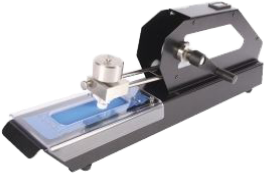


The Manual Rubbing Color Fastness Tester is used to determine the color fastness to rubbing of dyed textile materials. Color fastness to rubbing refers to the degree of color transfer from a dyed fabric surface to a standard white rubbing cloth under specified rubbing conditions.
The test method is based on applying controlled manual rubbing between the specimen and a standard white cotton cloth, followed by visual assessment of staining using a grey scale. The instrument supports both dry and wet rubbing tests and is suitable for routine laboratory inspection and quality control applications.
Applications
(1) Determination of dry rubbing color fastness of woven, knitted, and nonwoven textiles.
(2) Determination of wet rubbing color fastness of dyed textile materials.
(3) Quality control testing during textile dyeing and finishing processes.
(4) Incoming material inspection for textile manufacturers.
(5) Routine testing in textile laboratories, educational laboratories, and R&D centers.
(6) Comparative testing of different dyes, finishes, and fabric constructions.
(7) Basic compliance testing for textile products prior to further certification testing.
Standards
(1) DIN EN ISO 105-X12 — Textiles — Tests for colour fastness — Part X12: Colour fastness to rubbing.
(2) ISO 105-X12 — Textiles — Tests for colour fastness — Colour fastness to rubbing.
(3) GB/T 3920 — Textiles — Tests for colour fastness — Colour fastness to rubbing.
(4) AATCC 8 — Colorfastness to Crocking (reference method, where applicable).
Features
(1) Manual operation design suitable for basic and routine color fastness testing.
(2) Stainless steel structure providing good corrosion resistance and durability.
(3) Compact and lightweight construction for easy transport and bench use.
(4) Simple specimen mounting and removal, improving operational efficiency.
(5) Built-in automatic counter for accurate recording of rubbing cycles.
(6) Supports both dry and wet rubbing test methods.
(7) Suitable for textiles of different fabric types and colors.
Technical Parameters
| Item | Specification |
|---|---|
| Operation mode | Manual |
| Rubbing finger diameter | 16 mm |
| Downward load on rubbing finger | 9 N |
| Test method | Dry rubbing / Wet rubbing |
| Counter | Built-in automatic counter |
| Structure material | Stainless steel |
FAQ
(1) What is this tester used for?
It is used to evaluate the color fastness to rubbing of dyed textile materials under dry and wet conditions.
(2) What materials can be tested?
Woven fabrics, knitted fabrics, nonwoven textiles, and other dyed textile materials.
(3) What is the difference between dry and wet rubbing tests?
Dry rubbing uses a dry standard white cloth, while wet rubbing uses a water-moistened white cloth to simulate more severe rubbing conditions.
(4) How are the test results evaluated?
The degree of staining on the white rubbing cloth is assessed using a grey scale for staining.
(5) Is this tester suitable for certified laboratory testing?
It is suitable for routine quality control and basic standard testing. For high-throughput or automated testing, motorized models may be preferred.
(6) Does the instrument include an automatic counter?
Yes, the tester is equipped with a built-in automatic counter to record the number of rubbing cycles accurately.
Leave Message Get Price