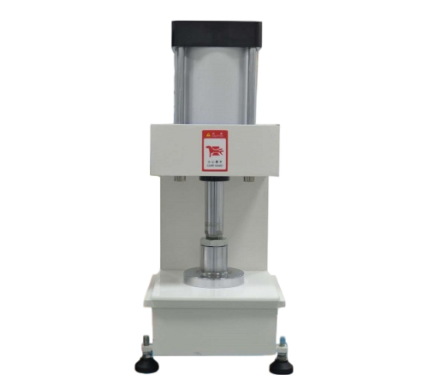
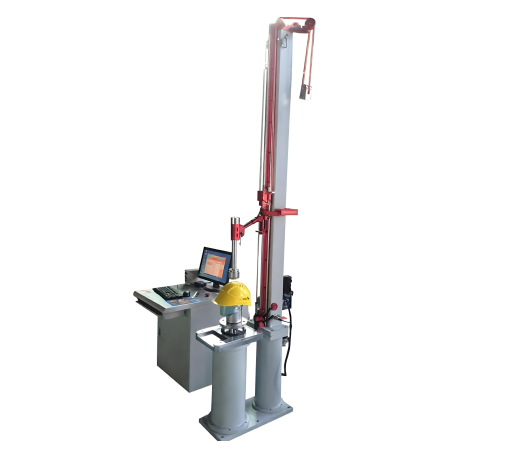
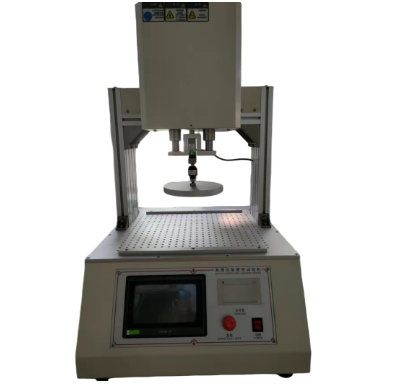
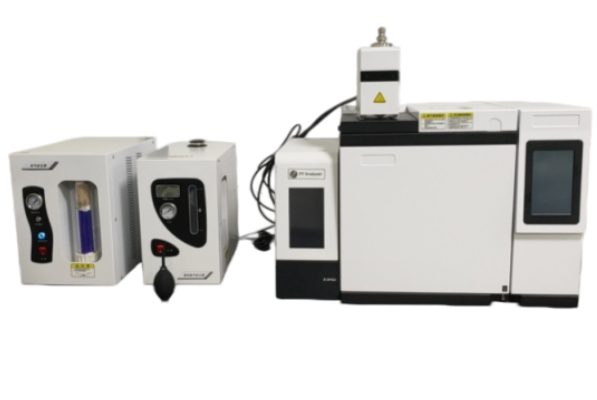
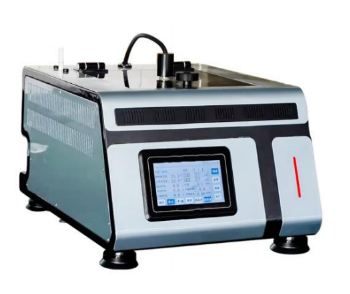
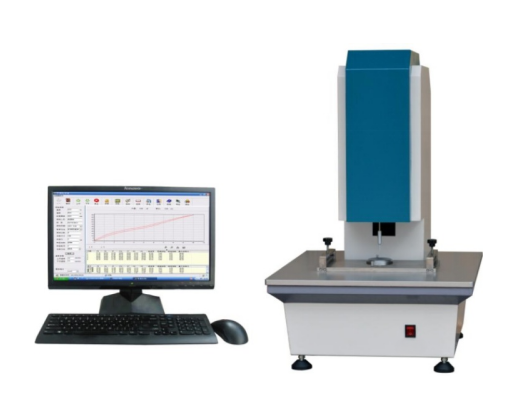
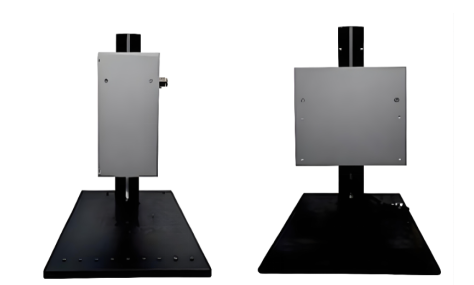
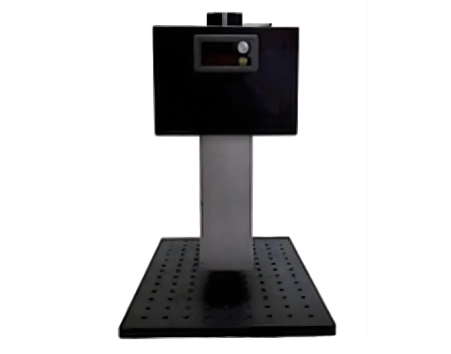
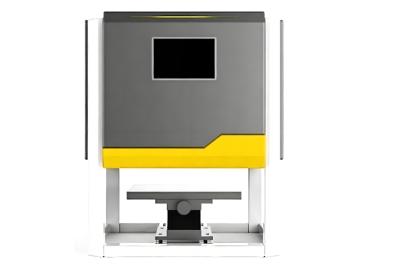
High and low temperature universal creep testing machine
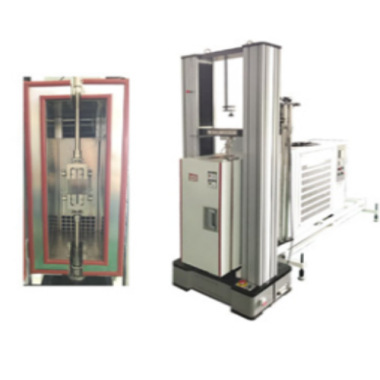


The High and Low Temperature Universal Creep Testing Machine is designed for long-term mechanical performance evaluation of non-metallic materials under controlled load and temperature conditions. The system integrates precise force control, displacement measurement, and environmental temperature regulation to perform creep, stress relaxation, tensile, compression, bending, shear, peeling, and tearing tests. It is suitable for laboratory research, material development, and quality inspection applications requiring accurate time-dependent deformation measurement.
Application
(1) Tensile creep and stress relaxation testing of plastic materials.
(2) Compressive creep testing of rigid foam plastics under specified load and temperature conditions.
(3) Tensile, compression, bending, and shear testing of non-metallic materials.
(4) Stripping and tearing performance evaluation of polymer-based materials.
(5) Long-term mechanical property research of plastics under high and low temperature environments.
(6) Quality control and performance verification for plastic and foam material manufacturers.
Standards
(1) GB/T 11546.1-2008 — Plastics — Determination of creep properties — Part 1: Tensile creep
(2) GB/T 15048-1994 — Test method for compressive creep of rigid cellular plastics
(3) GB/T 20672-2006 — Determination of compressive creep of rigid foam plastics under specified load and temperature conditions
(4) GB/T 1040.1-2006 — Plastics — Determination of tensile properties — Part 1: General principles
(5) GB/T 1041-1992 — Plastics — Determination of compressive properties
(6) GB/T 9341-2000 — Plastics — Determination of flexural properties
Parameters
| Item | Specification |
|---|---|
| Maximum test force | 10 kN |
| Effective force measurement range | 0.4% – 100% FS |
| Force resolution | 1/300000 |
| Force measurement error | ±0.5% |
| Test speed range | 0.05 – 500 mm/min (stepless) |
| Speed accuracy | ±0.5% |
| Uniform force / deformation rate control range | 0.01% – 5% FS/s |
| Uniform rate control error | ±0.5% |
| Constant force / deformation control range | 0.5% – 100% FS |
| Constant control error | ≤10% FS: ±1% set value; >10% FS: ±0.1% set value |
| Beam displacement range | 0 – 999 mm |
| Displacement resolution | 0.001 mm |
| Displacement accuracy | ±0.5% |
| Beam deformation measurement range | 860 mm |
| Beam deformation accuracy | ±0.5% |
| Large deformation measurement range | 25 – 1000 mm |
| Large deformation accuracy | ±0.5% |
| Effective test width | 420 mm |
| Moving beam maximum travel | 1160 mm |
| Maximum wedge grip clamping force | 10 kN |
| Plate specimen clamping range | 0 – 8 mm |
| Rod specimen clamping range | φ6 – φ16 mm |
| Compression device diameter | φ70 mm |
| Bending support roller radius | R2.5 – R5.0 mm |
| Roller diameter | φ5 mm |
| Offset adjustment range | 120 mm |
| Overall dimensions (L×W×H) | 900 × 480 × 1810 mm |
Accessories
(1) Tensile wedge grips.
(2) Compression platens.
(3) Bending test fixture with support rollers.
(4) High-precision force sensor.
(5) Displacement and deformation measuring devices.
(6) Environmental temperature control unit.
Features
(1) Integrated high and low temperature environmental testing capability.
(2) High-precision force measurement with wide effective measurement range.
(3) Stepless speed regulation for tensile and compression testing.
(4) Support for constant force and constant deformation control modes.
(5) High-resolution displacement and deformation measurement.
(6) Multiple test configurations including tensile, compression, and bending.
(7) Stable mechanical structure ensuring long-term creep test reliability.
Leave Message Get Price