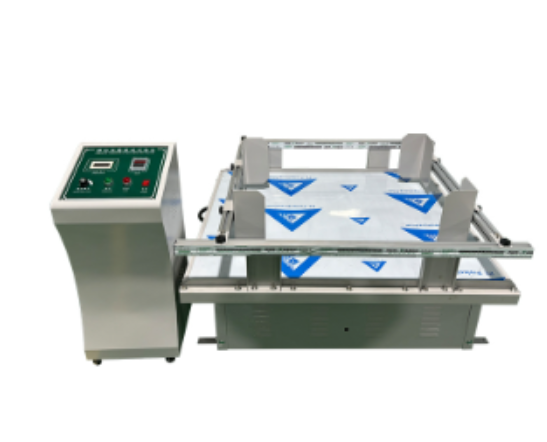
Full Face Masks Resistance To Thermal Radiation Tester
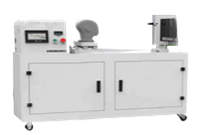


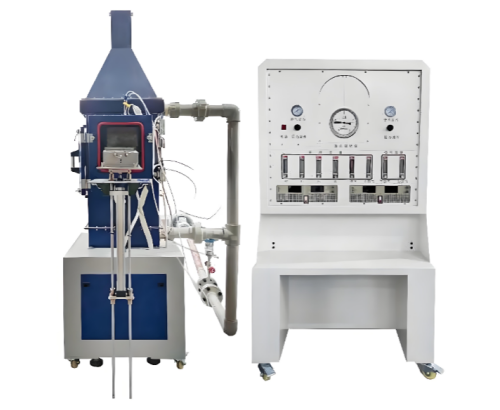
The Heat Radiation Resistance Tester for Face Masks is a protective equipment testing unit designed and manufactured in full compliance with the latest standards GBT16556-2007 and GA 124-2013. It is specifically intended to evaluate the heat radiation resistance performance of full-face protective masks.
Applications
(1) Testing the heat radiation resistance of full-face masks used in firefighting protective gear.
(2) Quality control for production of firefighting masks to ensure compliance with national fire safety standards.
(3) Research and development for new protective masks, helmets, and related headgear for firefighting applications.
(4) Certification and inspection of full-face masks for fire service personnel, ensuring standardized protective performance.
(5) Used in combination with other firefighting protective equipment such as helmets, gloves, boots, and protective clothing for comprehensive safety assessment.
(6) Supports compliance verification for international markets adhering to EN 136 and related standards.
Standards
(1) EN 136: Respiratory Protective Devices – Full-Face Masks – Requirements, Testing, Marking
(2) GBT16556-2007: Protective Clothing for Firefighters
(3) GA 124-2013: Firefighter Personal Protective Equipment – Heat Radiation Resistance
(4) ISO 6942:2002: Protective Clothing – Protection Against Heat and Flame – Method of Test: Evaluation of Materials and Material Assemblies Against Heat Radiation
(5) ASTM F1930: Standard Test Method for Determining the Heat and Flame Resistance of Materials Used in Protective Clothing for Firefighting Applications
Technical Parameters
| Parameter | Specification | Notes |
|---|---|---|
| Flame height | 40 mm ± 2 mm | — |
| Heat release rate (HRR) | 0.1 kW/m² | Controlled via temperature controller |
| Equipment size | 1,400 (W) × 600 (D) × 1,400 (H) mm | — |
| Power supply | AC 220V, 50/60Hz, 30A | — |
| Weight | 80 kg | — |
| Distance from radiation source to headform | 175 mm | HRR at this position: 7.0–9.0 kW/m² |
| Respiratory simulation | 10–30 cycles/min, 1.0–2.5 L per cycle | Manual breathing simulation |
| Control system | PLC + touch screen | Automated timing, HRR data recording and storage |
Features
(1) Painted box for aesthetic appearance; all fixtures made of stainless steel for corrosion resistance and durability.
(2) Imported flow control valve to precisely regulate gas flow; flame height precisely controlled at 40 mm ±2 mm.
(3) Imported pressure gauges and regulating valves for accurate monitoring.
(4) Needle valve for precise gas supply to burners.
(5) PLC + touch screen intelligent control system; easy-to-operate interface.
(6) Automated timing system with HRR data automatically recorded and stored; reports independently stored and can be freely retrieved.
(7) Metal headform resistant to heat and corrosion.
(8) Radiation source and headform distance set at 175 mm with HRR between 7.0–9.0 kW/m².
(9) Imported heat flux sensors accurately detect radiant heat.
(10) Radiation shield can be freely removed and positioned.
(11) Headform sliding rail design allows easy movement.
(12) Manual breathing device simulates 10–30 cycles/min with 1.0–2.5 L per cycle.
(13) Fully automated PLC control for test management and data collection.
FAQ
(1) Can the tester simulate human breathing during testing?
Yes, the system includes a manual breathing device with adjustable cycles and air volume.
(2) How is the heat radiation precisely measured?
The tester uses imported heat flux sensors and a controlled flame height to maintain accurate HRR at 7.0–9.0 kW/m².
(3) Is the system fully automated?
Yes, the PLC + touch screen control allows automated timing, HRR data collection, and storage of test reports.
(4) Can the headform be adjusted or moved during testing?
Yes, the headform is mounted on a sliding rail for flexible positioning relative to the radiation source.
(5) What type of gas is used for the flame?
The tester uses controlled gas via imported flow and needle valves; typically propane or a propane mixture is applied.
Leave Message Get Price