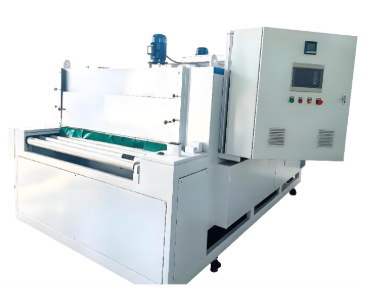
Mine Cable Load Combustion Tester
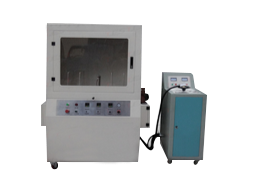


The Mine Cable Load Combustion Tester is specially designed to evaluate the flame-retardant performance of mine cables and cable joints under overload conditions. The instrument allows simulation of high-temperature operation where cable cores reach up to 204℃ and applies a controlled flame to assess the fire resistance and high-temperature behavior of insulation and sheath materials.
The tester is manufactured according to MT 386-1995 / MT 386-2011 “Test Methods and Criteria for Flame Retardancy of Mine Cables”. It is also compliant with GB 3836.1-2000 for electrical equipment in explosive gas atmospheres. The testing cabinet and control system are ergonomically designed for easy operation and observation.
Applications
(1) Mine Cable Safety Evaluation:
Assessment of flame-retardant properties of power cables used in coal mines.
Evaluation of non-metallic cable joints for fire resistance and material safety.
(2) Quality Control in Production:
Routine testing for production of flame-retardant mine cables.
Ensures conformity with national and international fire safety standards.
(3) Research & Development:
Development and improvement of high-performance flame-retardant cable materials.
Analysis of cable insulation and sheathing materials under overload and high-temperature conditions.
(4) Regulatory Compliance & Certification:
Supports certification of mine cables for international export markets.
Provides test data for compliance with safety regulations in mining operations.
(5) Training & Education:
Technical training for mining electrical engineers and safety specialists.
Demonstration of flame-retardant behavior under simulated overload conditions.
Standards
The tester complies with the following standards:
(1) MT 386-2011 — Test Methods and Criteria for Flame Retardancy of Mine Cables
(2) MT 818-2009 — Mine Cables Technical Specification
(3) GB 3836.1-2000 — Electrical Apparatus for Explosive Gas Atmospheres — General Requirements
(4) IEC 60332-1 — Tests on Electric Cables Under Fire Conditions — Part 1: Flame Propagation for a Single Insulated Wire or Cable
(5) IEC 60332-3 — Flame Propagation for a Bunch of Wires
(6) EN 50266-2-4 — Tests on Electric and Optical Fibre Cables Under Fire Conditions — Horizontal Flame Test
(7) ISO 6722-1 / ISO 6722-2 — Automotive Cables — Flame Retardant and Electrical Performance
Technical Parameters
| Item | Specification |
|---|---|
| Combustion Chamber Size | 1100 × 500 × 1000 mm |
| Control Cabinet Size | 1100 × 500 × 800 mm |
| Brass Burner Diameter | ¢9.5 ±0.5 mm |
| Load Current | 10–3000 A |
| Timer Range | 0–9999 s (Standard: 4 min) |
| Operating Voltage | AC 220V / 380V ±10%, 50 Hz |
| Working Environment Temperature | -15 to 45℃ |
| Relative Humidity | 30–80% RH |
| Gas Fuel | ≥95% Methane (supplied by customer) |
| Weight | 300 kg |
| Flame Control | Adjustable height; automatic gas shutoff when core temperature reaches 204℃ |
Features
(1) High-Quality Construction: Stainless steel cabinet and fixtures (SUS304) with corrosion resistance and long service life.
(2) Large Observation Window: Transparent window allows clear visual monitoring of cable burning during tests.
(3) Precision Flame Control: Brass burner with adjustable flame height, needle valve for precise gas flow, automatic ignition, and electronic flame shutdown.
(4) Safe Electrical Control: Load current is automatically disconnected when the burner is withdrawn; manual override and safety timers included.
(5) High Automation: PLC and timer-controlled operation ensures precise combustion duration, with real-time monitoring and alarms.
(6) Versatile Load Testing: Supports overload simulation for a wide range of mine cable types and joints.
FAQ
(1) What is this instrument?
It is a combustion tester for mine cables under high-load conditions to assess flame-retardant performance.
(2) What types of cables can it test?
Coal mine power cables, flame-retardant cables, and non-metallic cable joints.
(3) Why is it important?
Mine cables must meet strict flame-retardancy standards to ensure safe operation and prevent fire hazards.
(4) How does it operate?
Cables are energized under overload conditions, reaching core temperatures of 204℃, while a controlled flame is applied to evaluate combustibility.
(5) Can it be used for export compliance?
Yes, the instrument meets MT, GB, IEC, and EN standards suitable for international certification.
Leave Message Get Price