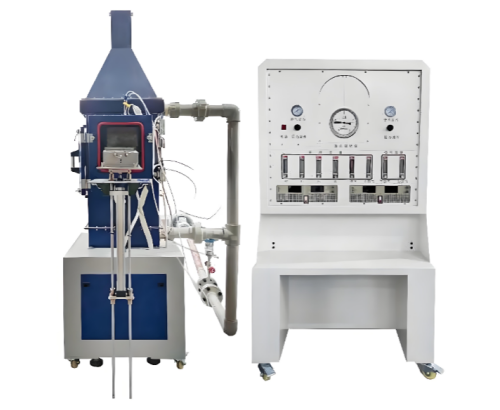
Air Tightness Tester for Windows and Doors


The On-Site Air Tightness Tester for Windows and Doors is developed in accordance with JG/T 211-2007 “Field Test Method for Air Tightness, Water Tightness and Wind Resistance Performance of Building Windows”.
The instrument is designed for on-site evaluation and grading of air permeability (and water tightness) of installed windows and doors under real operating conditions. It is widely used by window and door manufacturers, quality inspection authorities, construction supervision agencies, universities, and research institutes.
Applications
(1) Building Window Testing: Used for air leakage evaluation of aluminum alloy windows, PVC-U windows, wooden windows, and aluminum-clad wood windows.
(2) Building Door Testing: Suitable for exterior doors, balcony doors, sliding doors, hinged doors, and other architectural door systems.
(3) Curtain Wall System Evaluation: Tests window sections and openings integrated into curtain wall structures.
(4) Building Energy Efficiency Assessment: Evaluates air leakage of residential and commercial buildings to support energy-saving performance analysis.
(5) Quality Control and Acceptance Inspection: Used for factory product verification, construction acceptance testing, and installation quality assessment.
(6) Research and Education Applications: Suitable for building physics research, architectural energy efficiency studies, and laboratory teaching.
Standards
(1) JG/T 211-2007 — Field Test Method for Air Tightness, Water Tightness and Wind Resistance Performance of Building Windows
(2) GB/T 7106-2008 — Graduation and Test Methods for Air Tightness, Water Tightness and Wind Resistance of Building External Windows and Doors
(3) GB/T 7107-2002 — Graduation and Test Method for Air Tightness of Building External Windows and Doors
(4) JGJ/T 132-2009 — Standard for Energy Efficiency Inspection of Residential Buildings
(5) ISO 9972 — Thermal Performance of Buildings — Determination of Air Permeability of Buildings — Fan Pressurization Method
(6) EN 1026 — Windows and Doors — Air Permeability — Test Method
Technical Parameters
On-Site Air Tightness Tester
| Parameter | Specification |
|---|---|
| Pressure Measurement Range | −200 Pa to +200 Pa |
| Pressure Measurement Accuracy | ±2% |
| Air Flow Measurement Range | 0 – 318 m³/h |
| Air Flow Accuracy | ±5% |
| Pressure Control | Automatic control for positive/negative pressure infiltration |
On-Site Air & Water Tightness Tester
| Parameter | Specification |
|---|---|
| Air Flow Measurement Range | 0.2 – 326 m³/h |
| Air Flow Accuracy | ±0.2% |
| Pressure Resolution | 1 Pa |
| Water Flow Meter Accuracy | Class 2.5 |
| Spray Flow Rate Range | 63 – 630 L/h |
| Power Supply | AC 220V, 50 Hz |
Features
(1) The enclosure is made of aluminum-plastic composite panels, offering weather resistance, corrosion resistance, impact resistance, fire resistance, moisture resistance, and lightweight construction.
(2) Compact structure with internal anti-vibration design, ensuring both aesthetic appearance and protection of internal components.
(3) Frequency inverter signal control replaces traditional industrial control cards, providing more stable and reliable operation.
(4) Integrated industrial centrifugal fan with large airflow, high static pressure, low vibration, and low noise.
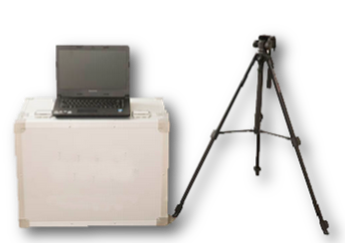
(5) Laptop-based control system with a user-friendly interface, easy operation, and excellent portability.
(6) RS-232 / RS-485 communication with asynchronous half-duplex differential transmission, effectively reducing signal interference.
(7) USB communication interface ensures stable data transmission with strong anti-interference capability.
(8) Pressure supply channel fixed by professional tripod, easy to install and adjust, with high stability and airtight flange connection.
(9) Replaceable sealing membrane made of common plastic film for convenient operation and maintenance.
(10) Professional testing software supports automatic testing, data acquisition, curve display, report generation, and manual debugging mode.
(11) Remote online service allows engineers to monitor equipment operation, assist users, diagnose faults, and perform software upgrades.
FAQ
(1) What is this product?
The On-Site Air Tightness Tester is a portable testing system used to measure the air permeability and water tightness performance of installed windows and doors.
(2) What is this product used for?
It is used to evaluate and grade the air leakage and water penetration performance of windows and doors under actual installation conditions.
(3) Why is this product important?
Air tightness directly affects building energy efficiency, indoor comfort, and moisture control. Accurate on-site testing ensures compliance with standards and improves construction quality.
(4) What products can be tested with this instrument?
Various types of exterior windows, doors, balcony doors, sliding doors, and window sections in curtain wall systems.
(5) What types of tests can be performed?
Air permeability testing, water tightness testing (optional), pressure difference control, and leakage grading evaluation.
(6) How is the tester operated?
The tester is controlled via a laptop computer. Pressure is applied using an integrated fan system, data is automatically collected and processed by software, and test reports are generated automatically.
Leave Message Get Price