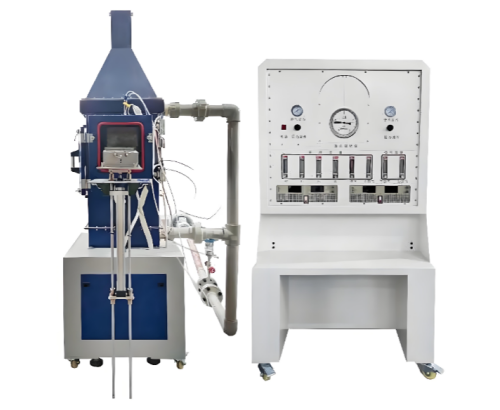
Heat Transfer Coefficient Tester
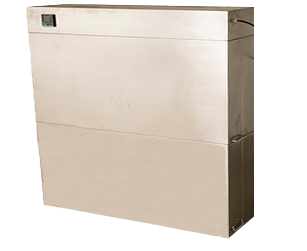


The On-Site Heat Transfer Coefficient Tester is designed to measure the heat transfer coefficient of building envelope structures and assess heating and energy supply efficiency. The device integrates automated data acquisition and temperature measurement controlled by a host computer. The heating box is constructed with high-performance insulation materials to ensure temperature stability, and the surface is equipped with instruments to display internal temperatures. The system can simultaneously record temperature and heat flux, automatically calculate the heat transfer coefficient, and generate comprehensive test reports.
Applications
This tester is suitable for:
(1) Measuring heat transfer coefficients of walls, floors, and roofs in residential and commercial buildings.
(2) Evaluating energy efficiency and heating demand for building envelope structures.
(3) Conducting on-site building thermal performance assessments.
(4) Supporting compliance verification with national and regional building energy codes.
(5) Research and development in building insulation materials and HVAC system efficiency.
(6) Providing reference data for retrofit and energy-saving renovation projects.
Standards
(1) GB/T -2009 – Method for Measuring Heat Transfer Coefficient and Heating Supply of Building Envelope Structures
(2) JGJ/T 132-2009 – Residential Building Energy Efficiency Inspection Standard
(3) JGJ/T -2015 – Technical Regulations for On-Site Measurement of Heat Transfer Coefficient of Envelope Structures
Technical Parameters
| Category | Parameter | Value / Range |
|---|---|---|
| Temperature Acquisition | Main Station | Up to 256 channels; standard: 8 temperature, 4 heat flux; optional: 60 temperature, 24 heat flux |
| Data Slave | Standard: 4 temperature, 1 heat flux; two slaves per device | |
| Measurement Range | Temperature | 10℃ – 95℃ (customizable) |
| Resolution | Temperature | 0.01℃ |
| Control Accuracy | Temperature | ±0.5℃ |
| Power Supply | Voltage / Frequency | AC 220V, 50/60 Hz |
Features
(1) Heating and cooling boxes with aluminum-plastic construction, offering high mechanical strength and corrosion resistance.
(2) Compact, foldable cold box with wheels for easy transport and enhanced flexibility.
(3) Support frame design ensures close contact with the wall, stabilizing thermal properties.
(4) Excellent temperature stability with protective plate design to minimize heat loss.
(5) Dual calibration technology for simultaneous temperature calibration and system error correction.
(6) Core control using imported Omron PLC and temperature expansion module for high stability and low interference.
(7) Output uses Schneider solid-state contactless switches, ensuring reliability, long lifespan, and anti-interference capability.
(8) RS-232 data interface for synchronous acquisition of test data; high reliability and stability.
(9) Computer-controlled interface with automated operation, real-time display, data storage, report generation, and data export/printing.
(10) Visual Basic 6.0 software interface, fully localized in Chinese, compatible with Windows XP/2000, hardware-independent.
(11) Wireless design supports distributed data collection from up to 256 sampling points.
FAQ
(1) What is this product?
The On-Site Heat Transfer Coefficient Tester is an instrument for measuring the heat transfer properties of building envelope structures under real conditions.
(2) What is this product used for?
It evaluates heat transfer coefficients, energy efficiency, and heating demand of walls, roofs, and floors in buildings.
(3) Why is this product important?
It ensures accurate thermal performance assessment, supports energy efficiency compliance, and guides design and retrofitting decisions.
(4) What products or materials can be tested with it?
Walls, floors, roofs, insulation layers, and other building envelope components.
(5) What types or modes of testing does it perform?
On-site heat transfer coefficient measurement, real-time temperature and heat flux monitoring, automated calculation of thermal performance.
(6) How is the tester operated?
The system is controlled via a computer interface. The heating/cooling boxes stabilize temperature, sensors record data, and software automatically calculates heat transfer coefficients and generates reports.
Leave Message Get Price