Plastic Smoke Density Tester /ASTM E662/ ISO 5659.2
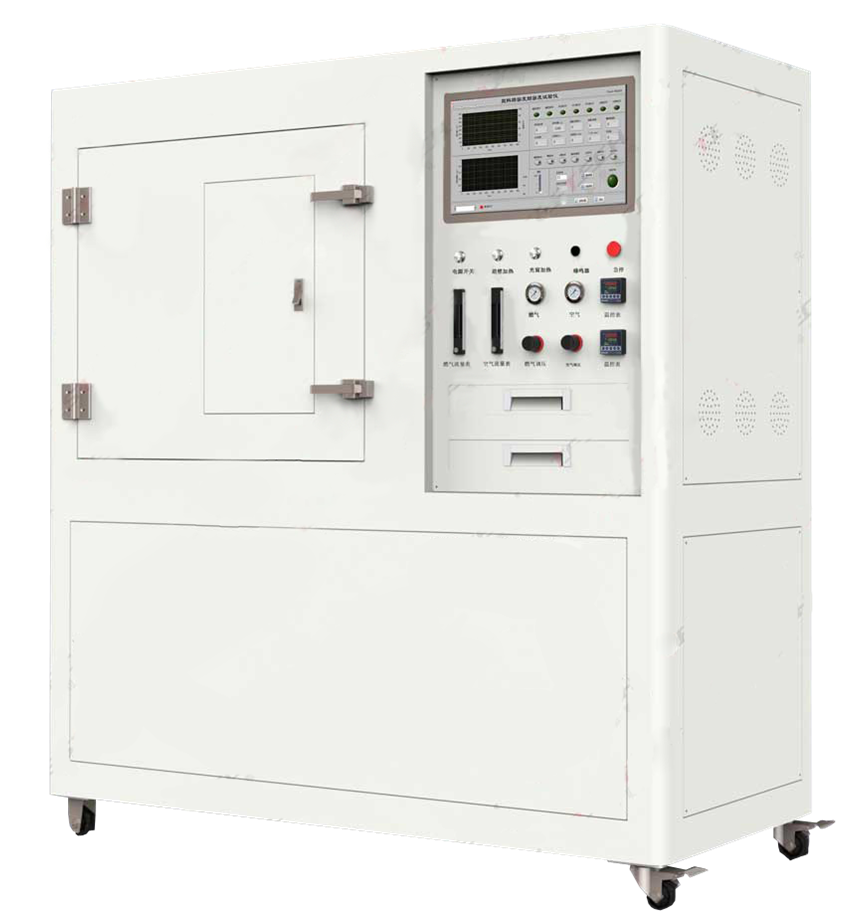


The Plastic Smoke Density Tester is a specialized instrument designed to evaluate the smoke generation characteristics of plastics during combustion. By measuring the specific optical density of smoke, the device provides the maximum specific optical density as the test result, which is crucial for assessing the smoke performance of plastics under controlled conditions. This information is vital for safety assessment, material selection, and compliance with international fire safety standards, particularly in applications where smoke toxicity and visibility are critical.
Applications
The Plastic Smoke Density Tester has wide-ranging applications across industries that require stringent fire safety evaluation of plastic materials, including:
(1) Electrical and electronic enclosures and components
(2) Automotive interior plastics
(3) Aerospace cabin materials
(4) Building construction and insulation materials
(5) Consumer appliances and electronic housings
(6) Railway and public transport interior plastics
(7) Any other plastic products where smoke generation during combustion is a safety concern
Standards
The tester is compliant with the following international standards:
(1) GB/T 8323.2-2008 – Plastics – Smoke Generation – Part 2: Determination of Smoke Density Using a Single-Chamber Method
(2) ISO 5659.2-2006 – Plastics – Smoke Generation – Part 2: Determination of Optical Density in a Single-Chamber Apparatus
(3) ASTM E662-2014 – Standard Test Method for Specific Optical Density of Smoke Generated by Solid Materials
Technical Parameters
| Parameter | Specification |
|---|---|
| Smoke Density Measurement Range | 0.0001 – 100% (six-speed auto-range, 0 – 924) |
| Operating Voltage | 200 – 240V, 50Hz |
| Ambient Temperature | Room temperature – 40°C |
| Relative Humidity | ≤ 85% |
| Heat Flux Meter | 50 kW/m², flat receiving area Ø10 mm, water-cooled |
| Igniter | Copper tube nozzle Ø4.0 mm, flame length 30 mm (horizontal) |
| Light Source | 6.5V incandescent lamp, wavelength 400–750 nm |
| Detector | Silicon photodiode, 0–100% light transmittance |
| Combustion Gas | Propane, purity ≥ 95% |
| Burner Position | 10 mm above specimen surface (horizontal) |
| Heating Cone | Power 2600W, temperature 0–1000°C, ±2°C stability within 50 min, radiation 10–50 kW/m² |
| Control Voltage | 220V, Power 4 kW |
| Instrument Weight | N/A |
| Instrument Dimensions | N/A |
Features
(1) Ergonomic design with fully openable test chamber door for easy sample handling and cleaning.
(2) Front door equipped with window and movable opaque shade to prevent external light interference.
(3) Side-mounted controller for convenient operation while viewing the chamber.
(4) Safety flame-extinguishing plate, easily replaceable.
(5) Optional gas sampling port for smoke toxicity testing.
(6) Corrosion-resistant, easy-to-clean coated chamber surface.
(7) High-precision heat flux control with quality flow controller and differential pressure sensor.
(8) Automated ignition system with standard-compliant blue flame with yellow tip, 30 ± 5 mm length.
(9) Advanced smoke density measurement system with digital display, photomultiplier, filters, achromatic lenses, and low-noise high-gain amplifier circuits.
(10) Automatic test control and signal acquisition; computer-controlled with optional printer.
FAQ
(1) What is this product?
The Plastic Smoke Density Tester is an instrument for measuring smoke density produced by burning plastics.
(2) What is it used for?
It is used to determine the smoke generation characteristics of plastic materials for fire safety evaluation and compliance.
(3) Why is it important?
Smoke density affects visibility and toxicity in fires, which are critical for safety in buildings, transport, and electronics.
(4) What products can it test?
Plastic components, housings, panels, insulation, automotive and aerospace interior plastics, electrical enclosures, and consumer appliance parts.
(5) What types are there?
Single-chamber smoke density testers with varying heat flux and measurement ranges.
(6) How does it operate?
Specimens are placed in the chamber, exposed to controlled heat flux, ignited, and smoke density is measured optically using photodetectors and a light source, with automated data acquisition and analysis.
Leave Message Get Price