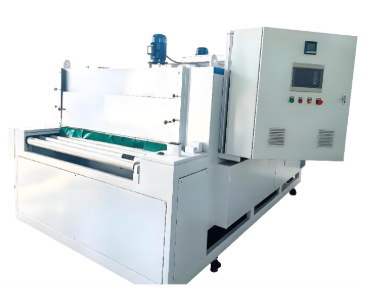
Heat Flux Meter
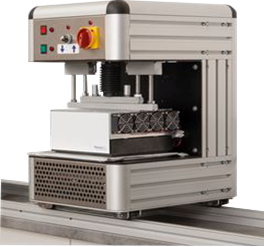


The Heat Flux Meter is designed for measuring steady-state heat transfer properties of industrial materials in laboratories, including thermal conductivity and thermal resistance. Steady-state heat transfer refers to the condition where heat flow, temperature, and heat load remain constant over time. The thermal conductivity reflects the intrinsic ability of a material to conduct heat, while thermal resistance quantifies the heat transfer between two defined points without additional heat sources.
Applications
The Heat Flux Meter is suitable for:
(1) Industrial testing of vacuum insulation panels and aerogel materials.
(2) Determining steady-state thermal conductivity and thermal resistance of large material samples.
(3) Quality control and material performance verification in building, energy, electronics, and industrial sectors.
(4) Materials that cannot be easily cut into small pieces, preserving the integrity of the test sample.
(5) Research and development of insulation and high-performance thermal materials.
Standards
(1) ISO 8301: Thermal insulation – Determination of steady-state thermal resistance and related properties – Heat flow meter apparatus.
(2) EN 12667: Thermal performance of building materials and products – Determination of thermal resistance using heat flow meter – High and medium thermal resistance materials.
(3) ASTM C518: Standard Test Method for Steady-State Thermal Transmission Properties by Means of the Heat Flow Meter Apparatus.
(4) ISO 8302: Determination of steady-state thermal resistance and related properties – Guarded hot plate apparatus.
(5) ASTM E1530: Standard Test Method for Evaluating Thermal Insulation Performance of Materials.
Technical Parameters
| Parameter | Specification |
|---|---|
| Structure | Stainless steel, corrosion-resistant, durable |
| Sample size | Unlimited, supports large samples without cutting |
| Measurement | Steady-state heat flux, thermal conductivity, thermal resistance |
| Sample measurement | Multiple samples can be measured simultaneously (modular design) |
| Control system | Computer-based data acquisition, recording, analysis, and storage |
| Accuracy & repeatability | High precision, reliable results |
| User interface | Clear layout, simple button operation |
| Weight / dimensions | Customizable based on lab configuration |
| Power supply | AC 220 V, 50 Hz (typical) |
Product Advantages
(1) Stainless steel construction for durability, corrosion, and rust resistance.
(2) Modular design allows multiple samples to be tested simultaneously.
(3) No limitation on sample size, avoiding the need to cut material and preserving sample integrity.
(4) High-precision computer-controlled measurement system ensures reliable and repeatable results.
(5) Simple and intuitive interface for ease of operation.
(6) Suitable for material performance testing and quality control across diverse industries.
FAQ
(1) What is this product?
A heat flux meter for measuring steady-state thermal conductivity and thermal resistance of materials.
(2) What is it used for?
Evaluates thermal properties of insulation, vacuum panels, aerogels, and other building and industrial materials.
(3) What types of this product exist?
Modular systems for multiple sample testing; configurations vary based on sample size and measurement channels.
(4) What industry problems can it solve?
Ensures reliable thermal performance data for material development, quality control, and regulatory compliance.
(5) How is it operated?
Samples are mounted on the heat flux meter, data is recorded via computer system, and thermal properties are automatically calculated and analyzed.
Leave Message Get Price