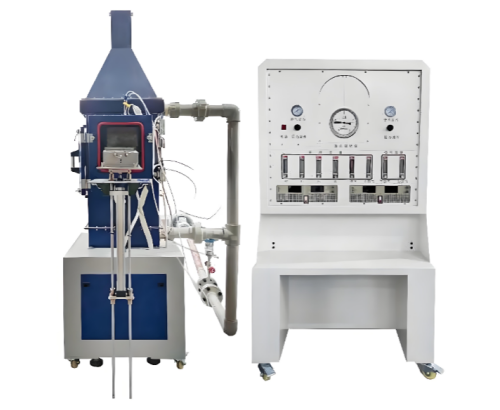
20L Spherical Explosion Tester
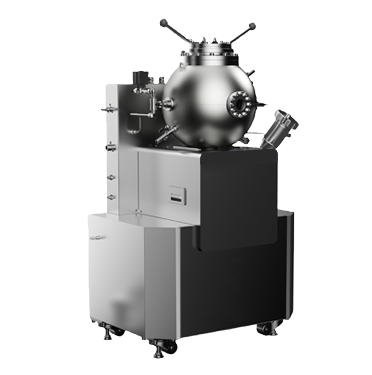


20L Spherical Explosion Tester is characterized by accurate test data and ease of use. Its through the compressed air will be a certain mass of dust specimen diffusion to the 20L spherical explosion container, the use of specified energy of the chemical ignition head or electrostatic ignition head of the dust cloud ignition, measurement of the explosion container in the pressure and time change curve, to obtain the maximum explosion pressure in the test and the maximum rate of rise of pressure, and then calculated to get the explosion index. Maximum explosion pressure, maximum explosion pressure rise rate and explosion index and other parameters can be used for explosion relief design and explosion suppression design. The instrument is mainly used for dust explosivity assessment in production and processing places such as aluminum powder, zinc powder, plastic powder, intermediates of organic synthetic drugs, wheat flour, sugar, wood chips, dyes, glue wood ash, milk powder, tea powder, tobacco powder, coal dust, plant fiber dust, and so on, to accurately determine the maximum explosion pressure of the dust cloud, the maximum rate of rise of the explosion pressure, the explosion index, the explosion of the lower limit and the limiting oxygen concentration and other parameters.
Applications
This instrument is used to measure the explosion index of dust or gas mixtures. The instrument uniformly sprays a dust or gas mixture into a confined space, and induces the test object to explode under the stimulation of an adjustable energy ignition source. The instrument measures the explosion index at the moment of explosion, including parameters such as the maximum explosion pressure pmax of dust, the maximum explosion pressure rise rate Kst, the lower explosion limit LEL of dust, the maximum explosion pressure pmax of gas, the maximum explosion pressure rise rate Kg, and the gas explosion limits (LEL and UEL), providing data support for the study of explosion suppression measures.
Standards
ASTM E1226: Standard Test Method for Minimum Ignition Energy of Dust Clouds in Air
ASTM E1515: Standard Test Method for Minimum Ignition Temperature of Dust Clouds by Electrically Heated Surface
EN 14034-1: Determination of Explosion Characteristics of Dust Clouds - Part 1: Determination of the Maximum Explosion Pressure (Pmax) and the Maximum Rate of Pressure Rise ((dp/dt)max) of Dust Clouds
EN 14034-2: Determination of Explosion Characteristics of Dust Clouds - Part 2: Determination of the Limiting Oxygen Concentration (LOC) for Dust Clouds
EN 14034-3: Determination of Explosion Characteristics of Dust Clouds - Part 3: Determination of the Minimum Ignition Energy (MIE) of Dust Clouds
EN 14034-4: Determination of Explosion Characteristics of Dust Clouds - Part 4: Determination of the Minimum Ignition Temperature (MIT) of Dust Clouds
EN ISO/IEC 80079-20-2: Explosive Atmospheres - Part 20-2: Equipment Protection Levels (EPL) - Classification of Equipment for Dust Atmospheres
ISO/IEC 6184/1: Explosive Atmospheres - Equipment for Explosive Gas Atmospheres - Part 1: General Requirements for Construction, Testing and Marking
ISO/IEC 6184/2: Explosive Atmospheres - Equipment for Explosive Gas Atmospheres - Part 2: Test Methods and Data for Determining Ignition Temperatures of Equipment Surfaces
Features
1) Can test dust, gas and the simultaneous existence of solid / gas mixture of the explosion parameters of the system.
2) Built-in international common test standards, can be tested according to standard parameters, can also be customized.
3) With chemical ignition and electrostatic ignition two ways, applicable to different test purposes.
4) The explosion container has a water circulation jacket to realize the constant temperature of the test environment.
5) Input the target concentration value, automatic cleaning, vacuum, and complete the gas distribution according to the requirements.
6) Dust dispersing device can completely disperse the dust into the explosion container.
7) The experiment is carried out automatically without human intervention.
8) Real-time display of time and pressure, the test process is more intuitive.
9) The results include time - pressure curve, providing detailed information on the explosion.
10) Remote control, to ensure the personal safety of experimental personnel.
11) The use of computer control, data analysis capabilities, curve characteristics of accurate judgment.
Technical Parameters
Operating
Environment | (5~45)℃,
<85%RH |
Explosive
Vessel | 20L ball with
jacket |
Vessel Pressure
Resistance | Design pressure
3.0MPa@25℃ |
Sphere
Material | Stainless steel
316 |
Sphere Operating
Temperature | Maximum temperature
220℃ |
Sphere
Volume | 20L |
Mezzanine
Volume | 1.5L |
Diffusion Pressure
Sensor | Range (0~3.5)MPa, overload
pressure 10.5MPa, |
Dispensing Pressure
Sensor | Accuracy ±0.1% FS,
working temperature (-40~105)℃ |
Explosive Pressure
Detection | Range (0~200)kPa, overload
pressure 600.0 kPa, |
Explosive Pressure
Detection Channels | Accuracy ±0.1% FS,
working temperature (-40~105)℃ |
Explosive
Temperature Sensor | Detection range
(0~10.0)MPa,
resolution 0.001MPa, |
Dust Diffusion
Vessel | Accuracy ±0.5%FS,
response time<20μs |
Powder Spraying
Pressure | 2
pcs |
Nozzle
Type | Detection range
(0~1000)℃, resolution
0.01℃ |
Powder Spraying
Delay Time | Capacity 0.6L,
pressure resistance 2.5MPa |
Ignition
Mode | 2.0MPa |
Ignition Delay
Time | Bounce back
nozzle |
Explosive Pressure
Data Acquisition | (30~50)ms |
Ignition
Control | Chemical ignition:
customer's own |
Ignition Head
Condition Detection | Electrostatic
ignition: 15kV, 0.5s |
Automatic Gas
Dispensing | 60ms |
Vacuum
System | Maximum collection
rate 100 ks/s, recording time 1s |
Snap Ring Diameter
x Diameter | Remote wireless
ignition support |
Viewing
Window | Electrochemical
ignition head contact state and fusion state
judgment |
Interface | 2 air intakes, 1 air inlet; using partial
pressure method of gas distribution, with an independent pressure sensor and
electromagnetic valves, gas distribution accuracy ±1%. Solenoid valve, gas
distribution accuracy ±0.1% |
Power | Rotary vane vacuum
pump, equipped with double impact filters to prevent residual substances from
clogging and contaminating the pipeline, and easy to
replace |
Power | 95mm |
Dimensions | 150mm |
Operating
Environment | Armored glass, 40mm in diameter |
Accessoriess
1. 20L spherical explosion test container (with water circulation jacket to maintain a constant test environment temperature)
2. Dual ignition assembly: chemical igniter and electrostatic igniter (adaptable to different testing needs)
3. Dust sample diffusion device (works with compressed air to achieve uniform dust cloud distribution)
4. Automatic cleaning & vacuum module (for container pretreatment and post-experiment cleaning)
5. Pressure-time curve detection sensor (accurately collects pressure and time data during the explosion process)
6. Gas mixing assembly (enables configuration of gas/gas-solid mixtures at target concentrations)
7. Water circulation jacket connection piping (piping accessories to ensure constant container temperature)
8. Calibration standard dust sample (calibration components adapted to reference standards)
Test Procedures
1. Pre-experiment Preparation: Check the integrity of components such as the explosion container, ignition head, and sensors. Connect the water circulation jacket pipeline to activate the temperature control function.
Install the chemical or electrostatic ignition head according to the test requirements.
2. Sample and Container Pretreatment: Load a quantitative amount of dust sample (e.g., wood flour, coal dust) into the dust diffusion device, connect it to a 20L spherical container, and seal it.
Activate the automatic cleaning & vacuum module to complete container cleaning and vacuuming; if testing a gas-solid system, configure the target concentration gas using the gas distribution component.
3. Parameter Setting: Select the built-in reference standard (e.g., ASTM E1226) or custom parameters on the instrument interface, and input the target dust concentration.
4. Ignition Test: Introduce compressed air to form a uniform dust cloud inside the container.
Start the ignition program and simultaneously collect the pressure-time change curve.
5. Data and Conclusion: The instrument automatically calculates parameters such as the maximum explosion pressure and pressure rise rate.
After the experiment, the automatic cleaning module was activated to clean the container, the device was shut down, and the test data was exported.
FAQ
1. What is this product?
It is a precision specialized testing instrument that quantitatively analyzes the explosive force of substances by inducing a controlled explosion within a 20-liter sealed spherical chamber.
2. What is this product used for?
It helps determine whether a substance is explosive and the destructive force it can generate upon detonation. You can use this data to guide explosion-proof zoning, explosion-proof wall design, and pressure relief window area calculations in your facility.
3. How does this product work?
A sample (dust or gas) is atomized into a cloud within the sealed sphere. An explosion is triggered by a high-energy ignition source at a specific time. A high-speed pressure sensor records the resulting pressure changes, which are then converted into an explosion intensity index.
4. Why is this product important?
It serves as the “judge” for industrial safety assessments. Without this data, chemical plants or dust-generating workshops cannot scientifically design explosion-proof measures, making them highly susceptible to significant property damage and casualties.
5. Which industries is this product suitable for?
It is primarily suitable for coal mines and metal mining, fine chemicals, pharmaceuticals, wood processing, food production (e.g., flour mills), third-party safety assessment agencies, and university laboratories.
Leave Message Get Price