Fabric Bursting Strength Tester
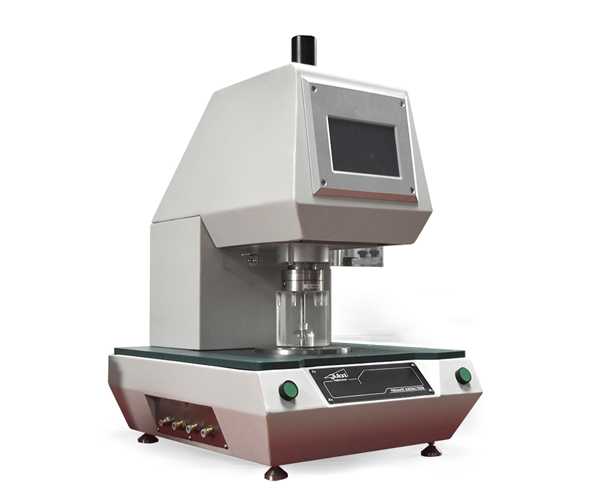


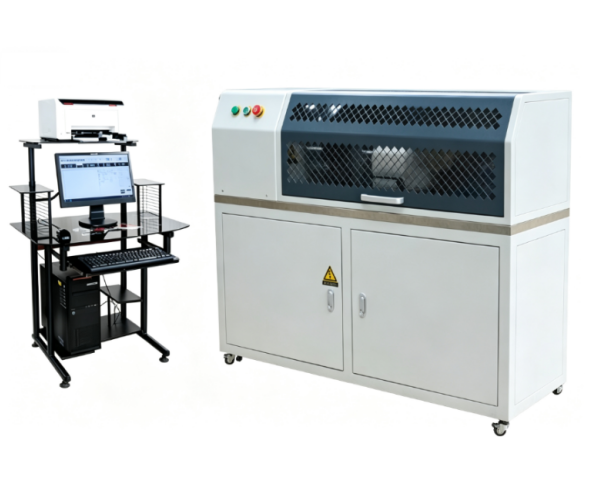
Bursting Strength Tester, to test the bursting strength of paper, woven or knitted fabrics, non-woven, fabric and board by the of hydraulic load under a Bursting tester diaphragm of a specific area. The Fabric Bursting Strength Tester is a hydraulic-based testing instrument designed to determine the bursting strength and expansion performance of textiles, nonwovens, paper, and similar materials. Using a rubber diaphragm to apply uniform pressure until rupture, the instrument provides accurate evaluation of material resistance under multi-directional stress conditions.
Application
Fabrics that must bear weight or withstand forces should be tested with a bursting strength tester, before they made into final products like truck covers, tarps, trampoline fabric, pool covers, compactor curtains, agricultural bagging applications and etc., to ensure the bursting strength meet the required requirement.
Digital bursting strength apparatus provides with a digital readout of pressure with peak hold facility, renewable rubber diaphragms. Automatic clamping device with a clear acrylic bell, an LED lamp is equipped for easy observation.
Interchangeable test bells and clamping ring sets 7.3cm2 (Φ30.5mm/l.22inch), 10cm2 (Φ35.7mm), 50cm2 (Φ79.8mm), 100cm2 (Φ112.8mm).
Bursting strength testing machine is provided with three test methods, Constant speed bursting, Certain pressure bursting and Certain extension.
This bursting tester is also called mullen bursting tester because its testing procedure is commonly called Mullen Burst Test, during which the specimen is clamped across a dia. 1.22 inch ring, and a rubber diaphragm below is inflated to push against the specimen until it ruptures.
Unlike mullen test, there is another kind of burst test called ball burst test, if that is what you need, please refer to this tester.
Standards
ASTM 3786-06、ISO 2758、ISO 13938-2、BS 3424
BS 3137、BS 4768、AS 2001.2.4、GB/T 7742
IWSTM 29、EDA NA 80.4-02、EDA NA 80.3-99、BS 2922
FZ/T 60019、JIS L 1018.6.17、NEXT 22 2206、FZ/T 01030
Parameters
Test range | 2.00Mpa | 10.00Mpa |
Minimum scale value | 0.001Mpa | 0.003Mpa |
Measuring range | full scale 1% ~ 100% | |
Pressure accuracy | ≤ 0.2% FS | |
Accuracy of expansion height | ≤ 0.2% FS | |
Test area | 7.3 cm² (dia.30.5mm), 10 cm² (dia.35.7mm) 50 cm² (dia. 79.8 mm), 100 cm² (dia. 112.8 mm) | |
The maximum expansion | 75 | |
Pressure rate | 20-600ml / min | |
Pressure units | kPa, kg / cm2, bar, lb / in2 | |
Power | AC220V / 50Hz | |
Dimensions | 550 × 450 × 700mm | |
Features
1, using hydraulic method, in line with the international standard.
2, touch screen control, the interface is simple and easy to understand, easy to operate intuitive, touch sensitive.
3, pneumatic clamping, clamping evenly, and adjust the fixture pressure, to avoid the sample slip or damage, easy to use.
4, the test cover for the high transparent plexiglass, built-in LED lighting, can clearly observe the experimental sample process. Which is a magnet Installation, replacement easy disassembly.
5, automatic induction blasting system, sensitive and reliable.
6, outside the organic glass cover, to prevent the folder wounding, the use of more secure.
7, the use of AC servo drive system, synchronous pulley drive, the instrument running low noise, wide speed range, high operating accuracy.
8, the use of high-speed AD and processor, sampling frequency is high, high test accuracy.
9, the only domestic: fixed speed burst, set pressure, set the expansion, set the time of four test methods.
10, the instrument comes with a thermal printer can print directly report, and support with professional computer software online work.
FAQ
(1) What is the difference between hydraulic and pneumatic bursting tests?
Hydraulic methods apply liquid pressure for stable and precise control, commonly used in ASTM D3786. Pneumatic methods use air pressure and are defined in ISO 13938-2. Hydraulic systems generally provide higher accuracy for detailed material evaluation.
(2) How to select the correct test area?
Test area depends on material type and thickness. Smaller areas (7.3 cm²) are suitable for stronger fabrics, while larger areas (50–100 cm²) are used for weaker or more flexible materials. Standards such as GB/T 7742 provide guidance for selection.
(3) What factors influence bursting strength results?
Results are affected by sample preparation, clamping pressure, diaphragm condition, and pressure rate. Consistent test conditions and proper calibration are essential to ensure repeatability and compliance with standards.
(4) How often should the diaphragm be replaced?
The diaphragm should be inspected regularly and replaced when signs of wear, deformation, or reduced elasticity appear. Frequent testing or high-pressure applications may require more frequent replacement to maintain accuracy.
(5) What should be considered when choosing a bursting tester?
Key factors include test range, accuracy, compliance with required standards, and available test methods. Users should match equipment capability with material type and testing requirements. For detailed selection advice, contact QINSUN engineers.
Leave Message Get Price