Textile Formaldehyde Tester
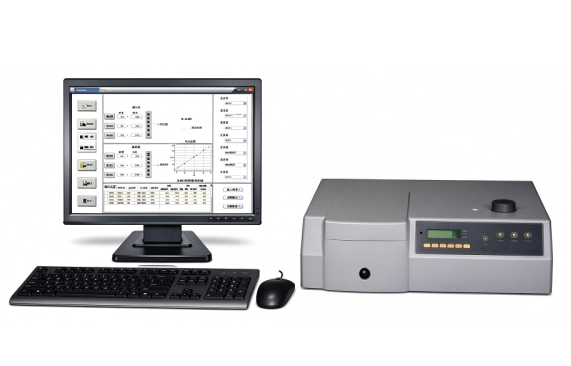


The Textile Formaldehyde Tester uses computer-controlled colorimetric analysis to determine formaldehyde content in textile materials. It processes sample and reference solutions, calculates the formaldehyde content, and displays the results as an F value in mg/kg.
The system supports automatic data processing, result storage, calibration, and test report printing, simplifying routine formaldehyde testing in textile laboratories.
Application
Formaldehyde content testing of textile fabrics.
Quality inspection of garments and textile products.
Formaldehyde testing during textile production and product development.
Laboratory testing according to textile formaldehyde determination methods.
Standards
GB/T 2912.1-2009 — Textiles — Determination of formaldehyde — Part 1: Free and hydrolyzed formaldehyde (water extraction method)
Parameters
| Parameter | Specification |
|---|---|
| Formaldehyde Measurement Range | F = 5–3500 mg/kg |
| Detection Wavelength | 412 nm |
| Measurement Accuracy | ≤5% |
| Optical Grating | 1200 lines/mm |
| Power Supply | AC 220 V ±10%, 50 Hz |
| Dimensions | 460 × 380 × 160 mm |
| Net Weight | 20 kg |
Features
Computerized Colorimetric Analysis: Processes sample, blank, and reference solutions simultaneously to simplify measurement.
Automatic Result Processing: Calculates formaldehyde content and the average of two measurements, with test report printing.
High-Precision Optical System: Uses a grating-based optical design for reliable wavelength selection and colorimetric analysis.
Adjustable Calibration: Supports zero and full-scale adjustment.
Calibration Curve Management: Analyzes measurement deviations and supports calibration curve generation and correction according to the national standard method.
Data Management: Measurement results can be stored for long-term reference and printed as test records.
Maintenance Information
Keep the optical system and sample compartment clean.
Handle cuvettes carefully and keep their optical surfaces free from fingerprints and scratches.
Use suitable reagents and reference solutions according to the test method.
Perform calibration checks regularly.
Store test data and software backups properly.
Follow the manufacturer's instructions for lamp replacement and routine maintenance.
Leave Message Get Price