Activated Carbon Fiber Adsorption Tunnel Oven
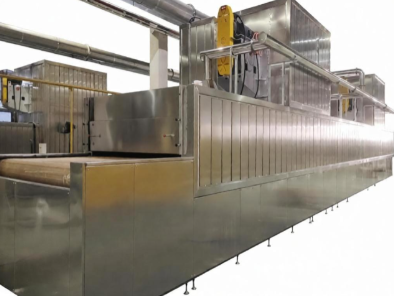


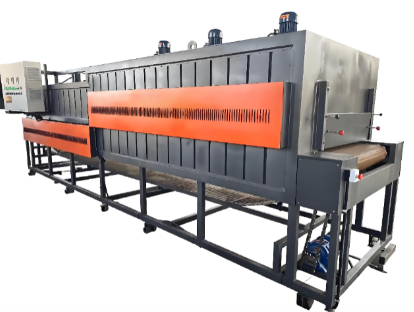
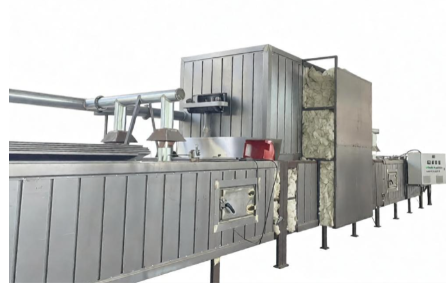
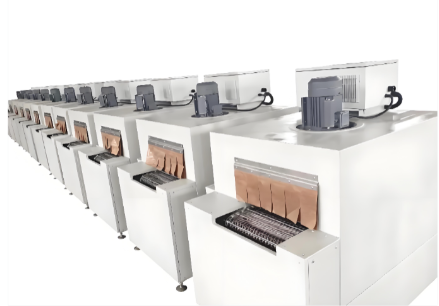
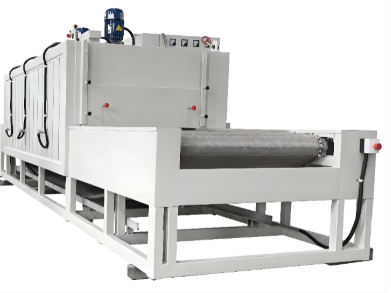
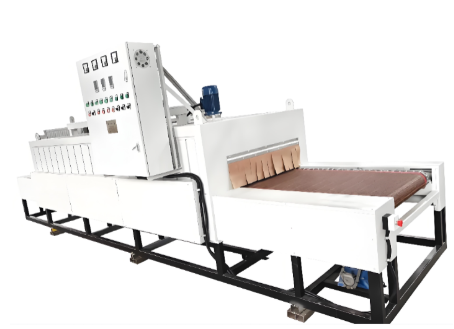
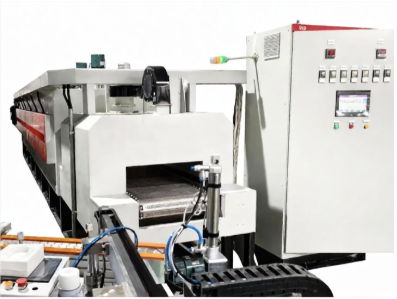
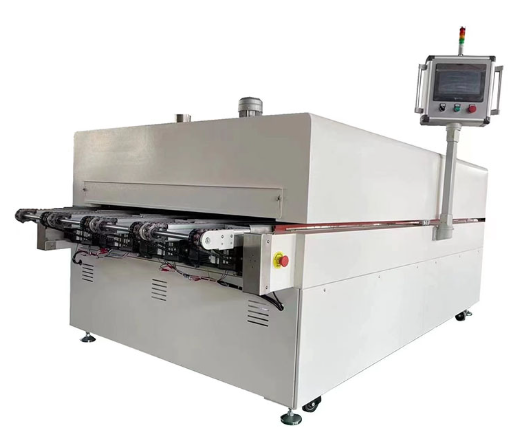
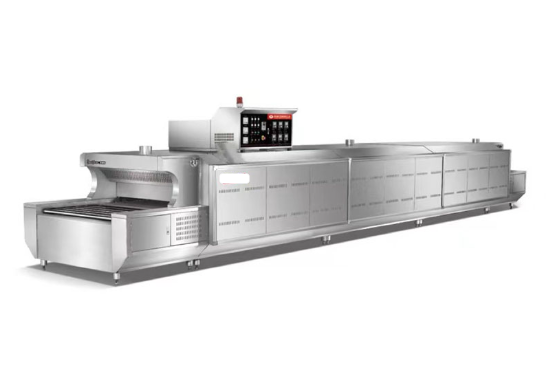
The Activated Carbon Fiber Adsorption Tunnel Oven is a modern integrated environmentally friendly industrial drying system that combines continuous material drying/thermal treatment with efficient purification of organic waste gases (VOCs).Based on the traditional tunnel oven (continuous conveyor drying system), this equipment integrates an activated carbon fiber (ACF) adsorption, recovery, and purification unit directly into the exhaust outlet or circulating air duct. It enables simultaneous operation of workpiece drying and VOC purification, achieving both production efficiency and environmental protection.
Applications
The equipment is mainly used in industrial continuous production processes where medium-to-low concentration, high-value, and volatile organic compounds (VOCs) are generated during drying.
Electronics and Semiconductor Industry
Used for:
PCB curing
Electronic component adhesive drying
Chip packaging insulation paint baking
Surface Coating and Printing Industry
Used for:
Drying of sprayed coatings on metal and plastic parts
Screen printing ink drying
Gravure printing production lines
New Materials and Composite Materials Industry
Used for:
Carbon fiber felt drying
Aerogel drying processes
Fiber fabric coating curing
Pharmaceutical and Chemical Industry
Used for:
Pharmaceutical granule drying
Continuous evaporation and recovery of solvent-based coatings or adhesives
Standards
The design, manufacturing, and emission control of this equipment must comply with relevant national environmental protection and machinery manufacturing standards.
HJ 2026
Technical Specifications for Industrial Organic Waste Gas Treatment Engineering by Adsorption Method
Regulates:
Adsorption airflow velocity
Pressure loss requirements (generally less than 4 kPa)
Regeneration temperature control
GB 37822
Standard for Control of Volatile Organic Compound Emissions
Used to control fugitive VOC emissions from the inlet and outlet openings of tunnel ovens.
GB 9078
Emission Standard of Air Pollutants for Industrial Kilns and Furnaces
Controls emission requirements from heating chambers and exhaust outlets.
Environmental Protection Technical Requirements
The activated carbon fiber used generally requires:
Specific surface area ≥ 1100 m²/g (BET method)
to ensure high adsorption efficiency.
Features
High-Efficiency Adsorption and Low Pressure Loss
Activated carbon fiber (ACF) has micropores directly exposed on the fiber surface, providing adsorption and desorption speeds dozens of times faster than traditional granular activated carbon (GAC).
Advantages include:
Faster adsorption/desorption response
Higher purification efficiency
Lower adsorption layer pressure loss (normally below 4 kPa)
Highly Integrated Design with Small Footprint
The purification system is integrated with the tunnel production line, eliminating the need for large independent environmental treatment equipment and long-distance exhaust pipelines.
Dual Recovery of Heat Energy and Valuable Resources
High-concentration VOCs after desorption can be recovered through condensation systems for valuable solvent recycling, such as:
Dichloromethane
Cyclohexane
Meanwhile, hot air can be recycled to significantly reduce energy consumption.
Continuous Conveyor Production
Compatible with:
Conveyor belts
Hanging chain systems
to meet requirements for large-scale, standardized, automated industrial production.
High Safety Design
Equipped with:
Precise temperature control systems
Gas concentration monitoring
Safety interlock systems
During hot air regeneration, the temperature is strictly controlled below 120°C to ensure safe operation.
Leave Message Get Price