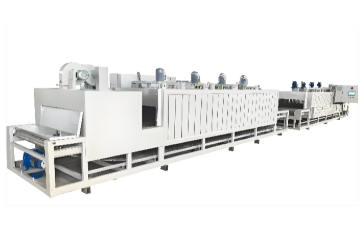
High Efficiency Filter Test Bench
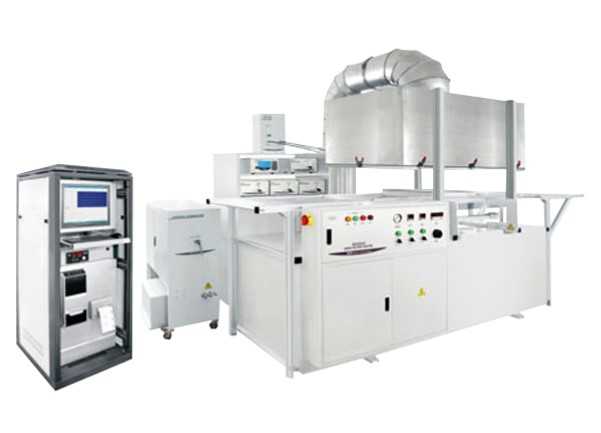


The High Efficiency Filter Test Bench is designed to evaluate the filtration efficiency, airflow resistance, and local leakage of high-efficiency air filters. It combines controlled aerosol generation, airflow measurement, particle counting, and automated scanning to assess filter performance and identify potential leakage areas.
The system uses DEHS aerosol and a controlled airflow to challenge the filter. Particle concentrations and pressure differences are measured to evaluate filtration efficiency and resistance. During scanning, the sampling probe moves across the downstream filter surface to detect local leakage. The system supports filter sizes ranging from 320 × 320 mm to 1,260 × 630 mm, with customized dimensions available.
The test bench features a modular airflow system, pneumatic filter mounting and sealing, upstream aerosol dilution, and computer-based data acquisition. Its automated software displays scanning responses, processes measurement data, and generates test reports, supporting filter production inspection, quality control, and performance verification.
Application
(1) High-efficiency particulate air (HEPA) filters.
(2) Ultra-low penetration air (ULPA) filters, subject to the measurable performance range.
(3) Flat-sheet filter media.
(4) Filter leakage detection and local defect identification.
(5) Filtration efficiency and pressure resistance evaluation.
(6) Air filter manufacturing, production-line inspection, and quality control.
(7) Filter development and laboratory performance testing.
Standards
ISO 29463-1:2024 — High-efficiency filters and filter media for removing particles in air — Part 1: Classification, performance, testing and marking
EN ISO 29463-4:2018 — High-efficiency filters and filter media for removing particles in air — Part 4: Test method for determining leakage of filter elements (scan method)
ISO 29463-5:2022 — High-efficiency filters and filter media for removing particles in air — Part 5: Test method for filter elements
GB/T 6165-2021 — Test method of the performance of high efficiency particulate air filter — Efficiency and resistance
IEST-RP-CC021.5 — Testing HEPA and ULPA Filter Media
Parameters
| Parameter | Specification |
|---|---|
| Test aerosol | DEHS |
| Aerosol particle size | 0.3–0.5 μm; stated concentration fraction ≥70% |
| Polydisperse aerosol concentration | 1 × 10¹⁰ particles/cm³, as specified |
| Scanning speed | Adjustable, ≤5 cm/s |
| Particle counter sample flow rate | 28.3 L/min ±5% |
| Upstream aerosol dilution ratio | 50–100 times |
| Measurable filtration efficiency | Up to 99.995%, according to the supplied specification |
| Filter resistance measurement range | 0–500 Pa |
| Air velocity uniformity | ≤10% |
| Detection coverage | 100% of the specified scanning area |
| System airflow range | 300–3,000 m³/h ±5% |
| Compatible filter dimensions | 320 × 320 mm to 1,260 × 630 mm; customization available |
| Compatible filter thickness | 50–300 mm |
| Particle counter model | SX-L310, as specified |
| Particle counter nominal sampling flow | 28.3 L/min |
| Particle counter lower particle-size limit | 0.3 μm, as specified |
| Main body dimensions (L × W × H) | 3,500 × 1,700 × 2,700 mm |
| Aerosol generator dimensions | 1,000 × 4,700 × 750 mm, as supplied; confirm the stated width |
| Electrical control cabinet dimensions (L × W × H) | 610 × 610 × 1,560 mm |
| Power supply | Single-phase AC 220 V ±5% or three-phase AC 380 V ±5% |
| Power supply frequency | 50 Hz ±2 Hz |
| Power consumption | Approximately 7 kW |
Features
(1) Evaluates filtration efficiency and airflow resistance of high-efficiency filters.
(2) Performs downstream scanning to identify local filter leakage.
(3) Supports full-area scanning of the specified filter face.
(4) Uses DEHS aerosol for filter performance and leakage testing.
(5) Provides adjustable scanning speed of up to 5 cm/s.
(6) Uses upstream aerosol dilution to maintain suitable particle concentrations for measurement.
(7) Features a pneumatic clamping and sealing system for convenient filter installation.
(8) Uses a uniform airflow delivery system to support stable testing conditions.
(9) Provides particle counting and scanning response monitoring through a computer-based system.
(10) Automatically processes test data and generates test reports.
(11) Supports filter dimensions from 320 × 320 mm to 1,260 × 630 mm, with customized sizes available.
(12) Can be integrated with a production line for automated filter inspection.
Leave Message Get Price