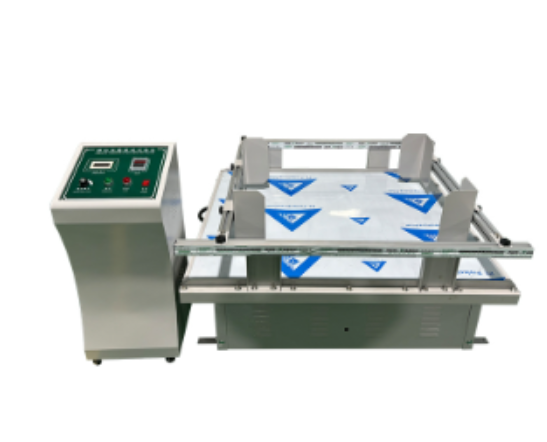
Automotive Pedal Performance and Durability Test Bench



The Automotive Pedal Performance and Durability Test Bench is designed for evaluating the durability, strength, stiffness, and torsional performance of various types of automotive pedals, including clutch, brake, and accelerator pedals. The system is computer-controlled and provides automated data acquisition and analysis to ensure accurate and repeatable testing.
Application
The test bench is applicable for:
(1) Testing the longitudinal and lateral displacement, stiffness, strength, and torsional performance of all types of pedal assemblies.
(2) Conducting durability tests for clutch, accelerator, and brake pedals.
(3) Evaluating pedal assemblies under repeated operational loads.
(4) Simulating real vehicle conditions for pedal operation and performance assessment.
Standards
The test bench meets the following standards:
(1) QC/T 788-2007 – Automotive pedal device performance requirements and bench test methods
(2) QHMAC 103[1].143-201-2005 – Clutch pedal testing
(3) QHMAC 103[1].143-202-2005 – Brake pedal testing
(4) QHMAC 103[1].141-201-2005 – Accelerator pedal testing
Test Items
(1) Longitudinal displacement, lateral displacement, stiffness, strength, and torsional performance of pedal assemblies.
(2) Clutch pedal durability testing.
(3) Accelerator pedal durability testing.
(4) Brake pedal durability testing.
(5) Overall durability of various pedal assemblies.
(6) 20° force durability testing for accelerator and brake pedals.
Technical Parameters
| Item | Specification |
|---|---|
| Pedal input force | 120–2000 N |
| Pedal travel adjustment | 5–200 mm |
| Output displacement measurement | 0–50 mm |
| Durability test cycles | 1–999,999 cycles |
| Humidity range | 35–90% RH (non-condensing) |
| Operating temperature | 0–40 ℃ |
| Maximum altitude | 1000 m |
| Power supply | AC 220V ±10%, 50 Hz, grounded |
| Compressed air supply | 0.8 MPa, flow 1 L/s |
| Working mode | 8-hour shift |
| Control system | PC-based automated control with data acquisition |
| Safety | Automatic stop upon reaching cycle limit or exceeding force/displacement thresholds |
Test Bench Structure
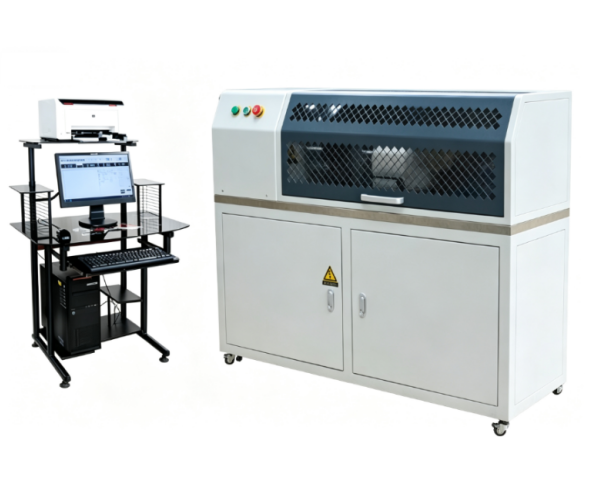
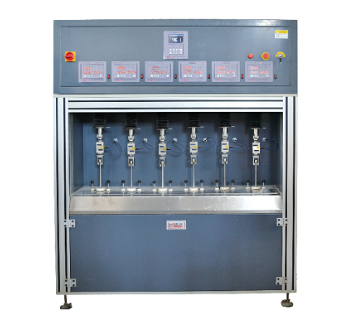
(1) The system consists of:
Test bench frame
Pedal fixture and mounting system
Drive unit and load box
Force and displacement sensors
Computer control system and data acquisition software
(2) Pedals are mounted in real vehicle positions on the bench.
(3) Drive and load mechanisms are pneumatically or electrically actuated to simulate pedal operation.
(4) Force and displacement sensors provide real-time data to the control computer, which monitors and stops the test automatically when limits are reached.
Operation Procedure
(1) Mount the pedal on the test bench in its actual vehicle position and secure the wire linkage.
(2) Adjust the cylinder position and air pressure to the required input force.
(3) Enter product information and set stop conditions in the computer system.
(4) Press start; the drive mechanism applies force to the pedal, moving the wire and load assembly.
(5) Force sensors measure cylinder output and load force; displacement sensors track movement.
(6) The computer calculates cycles and automatically stops the test when the count or force/displacement limits are reached.
Features
(1) Accurate simulation of real vehicle pedal operation.
(2) Automated data acquisition and real-time monitoring.
(3) Supports long-term durability testing with up to 999,999 cycles.
(4) Adjustable pedal travel and force range to accommodate different pedal designs.
(5) Automatic stop and protection when test conditions exceed limits.
(6) User-friendly PC interface for test setup, monitoring, and data export.
FAQ
(1) What types of pedals can be tested?
The tester can evaluate clutch pedals, brake pedals, accelerator pedals, and other automotive pedal assemblies for durability and performance.
(2) What is the maximum input force?
The pedal input force range is 120–2000 N and can be adjusted according to the type of pedal and test requirements.
(3) How long can the test cycles be set?
The number of cycles can be set from 1 to 999,999, meeting most durability testing requirements.
(4) Can the pedals be mounted in their actual vehicle positions?
Yes. Pedals can be installed on the test bench according to the actual vehicle position, ensuring realistic and accurate test data.
(5) How is the pedal durability monitored during testing?
The system uses force sensors and displacement sensors to monitor output force and displacement in real time. The computer automatically records data and stops the test when preset thresholds or cycle counts are reached.
Leave Message Get Price