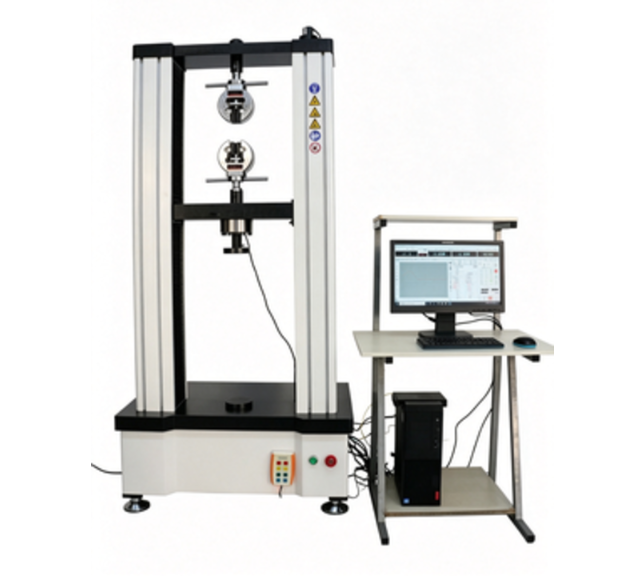
Static Load Testing Machine
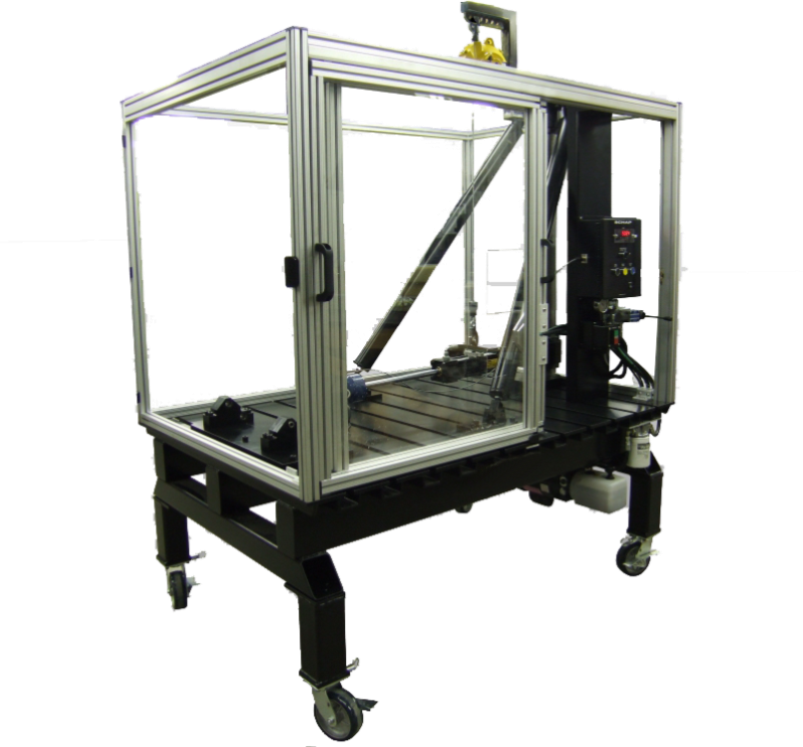


The Static Load Testing Machine is designed for static tensile load evaluation of seats and seat-related components. The system provides a maximum load capacity of 10,000 lbf and is constructed with an extruded aluminum protective frame, incorporating tinned steel wire or clean polycarbonate safety panels. All access doors are equipped with electrical safety interlock systems to ensure operator protection during testing.
The machine is hydraulically driven and configured for stable static load application, making it suitable for safety performance verification and structural strength assessment of automotive seating systems and accessories.
Application
Automotive seats and seat frames
Seat tracks and mounting brackets
Seat belts and seat anchorage components
Seat adjustment mechanisms and structural accessories
The large specimen mounting area allows integration with a three-station automatic workbench, supporting multi-point testing and improving testing efficiency in automotive safety laboratories and manufacturing facilities.
Standards
(1) FMVSS 207 – Seating Systems
(2) FMVSS 210 – Seat Belt Assembly Anchorages
(3) ISO 10542 – Technical Systems and Aids for Disabled or Handicapped Persons — Wheelchair Tie-Down and Occupant Restraint Systems
(4) ISO 6549 – Road Vehicles — Procedure for H-Point Determination
(5) SAE J879 – Motor Vehicle Seat Systems
(6) GB 15083 – Motor Vehicle Seats, Seat Anchorages, and Head Restraints — Strength Requirements
Parameters
| Parameter | Specification |
|---|---|
| Maximum load capacity | 10,000 lbf |
| Drive mode | Hydraulic |
| Cylinder stroke | 18 in |
| Cylinder type | U-shaped hydraulic cylinder |
| Piston rod diameter | 1 in |
| Load measurement | 10,000 lbf load cell |
| Load application mode | Static |
| Height adjustment | Manual |
| Base plate | 4 in × 6 in T-slot steel base |
| Safety protection | Interlocked safety doors |
| Power supply | 120 VAC |
| Hydraulic unit | Integrated power pack with oil reservoir |
| Surface treatment | Powder-coated (black as standard) |
Features
High-capacity static loading system with a maximum load of 10,000 lbf.
Extruded aluminum protective structure with steel wire or polycarbonate safety panels.
Electrical safety interlock on all service and access doors.
Large specimen mounting area suitable for multi-station expansion.
U-shaped hydraulic cylinder with 18-inch stroke for stable load application.
Manual height adjustment system with rear-mounted dual universal supports.
Adjustable tool balancer to support cylinder and load cell weight, preventing sensor damage.
Manual three-position hydraulic valve with spring-centered neutral position.
Digital peak-hold load indicator with zeroing, calibration, and reset functions.
Powder-coated finish available in customer-specified colors.
Accessories
(1) Static load testing main frame
(2) Hydraulic power unit with integrated oil reservoir
(3) 10,000 lbf load cell with quick-release chain attachment
(4) Manual hydraulic control valve
(5) Digital peak-hold load indicator
(6) Safety enclosure with interlock system
(7) Operation and maintenance manual
FAQ
(1) What products can be tested with a static load testing machine?
The machine is mainly used for automotive seats, seat frames, seat tracks, mounting brackets, seat belt anchorages, and related structural components. It evaluates their ability to withstand specified static tensile loads.
(2) Why use hydraulic loading for seat strength testing?
Hydraulic loading provides stable force output and smooth load application, which is important for large automotive components requiring controlled static tensile testing and accurate structural strength evaluation.
(3) What is the maximum testing load of this equipment?
The standard configuration supports a maximum static load capacity of 10,000 lbf. This load range is suitable for structural safety verification of automotive seating systems and related components.
(4) Which standards can be referenced for automotive seat testing?
The equipment supports evaluation according to FMVSS 207, FMVSS 210, SAE J879, ISO 6549, and GB 15083 requirements. Test fixtures and procedures can be configured according to specific application standards.
(5) How can I choose the correct static load testing machine?
Selection should consider required load capacity, test component size, applicable standards, fixture requirements, and laboratory conditions. QINSUN instruments are calibrated and tested before shipment to ensure data accuracy.
Leave Message Get Price