Skein Length Tester
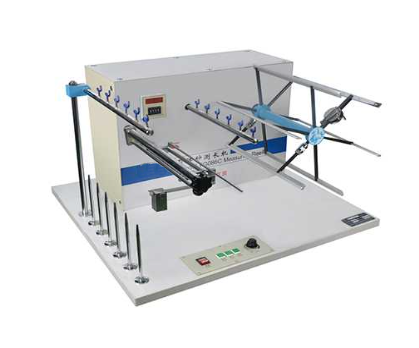


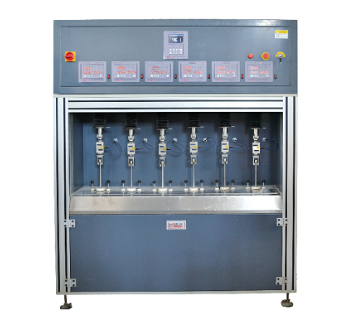
The Skein Length Tester is used to accurately measure the length of the yarn, for the determination of the yarn density or count of the yarn and the yarn strength test. The Skein Length Tester is designed to accurately measure yarn length for determining linear density (yarn count) and preparing standard skeins for strength testing. By winding yarn under controlled tension and length conditions, it ensures repeatable and standardized sample preparation in accordance with international textile testing standards. The instrument is widely used in textile laboratories, yarn production facilities, and quality control departments.
The Skein Length Tester provides a reliable and standardized solution for yarn length measurement and sample preparation. With precise control of winding length, tension, and speed, it ensures accurate determination of yarn linear density and supports consistent textile testing results across laboratories and production environments.
Application
(1) Determination of yarn linear density using the skein method
(2) Preparation of standard skeins for yarn strength testing (e.g., tensile testers)
(3) Quality control of spun yarns, filament yarns, and sewing threads
(4) Laboratory testing of cotton, wool, synthetic, and blended yarns
(5) Yarn count verification in textile production and inspection processes
(6) Sample preparation for further physical performance testing
Standards
GB/T 4743 Textiles-Yarn from packages-Determination of linear density (mass per unit length) by the skein method
GB/T 14343 Testing method for linear density of synthetic filament yarns
GB/T 6838 Testing method for sewing threads
ISO 2060 Textiles-Yarn from packages-Determination of linear density (mass per unit length)-Skein method
ASTM D1907 Standard Test Method for Linear Density of Yarn (Yarn Number) by the Skein Method
Parameters
| Item | Specifications |
|---|---|
| Frame Perimeter | 1000 mm ± 1 mm (G171C) / 54 in ± 1/16 in (G171E) |
| Number of Test Positions | 1 ~ 6 yarns simultaneously |
| Speed Range | 30 ~ 260 r/min (adjustable) |
| Preset Turns Range | 2 ~ 9999 turns |
| Traverse Stroke | 35 mm ± 0.5 mm |
| Single Yarn Tension Range | 0 ~ 100 cN |
| Tension Measurement | Dynamic sensor, digital display |
| Motor Power | 60 W |
| Power Supply | AC 220 V, 50 Hz |
| Dimensions | 780 × 660 × 480 mm |
| Weight | Approx. 45 kg |
Features
1, design of the overall structure is firm , and adopt the stainless steel and aluminum alloy material, long life and good stability.
2, with the need to install pre-tension device to improve the accuracy of unit testing .
3, with the pre-set fixed length winding wire counter, easy to use.
4, can be equipped with pressure dust cover, to prevent dust and protect the operation to avoid the scruples of clip injuries.
5, equipped with emergency safety switch.
OEM modeling
True single-chip microcomputer control, digital circuit, start and stop smoothly. You can design parameters. Besides, it is real-time speed, and the whole machine is no contact relay
It can be set to stop the first 1 ~ 5 laps in advance to slow down to greatly avoid the phenomenon of punching, mature and reliable electrical circuit: start and stop smooth, low noise operation, accurate circle, no ring phenomenon, good reliability, low failure rate
And the microcontroller set as one of the electronic counter.
With real-time speed function
Continuous step-less speed regulation
Structure principle:
1, the real single-chip domination, mature and reliable electrical circuits: start and stop smoothly, low noise, accurate loop-counting, no loop-clashing phenomenon, Good reliability low failure rate.
2, SCM design as one of the electronic counter
3, with the real-time speed measurement function
4, continuous variable speed
5, can set the final stop early deceleration, smoothly stop rotating , greatly avoiding the phenomenon of loop-clash
6, the sensor dynamic measurement, LED display
FAQ
(1) How does skein length affect yarn linear density results?
Linear density is calculated as mass per unit length. If the skein length deviates from the standard (e.g., 1000 mm perimeter × turns), the calculated yarn count will be inaccurate. Therefore, strict control of frame perimeter and turns is essential for compliance with ISO 2060 and ASTM D1907.
(2) Why is pre-tension important during winding?
Pre-tension ensures uniform yarn alignment and eliminates slack or uneven winding. Without controlled tension, the yarn may stretch inconsistently, leading to errors in length and mass measurement, especially for filament yarns.
(3) How many yarn samples can be tested simultaneously?
The instrument supports up to 6 yarn positions, allowing multiple samples to be prepared under identical conditions. This improves testing efficiency and consistency, particularly in batch quality control applications.
(4) What should be considered when selecting a skein tester?
Key factors include frame perimeter accuracy, speed stability, tension control range, and number of test positions. Selection should match the testing standards and yarn types used in your laboratory. For detailed configuration, consult QINSUN engineers.
(5) How is yarn count calculated after forming the skein?
After winding, the skein is weighed using a precision balance. Yarn count is calculated based on the known length (determined by frame perimeter and turns) and measured mass, following standard formulas defined in ISO 2060 or GB/T 4743.
Leave Message Get Price